No. 40949
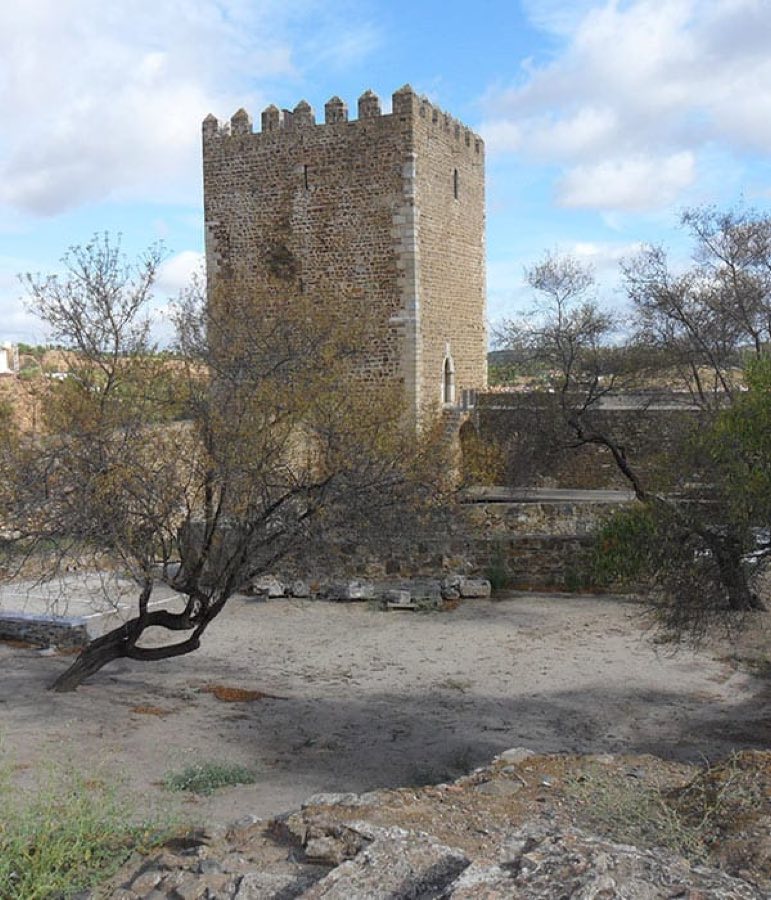
Castle of Mértola
Portugal
CastleRuin5th century
No. 83884
Castle · Portugal
No. 83884 · 37.471 N, 7.472 W
Quick summary
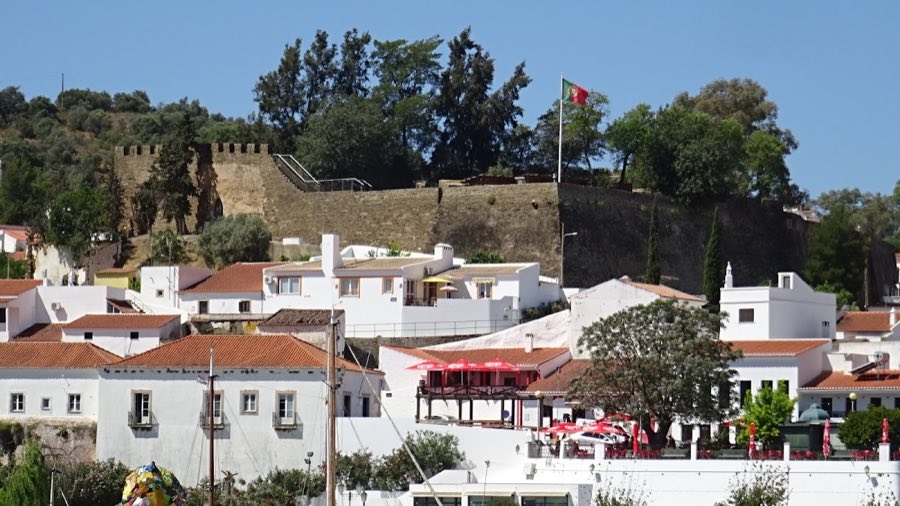
Alcoutim Castle is a castle in Portugal with origins associated with the 10th century.
See all castles in PortugalThe Castle of Alcoutim in the municipality of Alcoutim, Portugal, was shaped mainly under medieval Portuguese rule.
Human presence at the site reaches back to the transition from the Neolithic to the Chalcolithic, when a Lusitanian castro likely occupied the hill. By the end of the 10th century B.C.E. Phoenicians established a trading post in the region, and a Greek colony followed in the mid-8th century B.C.E.; Celtic groups and Carthaginians are also recorded in the settlement’s long early history.
Roman forces took control of Alcoutim at the beginning of the 2nd century A.D. The central stronghold was converted into a military post and administrative center, known in that period as Alcoutinium. In 415 the Alans seized the site, and the principal square of Alcoutinium declined when mineral exports dropped.
Moors arrived in 715 and the place-name was changed to Alcatâ. During the Reconquista the castle began to assume the form associated with medieval defensive works. In 1240 forces loyal to King Sancho II of Portugal captured Alcoutim; Sancho II ordered rebuilding of the castle and its walls and raised the settlement to the status of a town. Defenses were reconstructed and reshaped through the second half of the 13th century.
King Denis restored the castle and its walls and in 1304 granted a charter, transferring the settlement’s title to the Order of São Tiago. The fortress later served as the site where King Ferdinand of Portugal and Henry II of Castile signed a peace treaty. Kings John II and Manuel carried out further repairs; under Manuel Gothic elements were replaced by more practical fortifications and early modern defensive features. Around 1509 Duarte d’Armas recorded the fortress as having a rectangular plan without towers, entry from a single façade, walls set in two uniform faces, and exterior buildings supporting the complex.
During the Portuguese Restoration War beginning in 1640 restorations included the construction of the batteries known as Cortadoiro and Santa Bárbara and the creation of a landing oriented toward the border; the fortress took an active role in those military efforts. After this period the stronghold entered a long decline, was eventually abandoned, and later accommodated civic uses, including a slaughterhouse in about 1878. From 1961 the national directorate responsible for monuments undertook repeated conservation and restoration campaigns, addressing masonry consolidation, demolition of ruined houses to free wall segments, repair of merlons, installation of a new main gate, removal of the main magazine’s masonry and roof, reconstruction of batteries and bulwarks, and the addition of electrical illumination. From 1992 the municipal government developed the grounds further and commissioned an archaeological museum under architect Fernando Varanda; a museum within the castle opened in 2000, was renovated in 2011, presents archaeological material spanning the Neolithic to the modern era, and a separate building holds a permanent display of Islamic board games from the Moorish period. The castle and its museum follow a regular public opening schedule, closing only on 1 January and on 24, 25 and 31 December.
The castle occupies a commanding hilltop on the right bank of the Ribeira de São Marcos, at the confluence with the Guadiana and facing the Spanish village of Sanlúcar de Guadiana. The plan reflects two overlapping design phases, combining the older medieval castle form with later fortifications adapted for artillery; the overall layout follows an irregular outline that conforms to the hill.
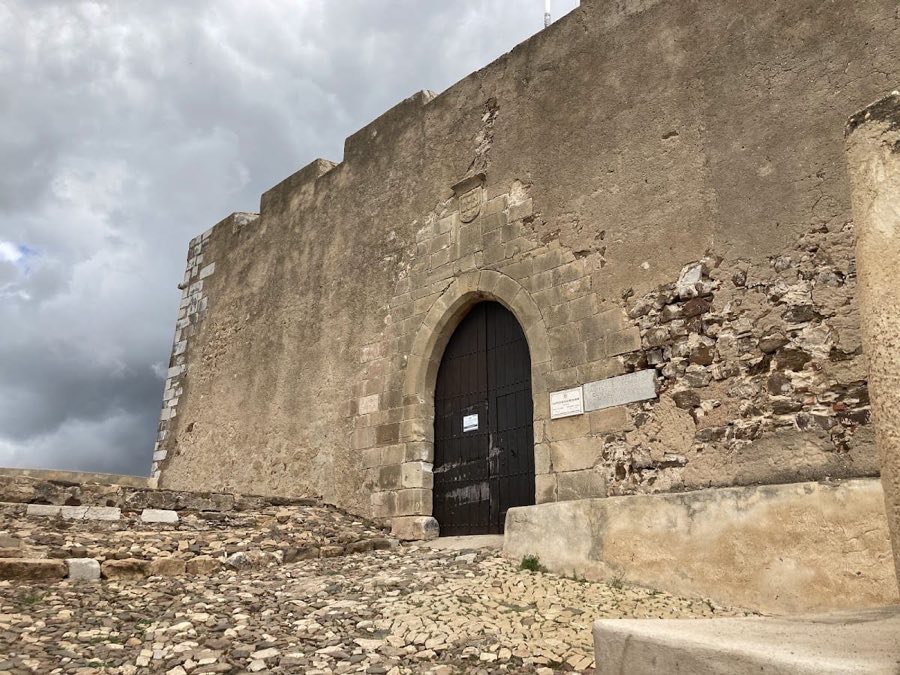
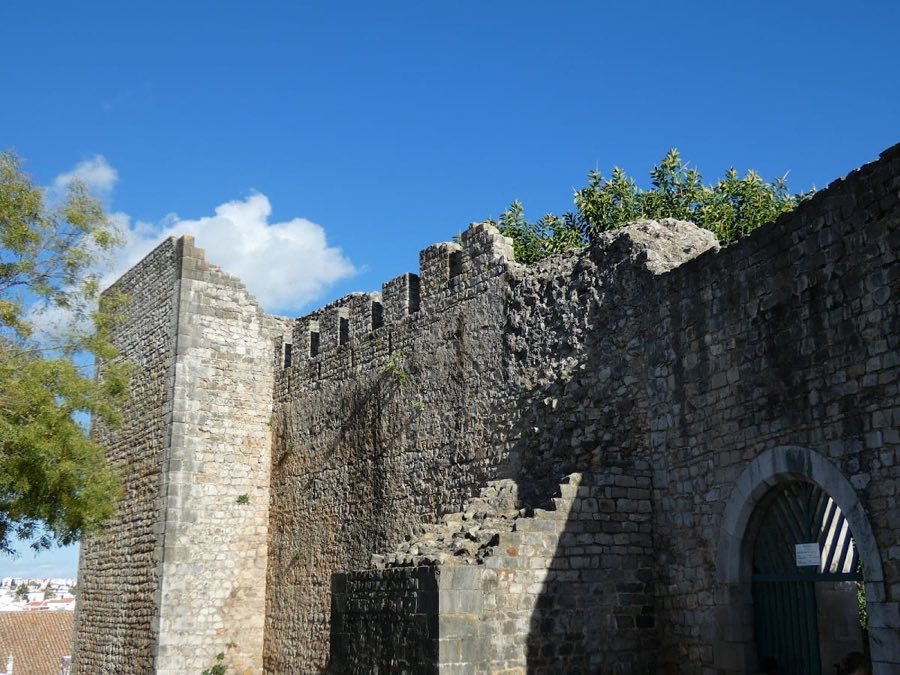
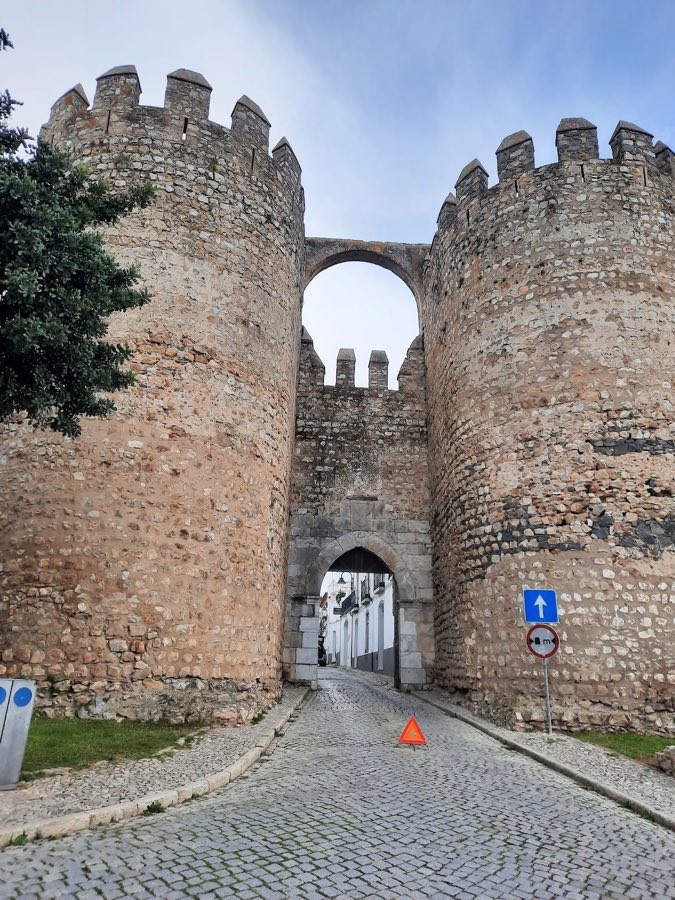
The enclosing walls form a circuit around the old settlement and delimit the medieval town. Surviving crenellations mark the medieval component. Two pointed-arch gateways from the original medieval castle remain and are recognizable within the circuit. The bulk of the enceinte is built in masonry; repeated consolidation and repair work has stabilized many wall segments, and the removal of dilapidated houses freed stretches of wall for conservation. These restored wall sections are visible in situ.
River-facing defenses represent the later, artillery-focused phase. The batteries of Cortadoiro and Santa Bárbara date from the 17th-century restorations undertaken during the Restoration War and were intended to guard the river approach. A landing constructed toward the border in that campaign remains part of the defensive sequence. In late 20th-century work batteries and bulwarks were reconstructed and consolidated to recover their river-defence function, using both traditional stone repairs and some reinforced-concrete interventions recorded during restoration campaigns.
Internal arrangements reflect earlier descriptions and modern interventions. The early 16th-century account by Duarte d’Armas records a rectangular plan without towers, access on a single façade, walls arranged in two uniform faces, and supporting buildings outside the curtain; these elements inform the interpretation of surviving foundations and arrangements. The main magazine’s masonry and roof were removed in 1979 as part of conservation work. A hydraulic lift was installed in 1981 to regain access to a staircase leading up to the battlements, and merlons received targeted repairs in later campaigns. Today the site presents a mix of fragmentary original fabric and areas that have been restored, with masonry consolidation, rebuilt bulwarks and batteries, repaired crenellations, and visible structural interventions from the 20th-century conservation program. Within the castle a museum displays the site’s archaeological finds and a separate building houses the permanent exhibition of Islamic board games associated with the Moorish occupation.
No. 40949
No. 71014
No. 45037
No. 76890
Comments
Comments for Alcoutim Castle will require a verified account before posting.
We'll send a verification link before your first comment is published.