No. 31328
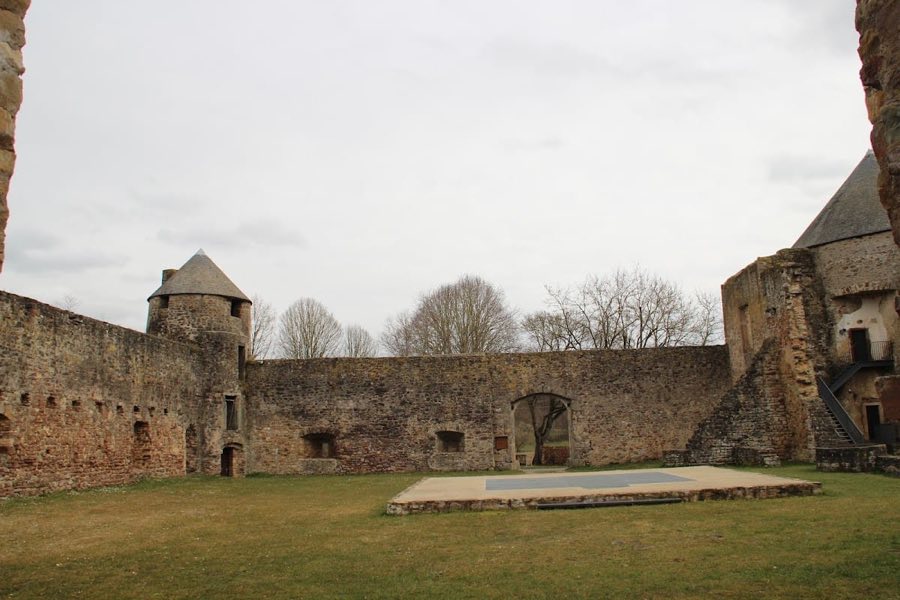
Pettingen Castle
Luxembourg
CastleRuinFor events10th century
No. 93458
Palace · Luxembourg
No. 93458 · 49.814 N, 6.087 E
For events
Berg Castle is marked as a château or castle venue lead. Capacity, indoor/outdoor spaces, catering rules, and accommodation options are published only after public verification.
Event types: Private events, Cultural gatherings, Filming and photography
Quick summary
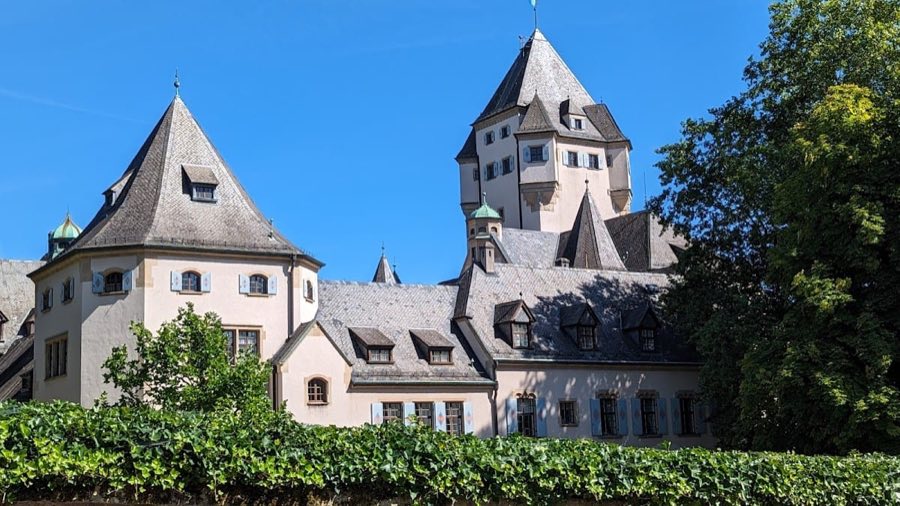
Berg Castle is a palace in Luxembourg with origins associated with the 19th century.
See all castles in LuxembourgBerg Castle is situated in the municipality of Colmar-Berg in Luxembourg. Developed over centuries, it has served as an important residence for the Grand Ducal family of Luxembourg.
The estate became linked to Luxembourg’s ruling dynasty in 1845 when Grand Duke William II acquired it to establish a permanent home following Luxembourg’s separation from the Netherlands after the Belgian Revolution. The 1848 constitution formally recognized Berg Castle as the exclusive residence of the Grand Duke, anchoring its role in the country’s governance. Later, after Luxembourg’s royal house parted ways with the Dutch crown in 1890, Grand Duke Adolphe purchased the castle to preserve its status as the family’s estate.
Between 1907 and 1911, the historic castle was demolished and replaced with a new structure designed by Munich architect Max Ostenrieder, alongside Luxembourg architect Pierre Funck-Eydt. This new building became the primary residence of the Grand Ducal family when it was completed in September 1911.
The castle’s ownership shifted in 1934 during the economic hardships of the Great Depression, when the Luxembourg government bought the property for 40 million francs. This purchase included an arrangement allowing the Grand Ducal family to continue using the castle as their official home under constitutional terms.
During World War II, the estate was occupied by Nazi forces from 1941 to 1944. The castle was converted into a “Napola” or National Political Education Institution for girls, requiring extensive structural changes. Valuable furnishings and artworks were taken, and the castle suffered damage, necessitating years of restoration after the war ended.
After several decades, the Grand Ducal family returned to Berg Castle in 1964, when Grand Duke Jean assumed his duties. Before that time, his mother, Grand Duchess Charlotte, had preferred residing at Fischbach Castle.
In recent developments, Hereditary Grand Duke Guillaume announced plans in 2024 to build a family cottage within the grounds. This residence is intended to serve as a home following his eventual accession, with construction slated to begin in mid-2025 and completion anticipated by 2027.
Notably, three of Luxembourg’s last four monarchs—Grand Duchesses Marie-Adélaïde and Charlotte, as well as Grand Duke Jean—were born at Berg Castle, underscoring its ongoing importance to the Grand Ducal family.
The estate of Berg Castle spans over 10 hectares and features a diverse range of buildings and facilities that support its role as the Grand Duke’s official residence. The main castle, constructed from 1907 to 1911, replaced older structures dating back to medieval times, including a 14th-century fortress and later buildings from the 18th and 19th centuries. The current structure retains few elements from these earlier versions.
A prominent feature of the castle is its main tower, which rises approximately 65 meters, providing a striking silhouette in the surrounding landscape. The castle sits in a valley near where the Alzette and Attert rivers meet, at an elevation of around 230 meters, surrounded by mixed forests and varied terrain.
The property includes extensive supporting buildings: stables for horses, storage sheds, a heated orangery for cultivating plants, as well as two garages for vehicles. Service facilities on the grounds comprise laundry rooms equipped with drying spaces and an independent electric power plant powered by diesel generators. Housing is provided for staff in fourteen separate residences distributed across the estate.
During the Nazi occupation, the castle underwent substantial alterations to accommodate its new function as an educational institution. These changes led to the loss of most original furnishings and artwork, and significant damage to the interior decoration. Following the war, restoration efforts were extensive but took many years to complete.
Within the castle is the Luxembourg Court Library, housing approximately 30,000 volumes. This collection adds a scholarly and cultural dimension to the estate’s function as both a home and workplace for the Grand Duke, where official receptions and ceremonies are also held.
Berg Castle remains a private royal residence and is not accessible to the public. Its layered history is visible through the mix of early 20th-century architecture and functional estate buildings that support the complex life of Luxembourg’s monarchy.
No. 31328
No. 37381

No. 94284
No. 46236
Comments
Comments for Berg Castle will require a verified account before posting.
We'll send a verification link before your first comment is published.