No. 79653
Bottmingen Castle
Switzerland
CastleIntactFor events14th century
No. 72994
Castle · Switzerland
No. 72994 · 47.537 N, 7.575 E
For rent
Binningen Castle is marked for bookable castle accommodation. Nightly pricing, sleeps count, stay rules, and amenities are displayed only when public operator data is available.
Rental type: Hotel / bookable stay, Short-stay rental
Short-term availability: Bookable accommodation signal
Quick summary
Binningen Castle is a castle in Switzerland with origins associated with the 13th century.
See all castles in SwitzerlandBinningen Castle in Binningen, Switzerland is a late 13th-century pond castle constructed in 1293 by the Basel citizen Heinrich von Zeise. Erected as a water-surrounded stronghold typical of the medieval period, it played a local defensive and residential role and later served as a military outpost for forces from Basel. The site’s long history intersects with major regional upheavals, repeated destruction and rebuilding, and a succession of civic and private owners.
The first phase ran from its founding through the mid-14th century. The structure was set around a defensive pond and stood until the seismic shock of 1356, when only the lowest structural courses and foundations endured. Following that catastrophe the building’s above-ground fabric required extensive reconstruction.
In 1409 fire reduced the castle to ruins. Reconstruction work took place about ten years after the blaze, restoring the residence and its defensive function. In 1444 during the conflict known as the St. Jakob’s War (part of the wider Old Zurich War and associated with the Battle of St. Jakob an der Birs) Habsburg forces destroyed the castle again, ending that medieval phase of occupation and defense.
During the early 16th century the canton of Solothurn showed interest in the village and fortress. Around 1520 a member of the Basel city council bought the property to halt hostile encroachment, and thereafter the castle could be used as an outpost for Basel troops when required. Ownership then passed through several private hands: the Grieb family and Escher vom Glas, followed in 1545 by purchases made by Joachim van Berchem and by Johann von Brügge, who was later revealed to be the Anabaptist leader David Joris living under an assumed name.
In 1574 Nikolaus von Hatstatt acquired the estate, and on his death the castle reverted to the city of Basel. Over the course of the 17th century leases and sales moved the property onward, first to the Eckstein family and in 1613 into the possession of the Counts of Sulz from Württemberg. Subsequent owners included Georg Wilhelm von Freudenstein and the baron von Polheim. In 1772 the surrounding defensive pond was deliberately drained and infilled, altering the castle’s original setting.
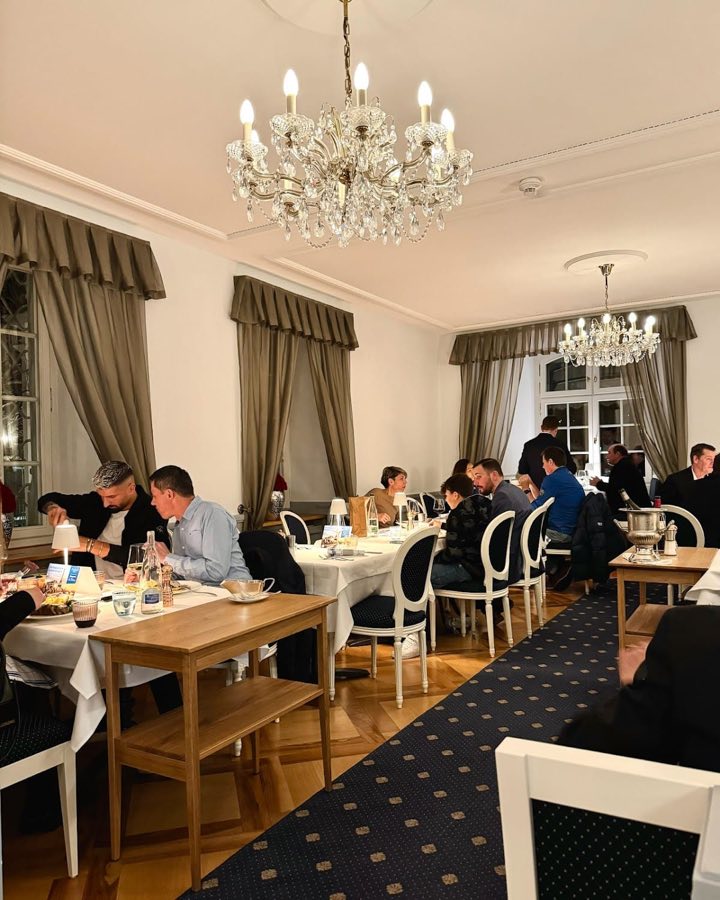
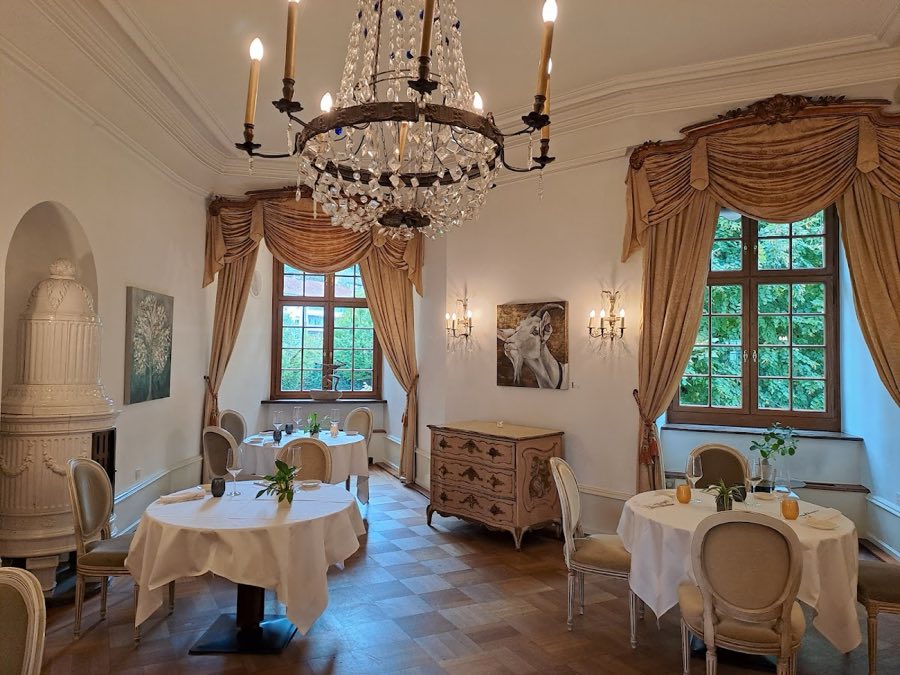
The 19th and 20th centuries brought new civilian uses. In 1817 Niklaus Singeisen of Liestal bought the property and planned to convert it into a gambling house, but a nearby innkeeper’s protest prevented that scheme. The first recorded dining establishment opened in the castle in 1870, and the building was repeatedly altered in the decades that followed. The municipality of Binningen purchased the property in 1960. Today the historic building is occupied by a restaurant and a hotel.
The site occupies a small park directly beside the tram line to Basel and retains a compact plan centered on a rectangular main block with an inner courtyard. The courtyard remains the organizing space of the building and reflects the medieval layout established when the castle stood within its water defenses. The courtyard’s southeast corner contains a small round tower that projects above the inner space, a feature that once contributed to the castle’s defensive arrangement and now reads as part of the historic core.
Foundational work at the site dates back to the original 13th-century construction, and the lowest courses of masonry reflect the survival of those earliest building phases after the 1356 earthquake left mainly foundations in place. The fabric that survives today incorporates later rebuilding from the early 15th century and subsequent repair campaigns following fires and military damage. The structure has been altered repeatedly, so present walls combine multiple phases of construction and repair.
Exterior finishes show a white-painted façade with window surrounds executed in red sandstone, a material choice that highlights openings while leaving wall planes plain. The east elevation opens onto an outdoor terrace that is used by the restaurant; this terrace occupies the side that once faced the former water defense. The building’s appearance today therefore mixes historic masonry, later repair work, and surface treatments applied during its modern conversions.
The former moat that originally encircled the castle was filled in 1772, changing how the complex related to its landscape and removing the island-like setting characteristic of a pond castle. Elements such as the inner courtyard, the southeast round tower, surviving foundation work, and the red sandstone window surrounds remain visible and give a sense of the castle’s medieval layout, while many interior and exterior parts reflect the numerous alterations carried out during its conversion to hospitality uses.
No. 79653
No. 19619
No. 54324
No. 73548
Comments
Comments for Binningen Castle will require a verified account before posting.
We'll send a verification link before your first comment is published.