
No. 22624
Čičava Castle
Slovakia
CastleRuin14th century
No. 11898
Castle · Slovakia
No. 11898 · 48.902 N, 21.832 E
Quick summary
Brekov Castle is a castle in Slovakia with origins associated with the 13th century.
See all castles in SlovakiaBrekov Castle is a medieval fortress situated in the municipality of Brekov, Slovakia. It was originally built in the 13th century by Hungarian settlers as part of a series of defensive strongholds lining the border between the Kingdom of Hungary and the Kingdom of Poland.
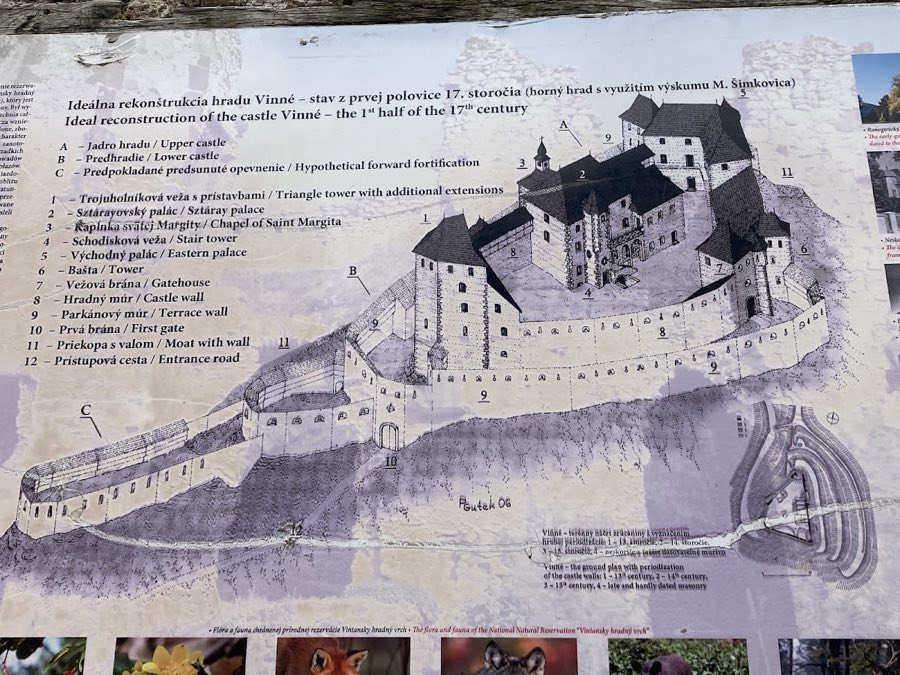
During the early period of its history, the castle served primarily as a watchtower and protective outpost, guarding an important frontier alongside neighboring fortresses such as Jasenov, Vinné, and Čičva. From 1317, the castle came under the control of the Drugeth family, a powerful noble lineage in the region, who maintained ownership until the late 15th century.
In 1466, Brekov Castle witnessed a significant military encounter when the armies of King Matthias Corvinus of Hungary and Polish King Casimir IV engaged in battle beneath its walls, highlighting its strategic importance in regional power struggles of that era. By the 1480s, ownership had transferred to the Zapolya family, who undertook major expansions and fortifications from 1484 to 1488, reinforcing the castle’s defenses and adding new structures.
The mid-16th century marked a turbulent period for the castle when František Kendy, its owner, aligned with forces opposing King Ferdinand I. After suffering damage during this conflict, the castle was reconstructed in 1575 under Mikuláš Druget’s direction. However, the unrest continued, and the fortress endured further destruction during the 1644 uprising led by Juraj Rákoci. Though partially restored afterward, the castle was ultimately abandoned in the aftermath of late 17th-century anti-Habsburg uprisings, leaving it to slowly fall into ruin.
Acknowledging its historical significance, Brekov Castle was officially declared a cultural monument in 1963. Systematic archaeological excavations and preservation efforts began in the late 2000s, initiated by the local Association for the Salvaging of Brekov Castle in cooperation with regional authorities.
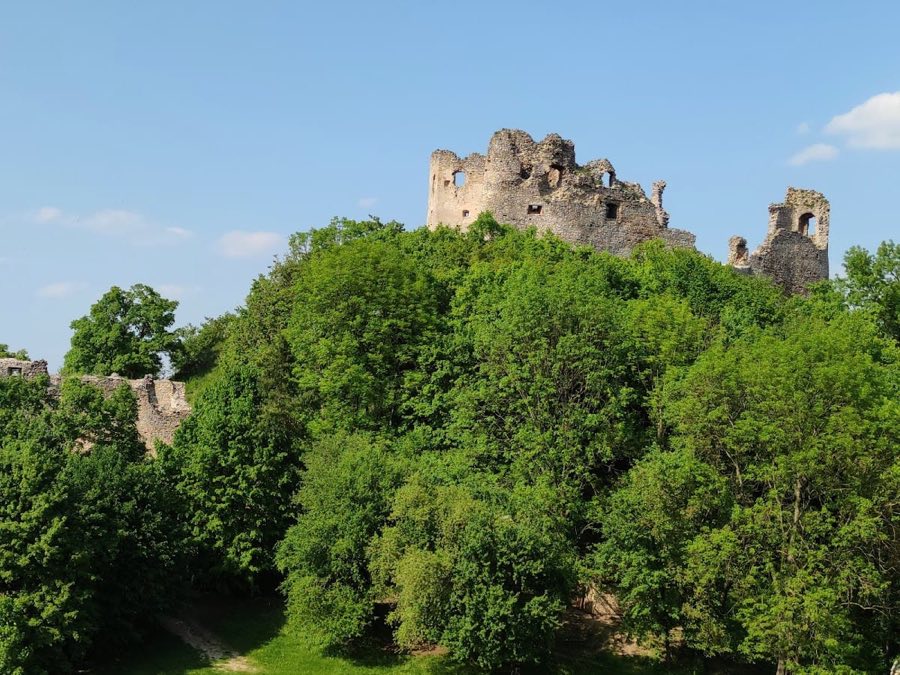
Brekov Castle occupies a commanding position atop a limestone hill approximately 280 meters above sea level. Its earliest section features an oval-shaped fortress layout, with masonry walls constructed primarily from local stone. A notable element from this original phase is a tower attached to the southwest side, dating back to the late 13th or early 14th century, which served as a lookout and defensive strongpoint.
In later construction phases, the Drugeth family added a two-winged palace within the castle grounds, along with a small forecourt positioned to the north. These additions replaced earlier fortifications and expanded the living and administrative spaces. Under the Zapolya family’s supervision during the late 15th century, the eastern edge of the rocky plateau was further fortified by removing older walls and erecting new masonry defenses, enhancing the castle’s resilience.
Near the entrance gate, a late Gothic bastion was constructed to strengthen the approach, providing a strategically cloistered position for defenders. The fourth phase of building introduced a polygonal structure on the western side of the original core, broadening the castle’s footprint and supporting its function as a fortified residence.
Today, portions of the castle walls stand still reaching up to three stories high, clearly delineating the contours of the former buildings and defensive enclosures. The main gates and the passage leading to the upper castle area remain visible; evidence suggests that a drawbridge once controlled access here. Inside, cellars featuring partial vaulted ceilings survive, reflecting the castle’s complex architectural development.
The western section preserves what was once the castle kitchen, identifiable by an open hearth, a drainage system, and a large chimney. Traces of wooden beams that supported fireplaces are apparent on the walls of the upper floors, providing insight into the castle’s domestic functions.
Archaeological investigations have uncovered a diverse collection of artifacts within the site. Among these are late Renaissance stove tiles displaying decorative craftsmanship, pieces of Slavic pottery that reveal earlier settlement on the site, and iron arrowheads linked to a Slavic hillfort predating the medieval castle. Some of these finds are exhibited in a museum situated beneath the castle ruins, while the castle grounds themselves are accessible for exploration.
No. 22624
No. 95838
No. 35916
No. 58797
Comments
Comments for Brekov Castle will require a verified account before posting.
We'll send a verification link before your first comment is published.