No. 72780
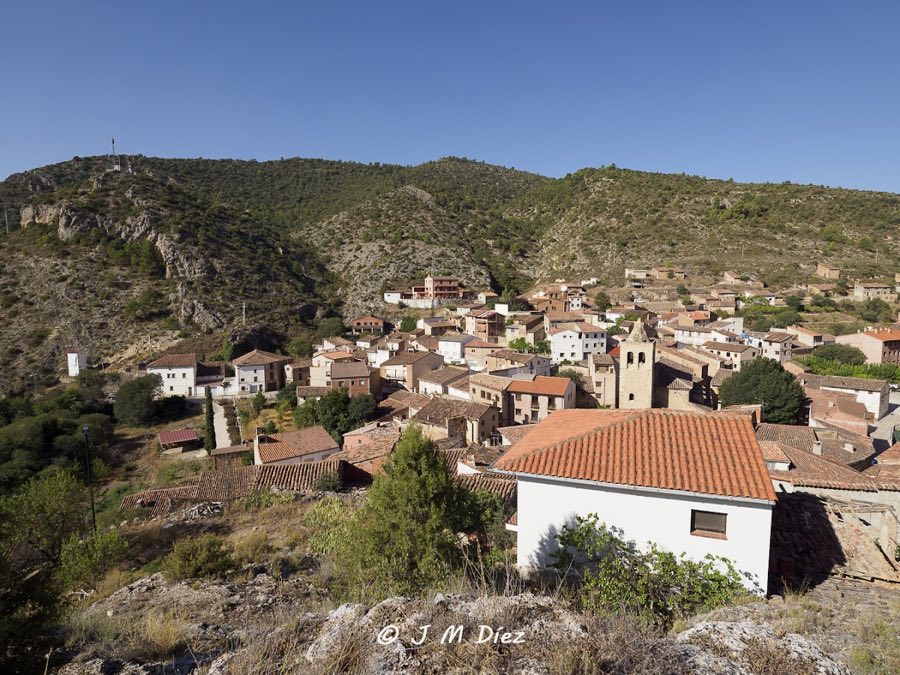
Castillo de El Cuervo
Spain
CastleRuin13th century
No. 75159
Castle · Spain
No. 75159 · 40.149 N, 1.044 W
Quick summary
Camarena de la Sierra is a castle in Spain with origins associated with the 13th century.
See all castles in SpainThe castle of Camarena de la Sierra stands above the village of Camarena de la Sierra, Spain, and its construction is possibly linked to the Muslim period.
The site enters the written record during the Christian reconquest under King Pedro II of Aragón. In 1210 the king transferred control of the fortress first to Pedro Fernández el Castellano and then to Pedro de Pomar. On 29 July 1210, after the battle of the llano de la Matanza, Pedro de Pomar is recorded as having taken the castle during Pedro II’s reign.
By 1217 the place belonged to the bishopric of Zaragoza. That year the bishopric exchanged Camarena with the Crown in return for the Castillo de la Palma at Sástago, and the locality then became part of the Comunidad de Aldeas de Teruel, within the Sesma del Campo de Sarrión administrative division. In the 1260s the settlement is documented as depopulated. On 8 May 1268, while he was in Montpellier, King Jaime I of Aragón granted the Concejo de Teruel the power to select people to divide and repopulate Camarena together with other nearby places.
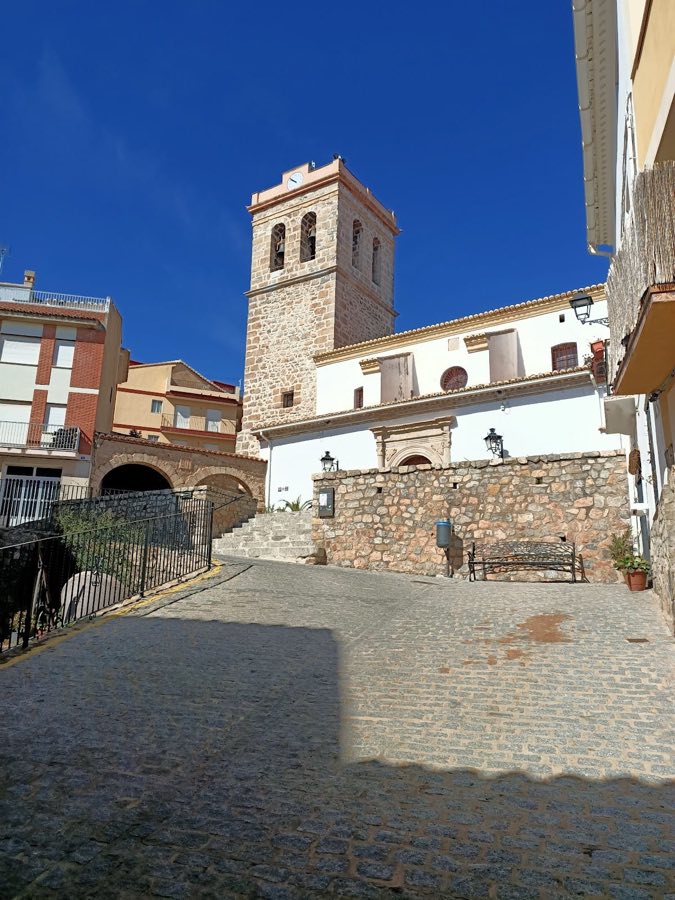
The original parish church that once stood on the hill later became the hermitage of San Cristóbal after a new parish church was built in 1677. Ceramic fragments found across the summit testify to both Islamic occupation and later Christian activity in the late medieval period. The site is recorded in the regional heritage inventory and was included in the Registro Aragonés de Bienes de Interés Cultural, with its listing published in the Boletín Oficial de Aragón on 22 May 2006.
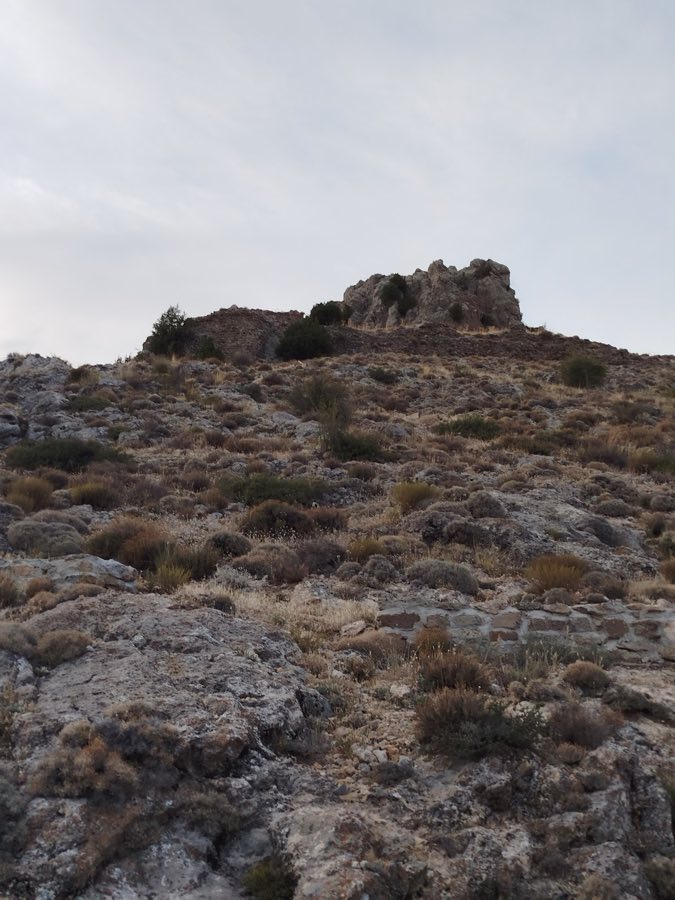
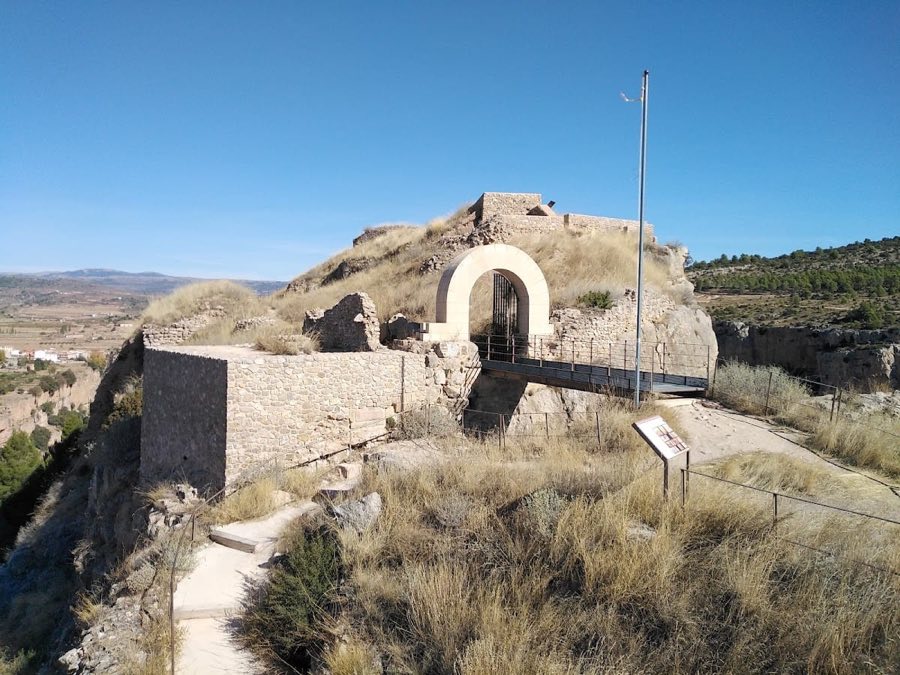
The ruin occupies the top of a rocky hill called El Castillejo or Cerro de San Cristóbal, on the right bank of the river Camarena and to the west of the modern village. Surviving elements are few and scattered across the summit, and much of the structure has suffered severe decay. Masonry visible on the hilltop is generally built from river cobbles set in lime mortar and appears irregular in distribution.
In the northern sector a rectangular building measuring about 20 by 7 metres stands on a platform cut directly into the rock. This structure is identified with the original parish church that was later converted into the hermitage of San Cristóbal. The platform and the building’s footprint remain in place, though the fabric is fragmentary.
Southeast of that church footprint are the remains of a substantial tower base formed of cobble masonry taken with lime mortar. Close to this tower base lie fragments of a perimeter curtain wall also built from river stones, in places showing a tendency toward a herringbone laying pattern. That wall now lacks most of its outer face and defines a platform that slopes toward the southeast; overall the curtain and tower remains are highly deteriorated.
On the highest rocky tor to the southwest there are additional defensive-structure remains interpreted as what could have been another tower. These elevated masonry fragments are visible from the western slope of the hill and relate to the site’s defensive layout.
Some preserved wall faces are described as erected “a sardinel,” a construction mode that suggests stepped or staggered courses of stone. These faces may originate in the Muslim phase of the site and were possibly reused in the immediate Christian occupation following the conquest. Scattered ceramic sherds of Islamic and late-medieval Christian date are found across the summit. In the wider municipal territory archaeologists have identified two Iberian settlement sites and fragments of Roman terra sigillata, indicating a long sequence of human activity in the surrounding landscape.
No. 72780
No. 28178
No. 26550
No. 78289
Comments
Comments for Camarena de la Sierra will require a verified account before posting.
We'll send a verification link before your first comment is published.