No. 13146
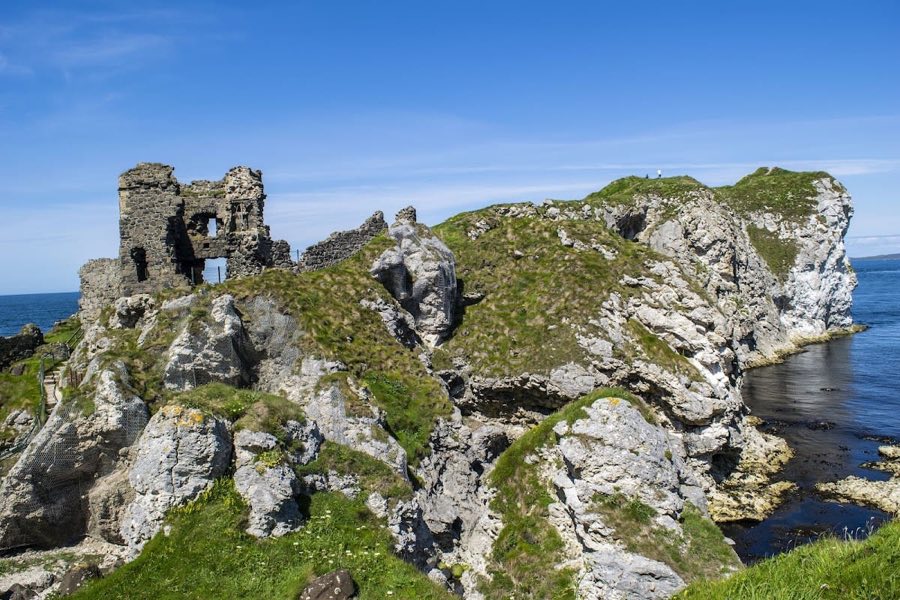
Kinbane Castle
United Kingdom
CastleRuin16th century
No. 10854
Castle · Ireland
No. 10854 · 55.316 N, 7.373 W
For events
Carrickabraghy Castle is marked as a château or castle venue lead. Capacity, indoor/outdoor spaces, catering rules, and accommodation options are published only after public verification.
Event types: Private events, Cultural gatherings, Filming and photography
Quick summary
Carrickabraghy Castle is a castle in Ireland with origins associated with the 13th century.
See all castles in IrelandCarrickabraghy Castle is situated on the northwestern tip of the Isle of Doagh in the municipality of Inishowen, Ireland. The site has been associated with the Irish clans who inhabited the region, particularly the McFall sept of the Cineal Fhearghasa clan, who played a central role in its early history.
From the 9th to the 13th centuries, the area around Carrickabraghy was known as Carraig Bhrachai, named after the Irish words for “rock” and possibly a personal name related to the McFall family. This district formed a western tuath, or tribal land unit, controlled by the powerful Ó Maolfabhail (McFall) clan. Historical records, notably the Annals of the Four Masters, mention a series of lords and kings ruling this district from 834 until 1215. Many of these leaders are noted for their involvement in battles against other Irish clans and Viking invaders, often meeting violent ends. The chronicles of their rulership conclude by the early 13th century.
During the Viking incursions into Inishowen in the 10th century, the McFall clan retained control of the fortress at Carrickabraghy. A local tradition recalls a Viking raid in which three Irish princesses were taken captive. According to legend, one of the princesses escaped, carrying stolen goods, and later married a local chief near the castle, highlighting the site’s role in regional conflicts and alliances.
The historical record falls silent on Carrickabraghy Castle for several centuries until about 1600, when the ruins visible today were constructed atop earlier defensive structures. This was a period when the O’Doherty clan had established dominance in Inishowen, with Sean Og O’Doherty serving as lord. At this time, the Isle of Doagh, including Carrickabraghy Castle, held strategic importance for protecting livestock and supplies from English attacks during the ongoing conquest of Ireland by English forces.
Following Sean Og’s death in 1601, a contested succession emerged involving his son Cathaoir Rua (also known as Cahir Roe), his half-brother Feilim Og, and external powers such as Aodh Rua O’Donnell and English officials. Feilim Og was briefly recognized as lord early in 1601, but by May of the same year, the 14-year-old Cathaoir Rua was acknowledged as the rightful lord, becoming the last major Irish leader of Inishowen. Around this time, a battle took place near the castle at Pollan Bay, where Aodh Rua O’Donnell’s forces suffered defeat.
Cathaoir Rua ruled Inishowen with relative peace until the Flight of the Earls in 1607, when many native Irish nobles left Ireland. English authorities became wary of potential uprisings, prompting Cathaoir Rua to seek refuge within Carrickabraghy Castle. He prepared a rebellion there that ultimately failed, resulting in his death in 1608. After these events, the castle was gradually abandoned, leading to its ruinous state by around 1665.
In the 21st century, conservation and restoration efforts began to preserve the remains of Carrickabraghy Castle, culminating in significant stabilization work completed in 2013 supported by both local initiatives and national funding programs.
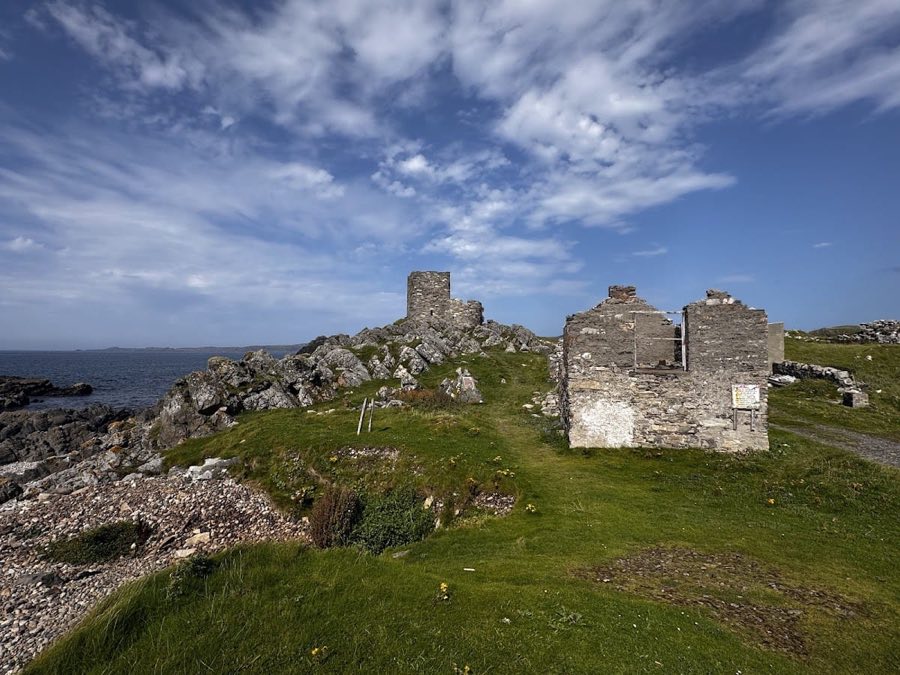
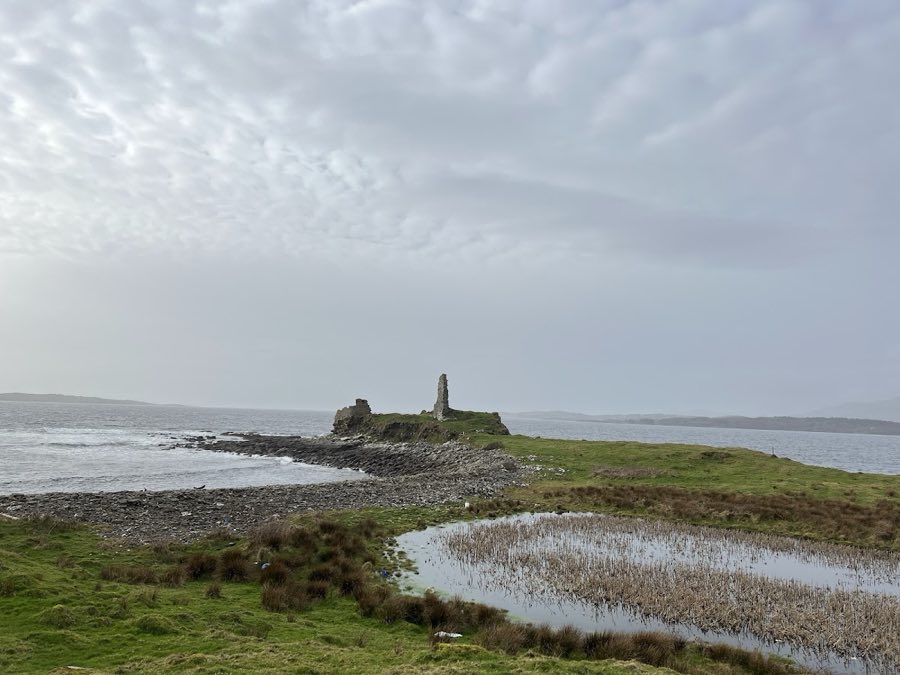
The ruins of Carrickabraghy Castle occupy a rugged rocky promontory overlooking Pollan Bay on the Isle of Doagh. Known locally as “The Castles,” the structure primarily dates from around 1600, though it rests over earlier, less-defined fortifications that likely date back to the early Iron Age. The defensive advantage of its position made the site significant across many centuries, with access to the island limited by the tide, enhancing protection against attackers.
The visible remains today consist of fragmentary stone walls constructed from locally sourced materials, characteristic of early 17th-century building methods. These walls appear to be part of a fortified residence or small stronghold, designed to safeguard livestock and valuable provisions during times of conflict. Despite the passage of time, the castle’s location still conveys a strategic perspective over the surrounding coastline and seaways.
No specific interior features such as gates, staircases, or decorative elements have been recorded in archaeological reports. Likewise, there are no inscriptions or artifacts reported from the site that would provide further detail on its occupants or their activities. The castle’s survival as a ruin has made it a focus for conservation, with work undertaken to stabilize the masonry and prevent further deterioration. This restoration, completed in late 2013, was carried out with support from the National Rural Development LEADER Programme alongside local fundraising efforts, ensuring the site’s preservation for future study and heritage appreciation.
No. 13146
No. 38611
No. 51672
No. 50612
Comments
Comments for Carrickabraghy Castle will require a verified account before posting.
We'll send a verification link before your first comment is published.