No. 55353
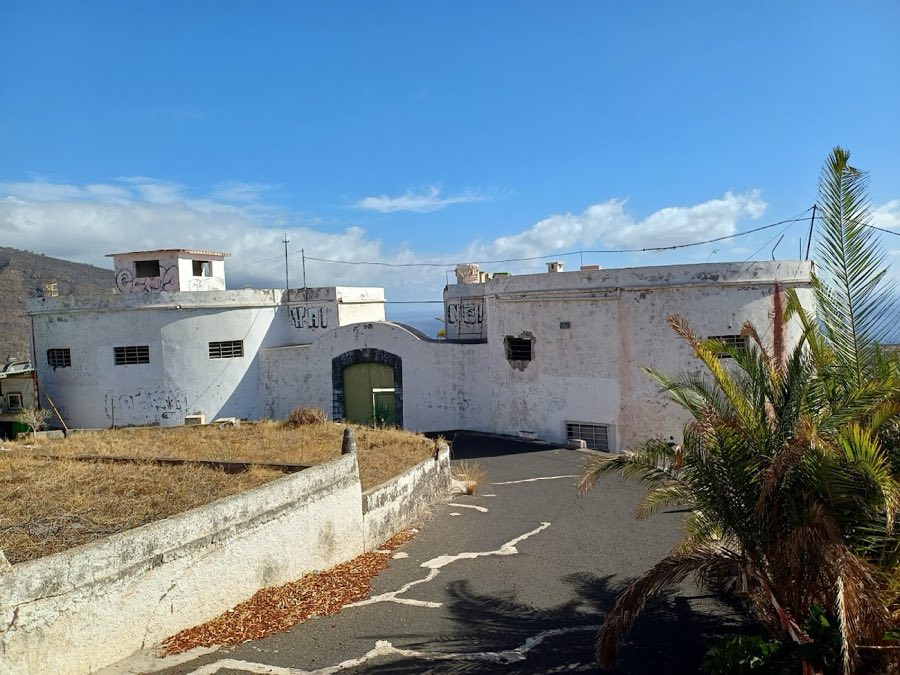
San Joaquín Castle
Spain
CastleRuin16th century
No. 10194
No. 10194 · 28.490 N, 16.316 W
Quick summary
Casa Salazar is a palace in Spain with origins associated with the 17th century.
See all castles in SpainCasa Salazar in San Cristóbal de La Laguna, Spain, is a 17th‑century Baroque palace built by members of a Spanish settler family active on Tenerife.
Construction began around 1629 under Cristóbal Salazar de Frías and continued across generations, with his son taking over the works and final completion reached about 1687 under Cristóbal Lázaro Salazar de Frías y Espinosa, who became the first Count of the Valley of Salazar and Marquis of Estremiana.
From its earliest decades the house served as a grand family residence in one of the island’s principal towns, reflecting the social standing of the Salazar lineage in the early modern Canaries.
In 1891 the property left the family when Bishop Ramón Torrijos y Gómez purchased it from Esteban Salazar de Frías y Ponte, the eighth count, and adapted the building to serve as the diocesan headquarters for the Diocese of Tenerife (Diocese of Nivariense).
The palace later entered official heritage protection procedures in the early 1980s and became part of the historic core inscribed as a World Heritage Site at the end of the 1990s, linking its conservation to wider efforts to preserve the town’s urban ensemble.
On 23 January 2006 a severe fire ravaged the structure and left little beyond the stone front.
After several years of rebuilding financed by public bodies, the Church, private companies and individuals, the palace was reopened for use on 19 June 2009.
A new Bishopric Chapel, commissioned for the restored palace and directed by Slovenian Jesuit Marko Ivan Rupnik with an international ecumenical team, was consecrated in May 2010; the chapel quickly took on prominence within the diocese because of its modern liturgical decoration and large mosaic programme.
The palace occupies a compact two‑storey plan built in stone and masonry typical of its period.
The main façade retains a dominant central crowning element and shows pronounced animal‑shaped gargoyles used as decorative water spouts.
A low wall running along the top of the front displays the Salazar family coat of arms carved in marble, set prominently above the principal entrance.
The exterior stonework survived the 2006 blaze better than the interiors and was incorporated into the post‑fire reconstruction completed in 2009.
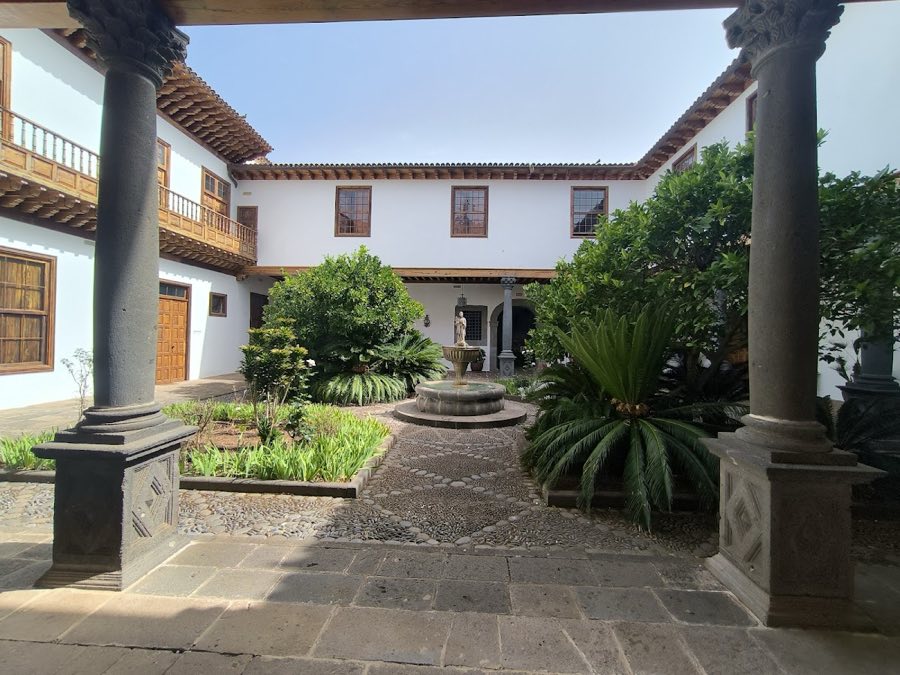
Interior spaces include a courtyard, an entrance portico and an inner garden, all features photographed and recorded before the 2006 fire.
The courtyard and portico functioned as the building’s organising open spaces; the inner garden occupies the central void typical of domestic palaces, and the entrance hall leads from the street into these private areas.
Decorative elements such as one of the palace’s carved gargoyles remain part of the visible ornamentation that characterises the front and inner elevations.
The Bishopric Chapel forms a discrete, richly decorated element added during the building’s recent phase of religious use.
Its focal artwork is a large mosaic executed in a Byzantine/Orthodox manner that depicts the mystery of Pentecost.
The chapel was designed and assembled in Rome, and thousands of small mosaic pieces were then transported to Tenerife for installation.
Names of local saints and blesseds are inscribed within the chapel fabric, among them Saint Peter of Saint Joseph Betancur, Saint Joseph of Anchieta, the Blessed Martyrs of Tazacorte and Sister María de Jesús de León y Delgado.
The chapel was opened in May 2010 and now houses these restored and newly installed decorative schemes within the rebuilt palace.
No. 55353
No. 33628
No. 45037
No. 71014
Comments
Comments for Casa Salazar will require a verified account before posting.
We'll send a verification link before your first comment is published.