No. 57894
Castell de Llaés
Spain
CastleIntact10th century
No. 39573
Castle · Spain
No. 39573 · 42.124 N, 2.251 E
For events
Castell de Besora is marked as a château or castle venue lead. Capacity, indoor/outdoor spaces, catering rules, and accommodation options are published only after public verification.
Event types: Private events, Cultural gatherings, Filming and photography
Quick summary
Castell de Besora is a castle in Spain with origins associated with the 9th century.
See all castles in SpainCastell de Besora stands in Santa Maria de Besora, Spain.
The place appears in written records in the late ninth century under the names castro Bisora and castro Bisaura, attested in 885 and 887 during the period of Wifredo el Velloso. In 898 Bishop Gomar consecrated two local churches, Santa María and San Quirico, at the request of Abbess Emma of the monastery of San Juan de Ripoll, and those parishes were subsequently incorporated into that monastery’s endowment. The first explicit documentary mention of the castle itself comes from 921, in a deed recording the sale to Abbess Emma of land that belonged to the castro Bisaura.
Civil authority over Besora belonged to the counts of Barcelona, who placed a knight with the title vicarius or veguer in charge of the territory and the fortress. The earliest named local lord is Ermemir, recorded in 975; surviving family details list his wife Ingilberga and a daughter, also called Ingilberga, who is recorded in connection with Count Oliba Cabreta and later became abbess of San Juan. During the twelfth century Ramon Berenguer IV entrusted several strongholds, among them Besora, to his great seneschal Guillem Ramon, and by 1201 a castellano called Gombau de Besora appears among the castle’s officers.
Members of the Besora family continued to be active in wider military and political events. A Guillermo de Besora took part in the conquest of Valencia in 1238 under King Jaime I. In 1243 Ramon de Besora settled a dispute with Ramon de Milany, and later generations of the two families intermarried. Royal intervention increased in the later thirteenth century when King Pedro the Great ordered in 1276 that the castle’s potestad be returned to Gastón de Moncada, vizcount of Bearne; by 1285 the king had reclaimed Besora and the nearby lordship of Curull for the crown.
Financial trouble brought a decisive loss of autonomy in 1329 when royal commissioners seized from the lord of Besora “all the honors, censuses and belongings” because of his disastrous finances. After that seizure possession alternated between the local lords of Besora and successive Catalan counts‑kings, with Pedro IV, Juan I, Martín I and Fernando I all named among those who held the place at various times. By the late nineteenth century physical decline was conspicuous; in 1892 Carreras y Candi recorded that the fabric had fallen into decay, noting that only the remains of the fortress and its church endured.
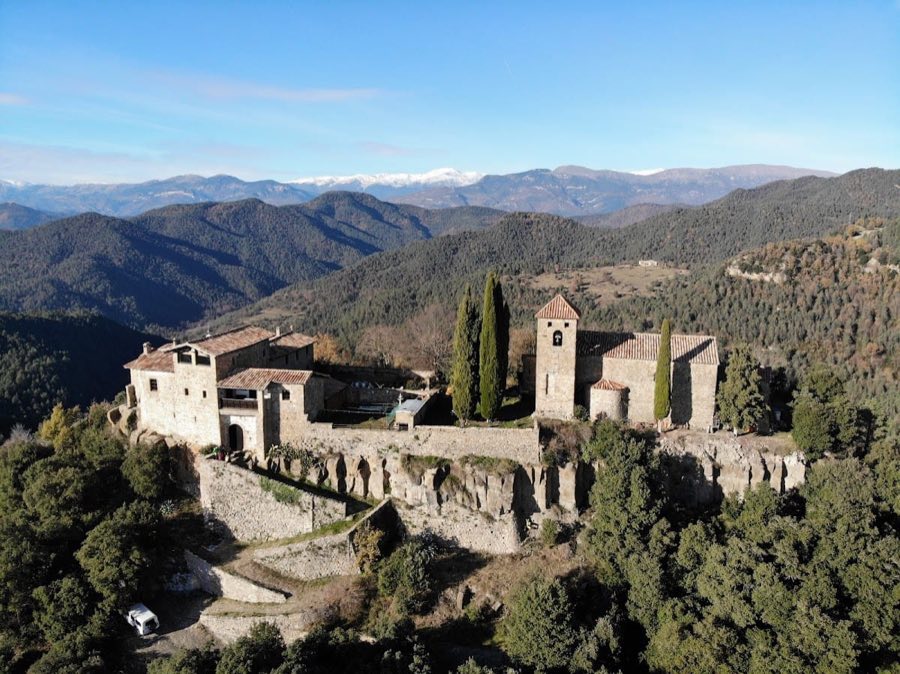
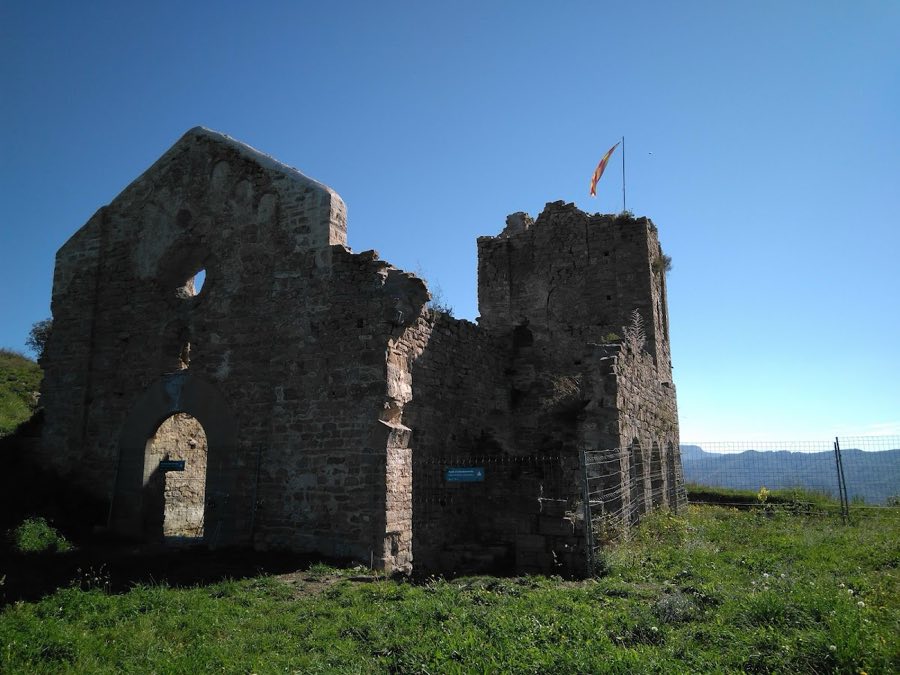
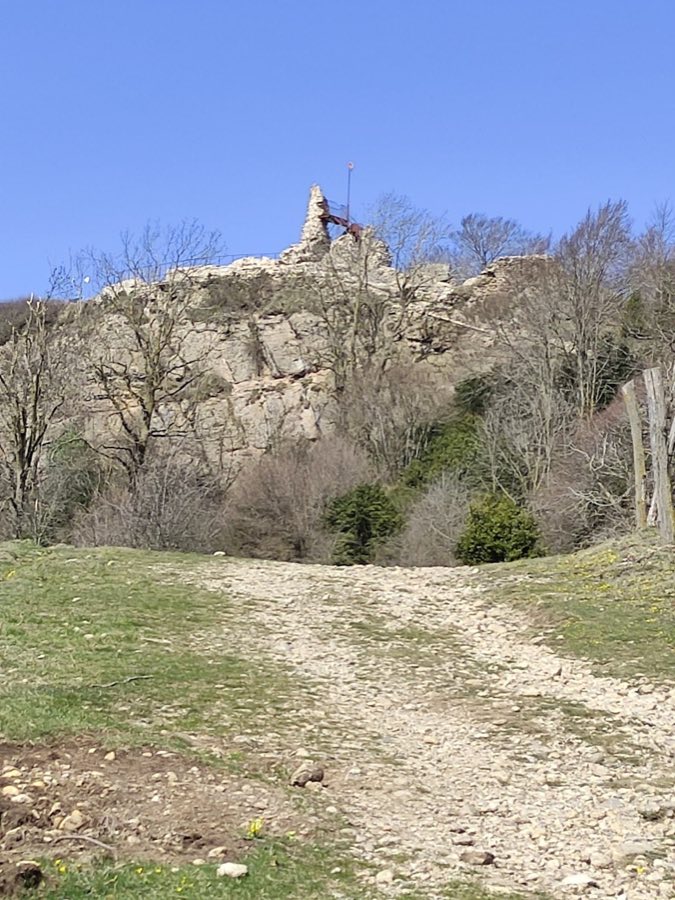
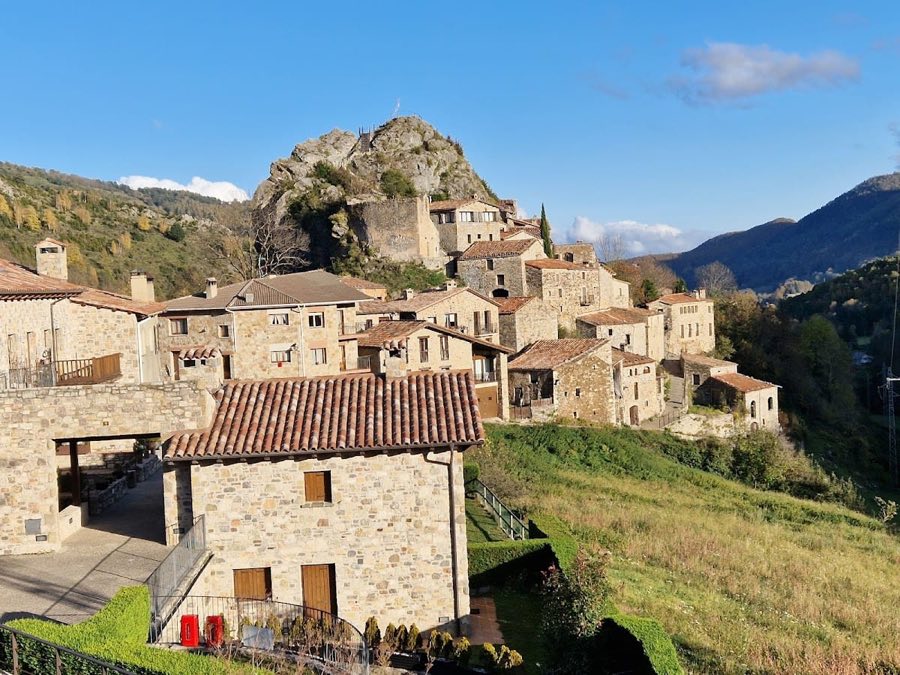
The castle crowns a hill west of the village of Santa María de Besora at an elevation of 1,023 metres, with the surviving vestiges forming a compact medieval ensemble. Today the site survives as ruins, with the remaining structural fabric made up chiefly of fragments of the castle’s enclosing walls and the adjacent Romanesque church. These ruined stretches mark the footprint of a medieval stronghold first documented in the early tenth century and later modified under successive lords and royal administrations.
The defensive structures are represented by portions of the castle walls that remain in situ. These wall fragments belong to the medieval fortification associated with the castro recorded in the ninth and tenth centuries. The preserved masonry stands as fragmentary evidence of the former enclosure and its defensive circuit; nineteenth‑century commentary remarked on the progressive ruin of the fortification and recorded that only residual sections of the walls survived into modern times.
The ecclesiastical component survives as the Romanesque parish church that occupied the upper part of the castle complex. This 11th‑century church served as the castle’s upper church and retains its apse and sections of the lateral body decorated with Lombard bands, a characteristic ornamental banding. The apse and those decorated bands remain in situ amid the broader ruin of the building, reflecting the church’s consecration in 898 and its subsequent incorporation into the endowment of San Juan de Ripoll. Observers in 1892 noted that while much of the complex had collapsed, the church and wall fragments continued to testify to the site’s long occupation.
No. 57894
No. 69369
No. 18836
No. 86977
Comments
Comments for Castell de Besora will require a verified account before posting.
We'll send a verification link before your first comment is published.