No. 84715
Castle of Lamia
Greece
CastleIntact5th century
No. 73921
Castle · Greece
No. 73921 · 38.531 N, 22.373 E
Quick summary
Castle of Salona is a castle in Greece with origins associated with the 14th century.
See all castles in GreeceThe Castle of Salona stands in the municipality of Delfi, Greece; its earliest defenses were erected by the ancient Greeks during the Classical and Hellenistic periods.
In antiquity the settlement of Amphissa was protected by substantial masonry using polygonal forms and regular ashlar techniques developed in Classical and Hellenistic times. In 338 BCE Philip II captured and destroyed the city, and the community was later rebuilt on the same site.
After the Fourth Crusade Latin rulers took control of the city. The barons Autremencourt were given the place and established the Frankish County of Salona, and the Franks erected a fortress upon the ruins of the ancient acropolis. Under the later centuries of Frankish rule the stronghold served as the county seat.
Following the 1311 conquest of the Duchy of Athens by the Catalan Company, the castle passed between different hands on several occasions, while remaining one of the main fortresses tied to the duchy. Ottoman forces captured the fortress in 1394. It was subsequently regained by the Byzantine principality known as the Despotate of Morea.
In 1403 control of the fortress changed again when it was ceded to the Knights Hospitaller in exchange for Corinth, and a 1404 account records a settlement in which Theodore transferred Salona, recently recovered from the Turks, for Corinth. The Knights Hospitaller held the castle only briefly, losing it definitively to Ottoman forces in 1410.
During the Greek Revolution the castle was taken on 10 April 1821 after a siege led by Panourgias; this was the first castle the Greek forces captured in that uprising. The fortification remained in use as a defensive site through the modern era and continued to serve military functions until the Second World War.
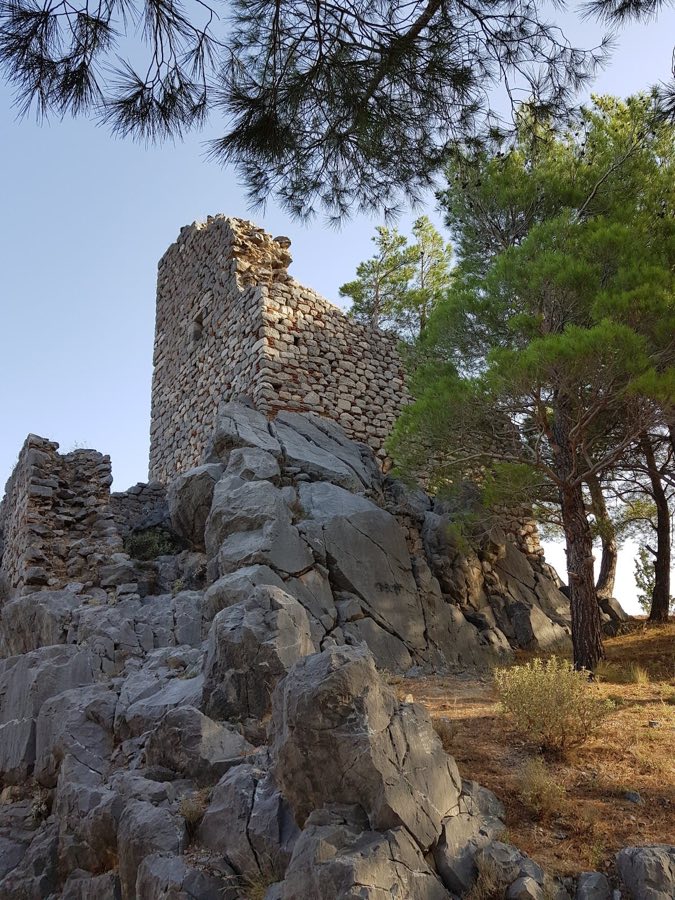
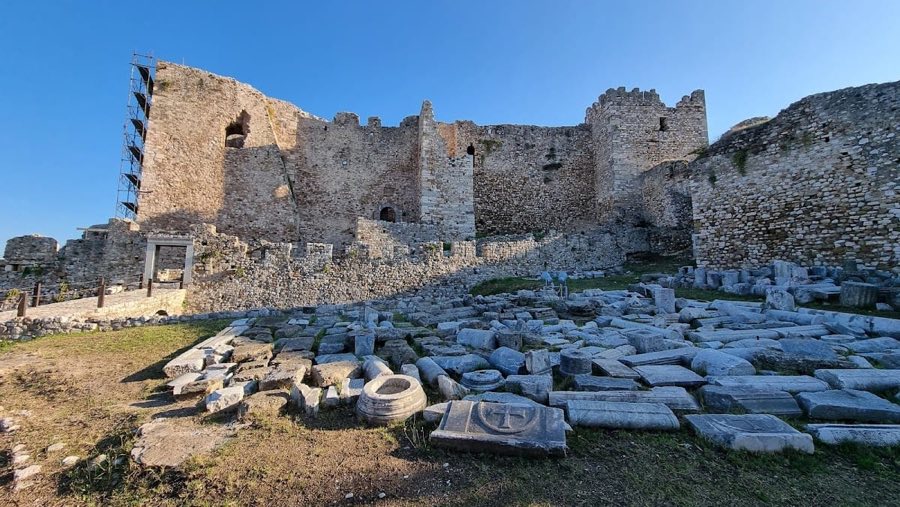
The site has an irregular plan that follows the shape of its hilltop. The defensive complex occupies two rocky platforms, a lower terrace to the southwest and a higher terrace to the northeast, where the acropolis or main keep sits. A transverse partition wall separates the keep from the rest of the enclosure; builders incorporated stone salvaged from older structures when erecting this divider, showing clear reuse of ancient material. The plan adapts to the slope and the surviving fabric records successive building phases.
Within the higher platform there are the foundations and rubble of several buildings and the remains of a circular tower. Local tradition links this elevated enclosure with the palace complex of the counts of Salona. These internal remains stand in fragmentary condition, the walls reduced to low courses and scattered masonry, but the circular tower’s footprint and partial walling remain visible in situ.
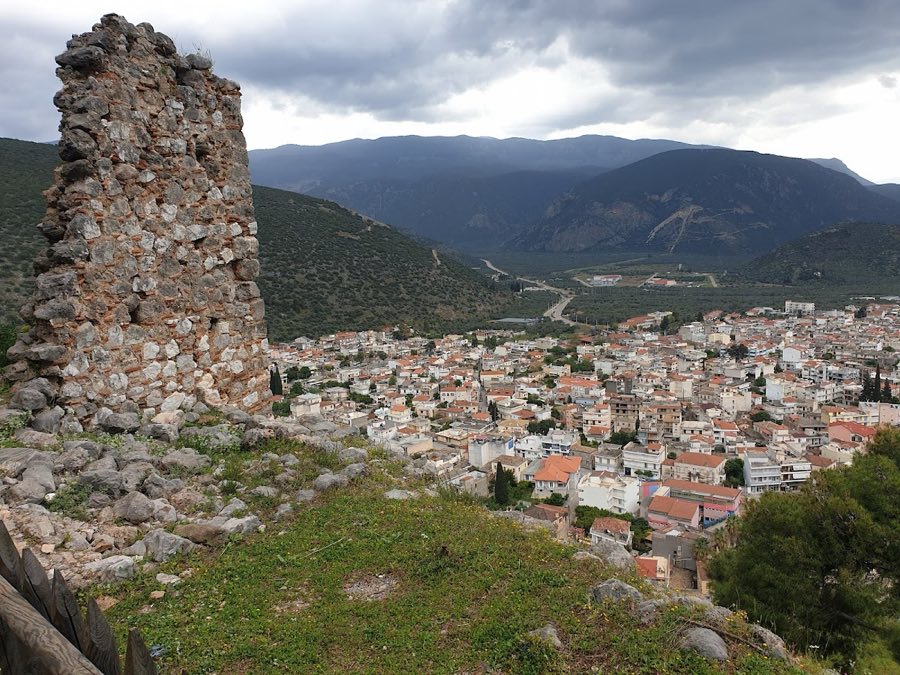
The principal gateway is situated on the western side of the fortress and is defended by a rectangular tower placed before the entrance. Sections of the older, Classical–Hellenistic fortification survive on the southwest and southeast flanks of the hill, identifiable by their large, squared ashlar blocks laid in regular courses. Later medieval repairs and additions are built with smaller stones and include tile fragments set in mortar, a construction practice that visibly contrasts with the earlier masonry.
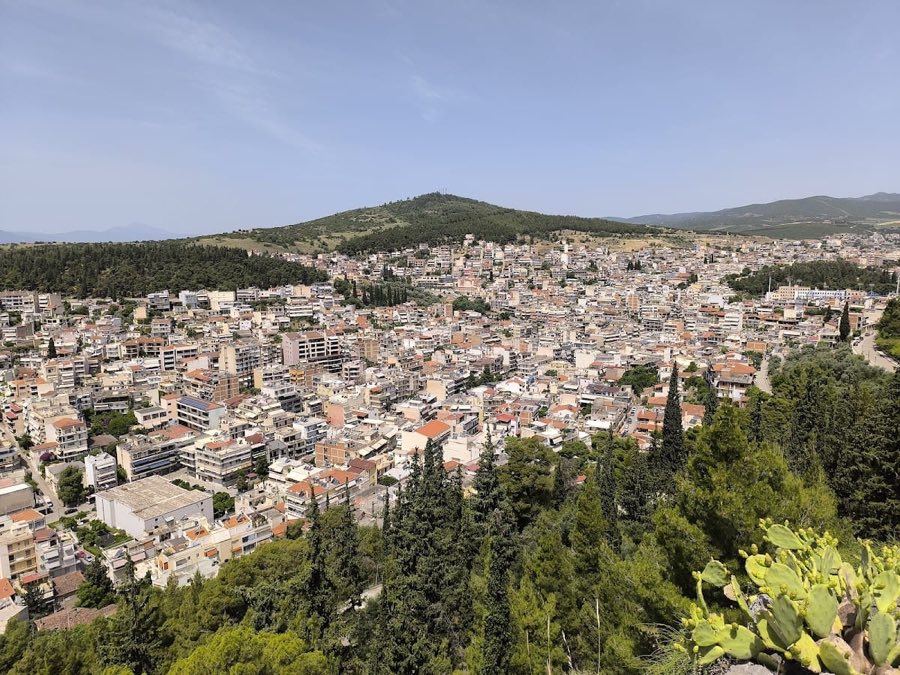
The castle occupies the hill called Elatos above the town, commanding views over the Krisaio Plain and the route between the Maliakos and Corinthian gulfs through the mountains of Central Greece; one source places the hill at roughly 180 meters above sea level northwest of Delphi. The broader enclosure stands in a ruined condition today, with its ancient and medieval fabric exposed and legible in the visible masonry and wall lines.
No. 84715
No. 74724
No. 55330
No. 87928
Comments
Comments for Castle of Salona will require a verified account before posting.
We'll send a verification link before your first comment is published.