No. 70649
Castle of Bragança
Portugal
CastleRestored10th century
No. 86329
Castle · Portugal
No. 86329 · 41.835 N, 7.000 W
Quick summary
Castle of Vinhais is a castle in Portugal with origins associated with the 13th century.
See all castles in PortugalThe Castle of Vinhais stands in the municipality of Vinhais, Portugal, near the historic border with the Kingdom of Castile. Its origins trace back to a Galician settlement, which during the Roman conquest of the Iberian Peninsula evolved into a fortified Galician-Roman town, or oppidum.
During the Middle Ages, the village of Vinhais was part of royal efforts to organize and centralize the Trás-os-Montes region by creating new towns. Early attempts to establish municipal status happened under King Sancho II in the mid-13th century, continuing with King Afonso III, who granted a formal charter in 1253. Following this, the castle’s walls and towers, including its characteristic keep integrated within the enclosure, were likely finished in the late 1200s during King Dinis’s rule.
The strategic position of Vinhais meant the castle was drawn into conflict between Portugal and Castile. Between 1369 and 1371, it was occupied by Castilian forces under King Ferdinand’s reign. During the 1383–1385 crisis, when Portugal faced a dynastic dispute, the local governor initially supported the claim of Beatriz but later pledged allegiance to King John I. However, in 1397 a rebellion led by João Afonso Pimentel temporarily restored Castilian control until 1403, when Portuguese authority was regained.
King Afonso V initiated renovations of the castle during his reign in the mid-15th century. By the early 1500s under King Manuel I, the castle was documented by Duarte de Armas in his “Book of Fortresses,” which noted its deteriorated state. Despite some additions in the 16th century, including a barbican and extra towers, parts of the walls were demolished as the town expanded.
The castle played a defensive role during the Portuguese Restoration War (1640–1668), resisting a notable Spanish assault in 1659 involving 1,700 soldiers. Minor repairs took place in the following centuries, but by the 20th century the fortress remained mostly in ruins. Designated a National Monument in 1947, the site survived a threatened demolition in the early 1960s thanks to the community’s efforts, leading to later conservation work.
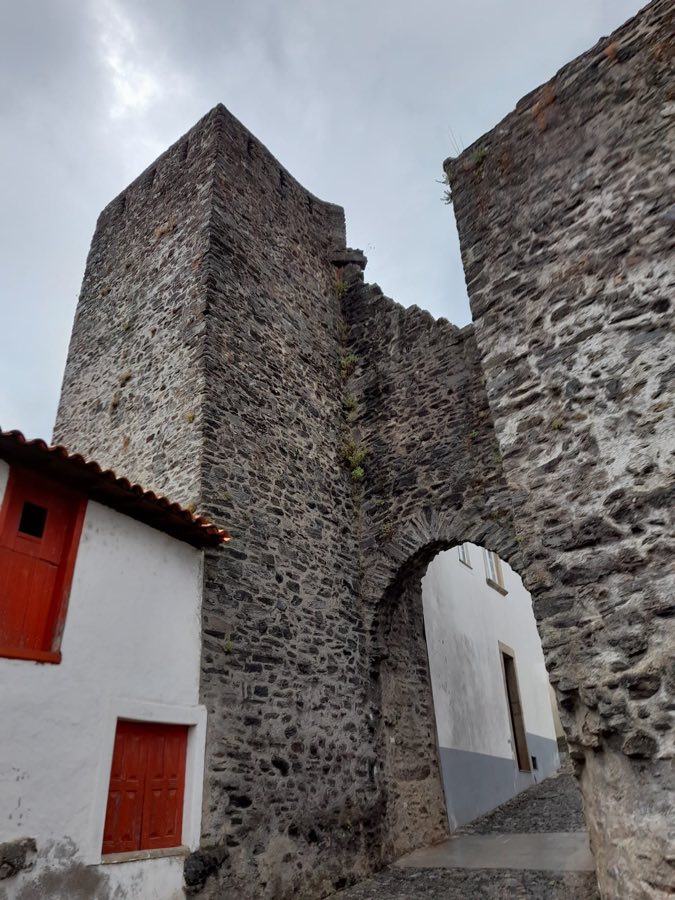
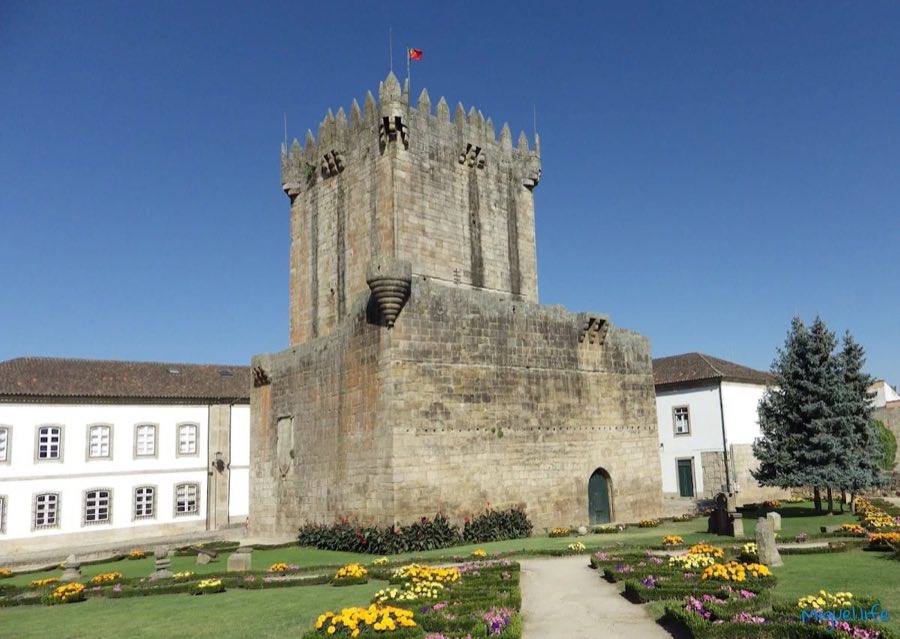
The Castle of Vinhais was originally enclosed by an irregular oval-shaped wall, about 150 meters in total length, reinforced by five or six towers. This defensive perimeter reflected the Gothic military architecture of the late 13th century and was built using local mountain stone, showing stylistic influences from nearby Castile and Galicia.
Key features include the main entrance, which was guarded by a large solid tower supported externally by two rectangular pillars. Flanking the main gate were two towers, enhancing its protection. A secondary gate provided access into the barbican, a fortified outer courtyard adjacent to the keep. Another smaller gate faced the valley, framed by two castellated turrets, or cubelos, adding further defense in that direction.
The castle’s walls were strengthened by three quadrangular turrets situated along the enclosure. One of these turrets near the western side contained a well, accessible through a winding staircase connected to the barbican. Inside the walls, the population housed residential buildings as well as the Church of Our Lady of the Assumption, underscoring the castle’s role as both a military and community center.
By the early 16th century, reports noted significant deterioration, especially in the inner face of the keep and some tower foundations. Over time, parts of the wall were demolished, and buildings were constructed against remaining fortifications as the town grew beyond its medieval boundaries.
Today, what remains of the Castle of Vinhais includes three gates, two towers, and stretches of the eastern curtain wall. Restoration efforts conducted during the 20th century helped preserve these elements, although some towers still face structural risks that threaten nearby pedestrians and vehicles. These surviving features continue to bear witness to the castle’s centuries-long history as a frontier stronghold.
No. 70649
No. 22940
No. 40571
No. 18298
Comments
Comments for Castle of Vinhais will require a verified account before posting.
We'll send a verification link before your first comment is published.