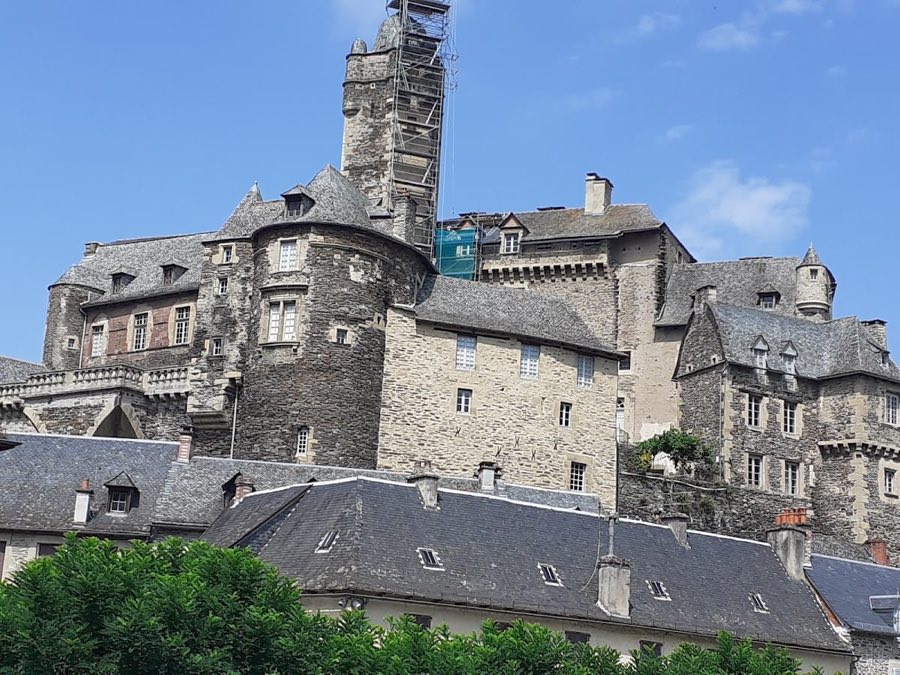
No. 65457
Château d'Estaing
France
ChâteauIntactFor events11th century
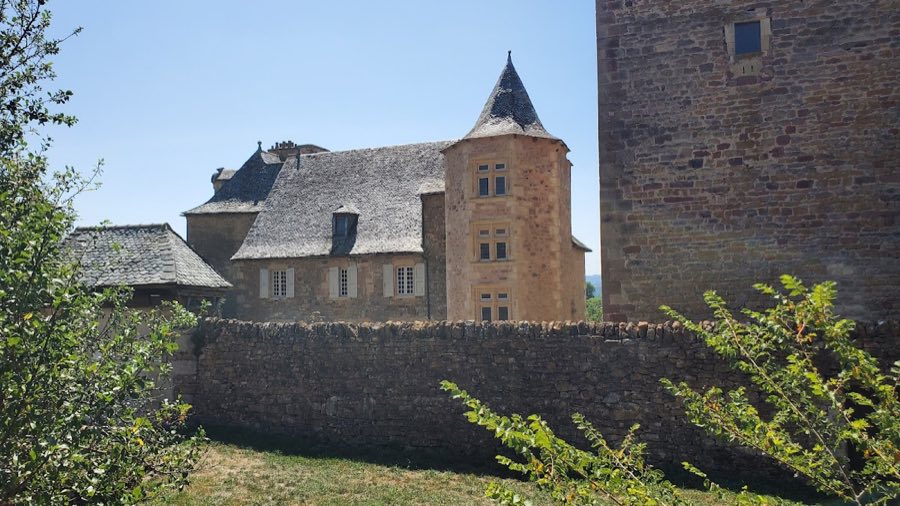
No. 64689
Château · France
No. 64689 · 44.451 N, 2.778 E
Quick summary
Château de Tholet is a château in France with origins associated with the 11th century.
See all castles in FranceChâteau de Tholet stands in Gabriac, France, and was established by medieval feudal lords of the de Solages family.
The site is recorded as existing in 1075, with major construction completed from the twelfth century onward. The estate remained in the hands of the de Solages for many generations. During the Hundred Years’ War Guillaume de Solages (about 1350–1418) fought against English forces and served as an adviser to the connétable of Armagnac. In the later Middle Ages the family’s leaders continued to hold local office; in the fifteenth and sixteenth centuries the barons of Tholet, François de Solages I, II and III, occupied the post of sénéchal of the county of Rodez and refashioned the earlier fortress into a residence in the Renaissance manner.
In 1626 a royal decree required dismantling of fortifications across northern Rouergue, but Antoine de Grolée Montbreton preserved Tholet through marriage to Marguerite de Solages, the heiress. The château suffered a severe assault in 1665 when it was completely pillaged, an event that probably destroyed part of the Renaissance living quarters. César de Grolée Viriville, born at Tholet, disposed of the property in 1686 to raise funds for repairs at another family seat, the château de la Baume.
Ownership changed further in the eighteenth century when Marc Antoine Dominique acquired Tholet in 1768; the estate was confiscated between 1792 and 1796. In 1794 a local farmer declined to carry out a district agent’s order to demolish towers and walls, and the demolition was not executed. During the nineteenth century Marc-Antoine-François de Gaujal owned the property and wrote an unpublished manuscript about Tholet; his grandson Ferdinand de Gaujal ceded the estate in 1886. The Souyri family held the château from 1886 until 2007. The entire building was officially listed as a protected monument on 9 July 1946. After 2007 conservation work began, three windows received restoration in 2014, and guided visits have been offered in July and August since 2013. Documentary material relating to the site is dispersed among departmental records in Aveyron, private Solages family archives in Tarn, papers connected with the château de Labaume in Lozère, and holdings of the Société des Arts & Lettres d’Aveyron in Rodez.
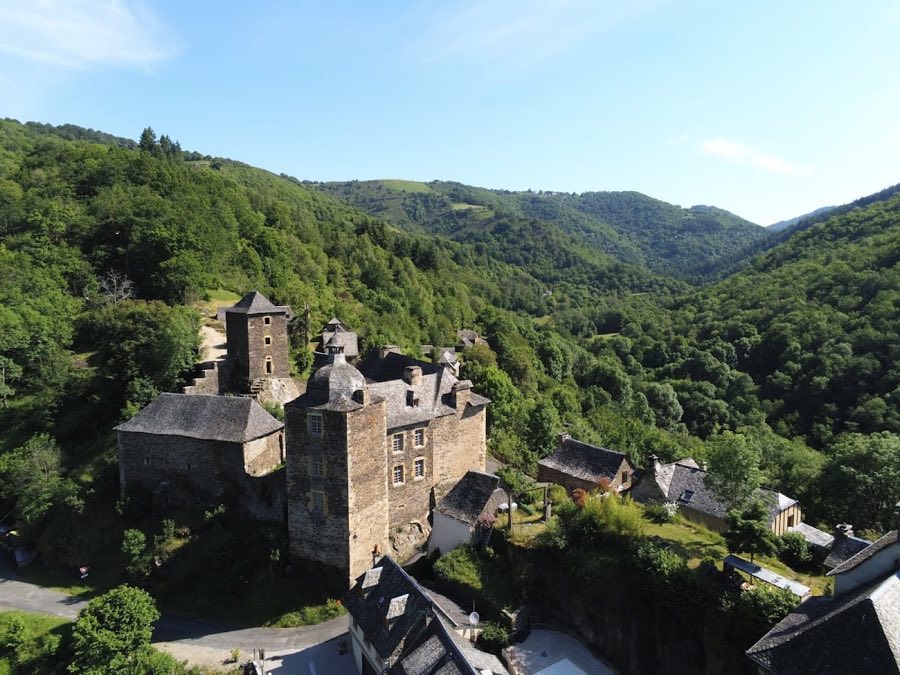
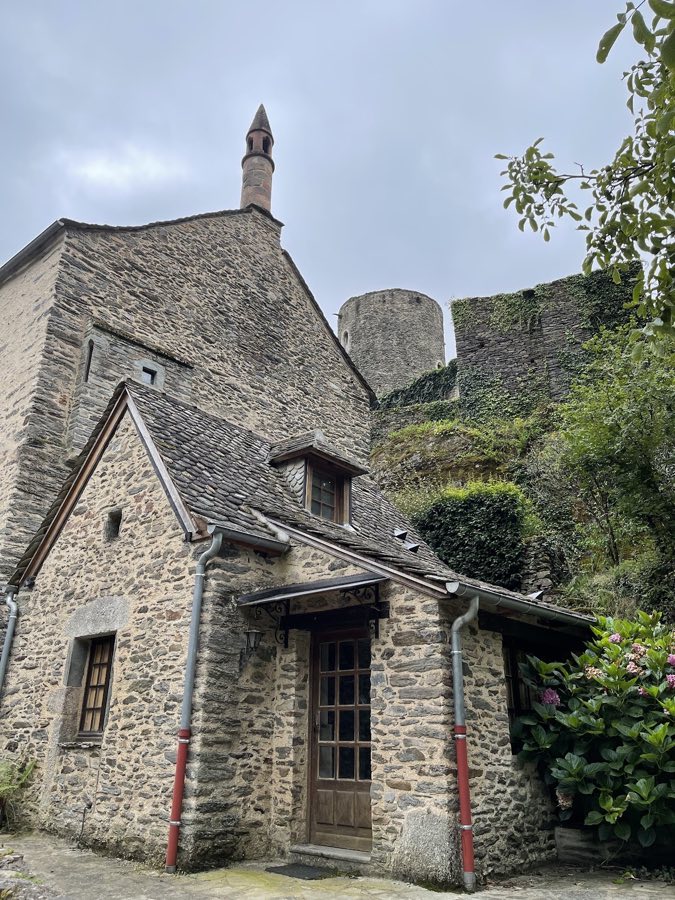
Tholet occupies a compact, regularly shaped defensive enclosure characteristic of a Rouergue stronghold. The curtain wall forms an almost rectangular perimeter and survives to a near-complete height, with a short stretch still capped by battlements. Several defensive towers punctuated the enclosing wall at regular intervals; a north‑east tower survives only as foundations, now concealed beneath a barn erected around 1780. The defensive ditch that once encircled the site remains visible to the west and was reinforced in 1386, while the ditch on the north side has been filled. Present access to the inner court passes through a small dovecote-style porch built in the nineteenth century, which replaced the medieval entrance during agricultural changes made by the first farmer at Tholet between 1748 and 1764.
A prominent fourteenth-century seigneurial tower, set a few metres north of the principal dwelling, rises to roughly twenty-four metres. Its base walls measure about three metres thick and it contains six storeys plus a parapet walkway. On the fourth level a large seigneurial hall retains a medieval fireplace, paired windows, and a soaring ribbed vault that reaches nearly nine metres above the ground. Movement within the tower was via a narrow spiral stair built into the wall thickness. The tower’s openings include cruciform, Templar‑style arrow slits that are ornamental in design. On the south face of this keep the historic entrance is suspended approximately ten metres above the ground and still shows the abutments and the beginning of a drawbridge beam; latrines that once projected from the north face were later removed. The top two storeys, which served as private apartments for the baron, have lost their original floors but remain reachable, with traces of cupboards, chimneys and latrines clearly readable and offering views toward the Aveyron valley and the Palanges forest massif.
The living quarters reflect later, Renaissance alterations and eighteenth‑century change. On the southeast side stands a large square tower dating from the Renaissance period, its walls bearing carved coats of arms for the de Solages, dated 1564, and for the de Montboissier family. An adjoining residence from the same period was substantially modified during the eighteenth century. Roof coverings across the complex use lauze, or stone slabs. Internal circulation shows a contrast of materials and dates: an older Renaissance tower contains the original wooden stair serving upper levels, while a broad stone spiral stair is contained within a hexagonal tower attached to the north face of the main house. That hexagonal tower preserves an entrance from the late fifteenth century whose design closely matches nearby ecclesiastical entrances, and its three mullioned windows were restored in 2014; the original wooden door is no longer present.
Agricultural reuse has left visible traces on the site. A barn erected around 1780 overlies the foundations of the former north‑east tower. The courtyard entry was altered in the nineteenth century when the dovecote porch was inserted. Where interventions and damage occurred at different times, restorations have focused on stabilizing historic openings and on conserving carved heraldry and the stone stair elements that mark the château’s long sequence from medieval fortress to Renaissance residence and later farmstead.
No. 65457
No. 75158
No. 41213
No. 66276
Comments
Comments for Château de Tholet will require a verified account before posting.
We'll send a verification link before your first comment is published.