No. 57857
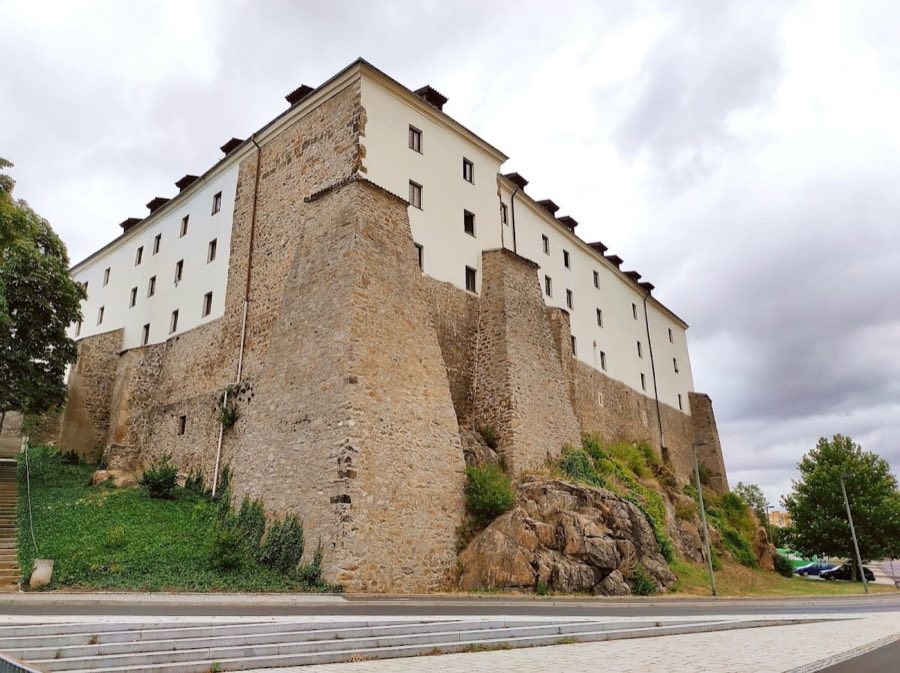
Kadaň Castle
Czechia
CastleRuin13th century
No. 77930
Castle · Czechia
No. 77930 · 50.445 N, 13.257 E
Quick summary
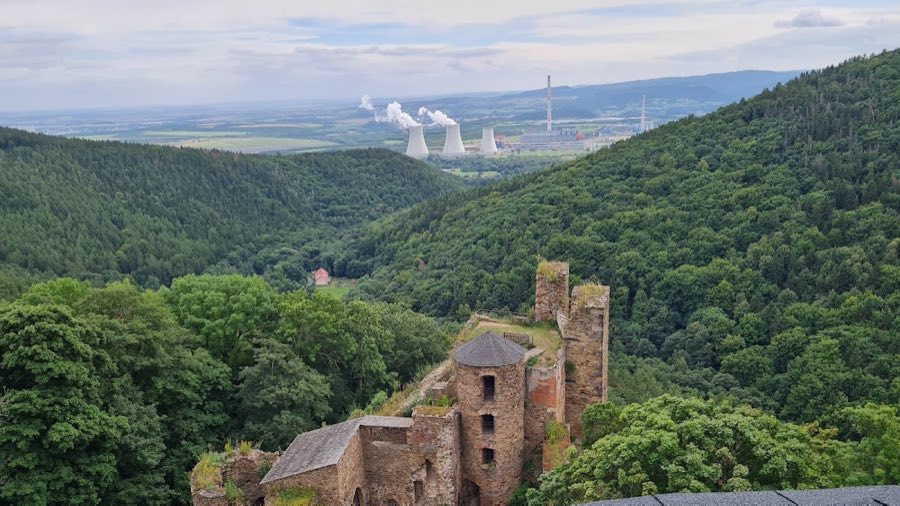
Hasištejn Castle is a castle in Czechia with origins associated with the 14th century.
See all castles in CzechiaHasištejn Castle is located near the village of Místo in the Czech Republic and was constructed by medieval Bohemian builders during the early 14th century. Its origins trace back to a time when the kingdom was establishing royal and noble strongholds to secure its borders and political interests in the Ore Mountains region.
The castle likely arose between the 1320s and 1330s, built either by local Šumburk lords or under the direction of King John of Bohemia, as supported by tree-ring dating of wooden elements from 1315 to 1331. It first appears in a legal document from 1348 known as the Majestas Carolina, where it is listed among royal castles that could be pledged for a limited period. Originally owned by the Šumburk family, the castle remained under their control until the early 15th century.
Political turmoil marked the castle’s history during the late medieval era. In 1392, King Wenceslaus IV seized the fortress, and following a siege in 1418, it was granted to Mikuláš Chudý of Lobkovic. The early 1500s heralded a period of cultural flourishing under Bohuslav Hasištejnský of Lobkovic, who expanded the castle and turned it into a notable center for Renaissance humanism in Bohemia. During this time, it housed one of the largest private libraries in the kingdom, reflecting Bohuslav’s scholarly interests. Upon his death in 1510, the estate was divided among heirs, leading to fragmented ownership.
The subsequent century saw rapid changes in possession. Parts of the castle reverted to Emperor Rudolf II before being sold to the Štampach family. After the Bohemian Revolt, royal confiscations led to abandonment, and by 1622 the castle was already described as desolate. Centuries later, in the late 1800s, Emanuel Karsch undertook partial restoration of the ruins and introduced a guesthouse at the site. The late 20th century brought renewed preservation efforts, including experimental masonry repairs carried out in 1998 and 1999. Notable figures associated with the castle include Bohuslav Hasištejnský and the poet Johann Wolfgang von Goethe, who visited the ruins in 1810.
Hasištejn Castle is set atop an oval plateau overlooking a steep valley carved by the Prunéřovský stream. Its fortifications are constructed primarily of local metamorphic rocks, chosen for strength and availability. The heart of the castle features a large bergfried—a type of fortified tower common in medieval Central Europe—measuring 8.7 meters across with remarkably thick walls up to 3.5 meters. Originally, this tower stood as a formidable, elevated stronghold accessed by ladder, with its main doorway positioned approximately 6.5 meters above ground within a sandstone portal. During 19th-century restoration work, a spiral oak staircase was added to enable easier access. The tower’s top level was also altered in the 16th century, featuring a thickened wall pierced by eight narrow openings called embrasures, designed for defensive purposes.
At the bergfried’s base, a cistern carved directly into the bedrock collected and stored water, an essential feature for the castle’s self-sufficiency. Opposite the main entrance gate lies the remains of a tower palace adjacent to a chapel constructed in the second quarter of the 14th century. This chapel, measuring roughly 8.2 by 3.9 meters inside, is divided into a nave and chancel by a pointed triumphal arch. Its cross-ribbed vault—a type of stone ceiling supported by intersecting ribs—rests on slender pyramid-shaped consoles, demonstrating an early example of Gothic architectural style in the region.
The original entry to the castle was situated on its northeastern side, with remnants of the eastern gate jamb still surviving. Defensive structures include reinforced curtain walls, especially along the northern and eastern sides, complemented by a barbican—an outer fortification protecting the gate—featuring a rounded tower which, while lacking gun openings, was defended via a wall-walk. After the siege of 1418, the castle was expanded with a spacious courtyard built above vaulted cellars and secured by a new square gate accessed over a protective neck ditch. Enhancements included strengthening the barbican wall with two delicate bastions on the west side.
Late Gothic modifications brought further fortifications: an outer wall incorporating a tower gate and a square battery tower were added, both opening inward towards the castle. This line of defense was further protected by an additional ditch. On a nearby hill, a forward bastion with a sharp, projecting tip was constructed to shield the castle from artillery attacks, reflecting advances in military technology.
Within the core area stand the ruins of two palaces. The older is a medieval Gothic palace featuring a stair tower and the adjacent chapel, while the younger late Gothic palace lies beneath the bergfried, with its eastern wall and decorative oriels (small projecting windows) preserved. The chapel’s western wall underwent 19th-century reconstruction that reused original Gothic elements, and historically it contained a gallery known as an emporium, which was supported by a pointed barrel vault. This gallery could be accessed via a staircase built into the chapel’s southern wall.
Archaeological investigations have uncovered fragments of medieval pottery but no ceramics dating definitively to the 13th century. Remains of two buildings in the castle’s outer bailey were also identified; these structures appear to have been destroyed by fire during the 1418 siege.
Today, visitors can see the impressive bergfried tower, now serving as a lookout, alongside the ruins of the two palaces and sections of the castle’s curtain walls. The late Gothic forward bastion stands accessible in front of the castle, while portions of the summit area are overgrown, preserving the site’s historic character as a medieval stronghold.
No. 57857
No. 47689

No. 95151
No. 96921
Comments
Comments for Hasištejn Castle will require a verified account before posting.
We'll send a verification link before your first comment is published.