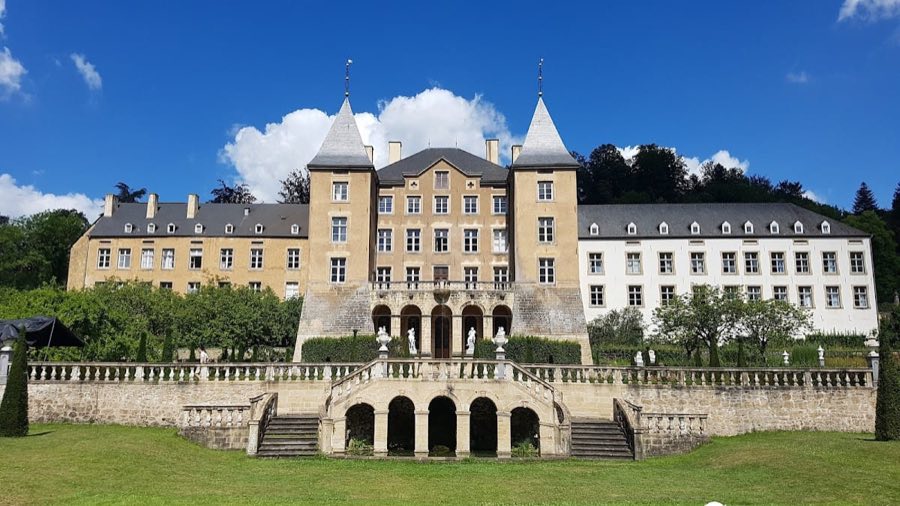
No. 12840
Ansembourg Castle
Luxembourg
CastleRestored12th century
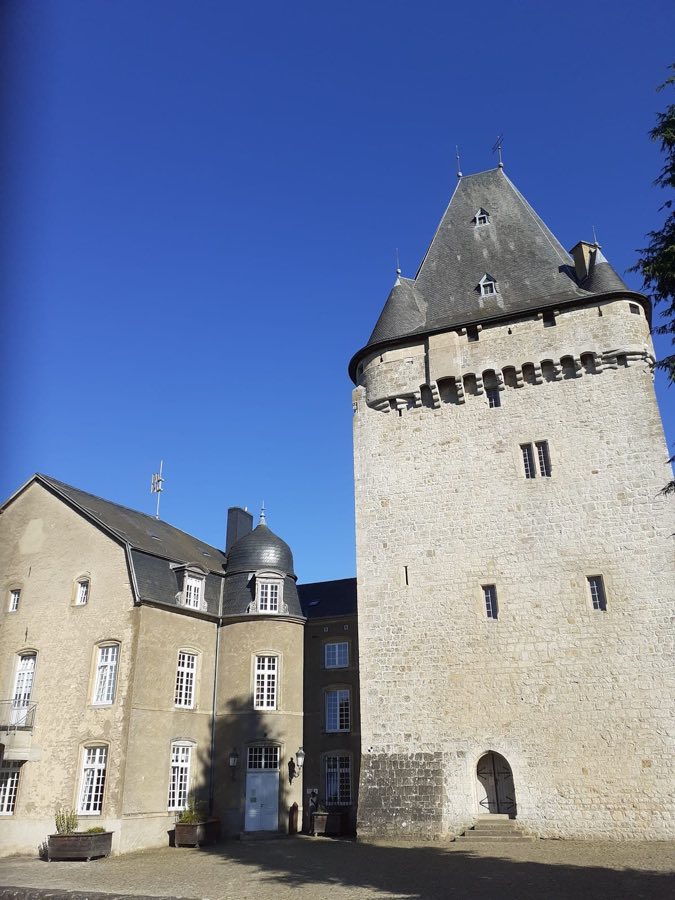
No. 19285
Castle · Luxembourg
No. 19285 · 49.712 N, 6.052 E
For events
Hollenfels Castle is marked as a château or castle venue lead. Capacity, indoor/outdoor spaces, catering rules, and accommodation options are published only after public verification.
Event types: Private events, Cultural gatherings, Filming and photography
Quick summary
Hollenfels Castle is a castle in Luxembourg with origins associated with the 11th century.
See all castles in LuxembourgHollenfels Castle is located in the municipality of Helperknapp, Luxembourg. This medieval stronghold was originally established by the local nobility during the early Middle Ages and has stood as a notable landmark in the region for nearly a thousand years.
The origins of the castle site date back to the 10th or 11th century, with its earliest recorded lord being Isenbald von Holfels in 1041. At that time, the site was known as Heimansiburud, a name documented from the 10th century onward. Throughout the 12th and 13th centuries, the castle remained an important noble seat, evidenced by frequent mentions in contemporary documents. During this period, the von Holfels family played a primary role in its early development.
In 1380, the central fortified tower of the castle, known as the donjon, was constructed by the von Holfels lineage. Over the following centuries, ownership and residence of the castle changed hands among several noble families, including the von Elter (also called Autel), de Raville, Greifenklau, von Ippenborn, von Thynner, and de Brouckhoven families. Each contributed to the castle’s evolving presence in the area.
The early 17th century marked a significant phase under Sebastian von Thynner, who acquired the castle and extended its functions beyond defense. Around 1600, he established an iron furnace nearby, supporting local industry. After 1629, he also founded a school in Hollenfels, aiming to provide education to the community’s most promising students.
The castle experienced military turmoil during the late 17th century amid the conflicts involving France and Spain. In 1681, forces under King Louis XIV of France occupied the fortress. Two years later, in 1683, Spanish troops briefly regained control before the French recaptured the site. The castle sustained damage from bombardments but was repaired afterward, reflecting its continued strategic importance.
By the end of the 17th century, ownership had passed to the de Brias family. They undertook significant expansion, including an enlargement of the castle complex in 1729. Much later, in 1921, a manor house in neo-Baroque style was added, marking a shift toward residential refinement.
From about 1820 until 1920, the castle was left vacant and fell into disrepair. Restoration efforts began in the 1920s under the direction of architect J. Schoenberg, commissioned by Charles van den Poll. These works revived much of the castle’s historical character.
During the Second World War, the castle served as a training center for the Nazi Bund Deutscher Mädel, the female branch of the Hitler Youth, between 1940 and 1945. Following the war, from 1945 to 1948, the buildings housed Russian prisoners of war and forced laborers. Since 1948, the castle has been owned by the state and repurposed for community uses. In 2022, it was formally listed as a national monument.
In 2024, archaeological excavations uncovered previously unknown medieval defensive structures, including a stone bridge and two watchtowers, shedding new light on the castle’s historical fortifications.
Perched upon a rocky ledge measuring approximately 60 by 35 meters and situated about 315 meters above sea level, Hollenfels Castle commands a steep rise nearly 80 meters above the Eisch river valley below. The site’s name, meaning “Hollow Rock,” refers to the natural caves and underground passages carved within the rock foundation.
The dominant surviving building is a five-story donjon constructed in 1380 by the von Holfels family. This tower measures 14 meters by 12.5 meters at its base and reaches an overall height of 39 meters. Its walls rise roughly 23 meters before being capped by a pitched roof structure about 16 meters tall. Inside, the donjon contains several vaulted rooms arranged vertically. The lowest level housed a kitchen with an oven; the floor above was a dining room for servants. Above these were a Gothic great hall used by the lords, a chapel that also functioned as a bedroom, and an armory.
Architectural highlights include thick stone walls pierced by windows and large, open fireplaces richly decorated with carved ornamentation. Medieval latrines are integrated into the upper levels, while the chapel area features an altar adorned with stained glass and sculptural details. A spiral staircase connects all floors, providing access throughout the tower.
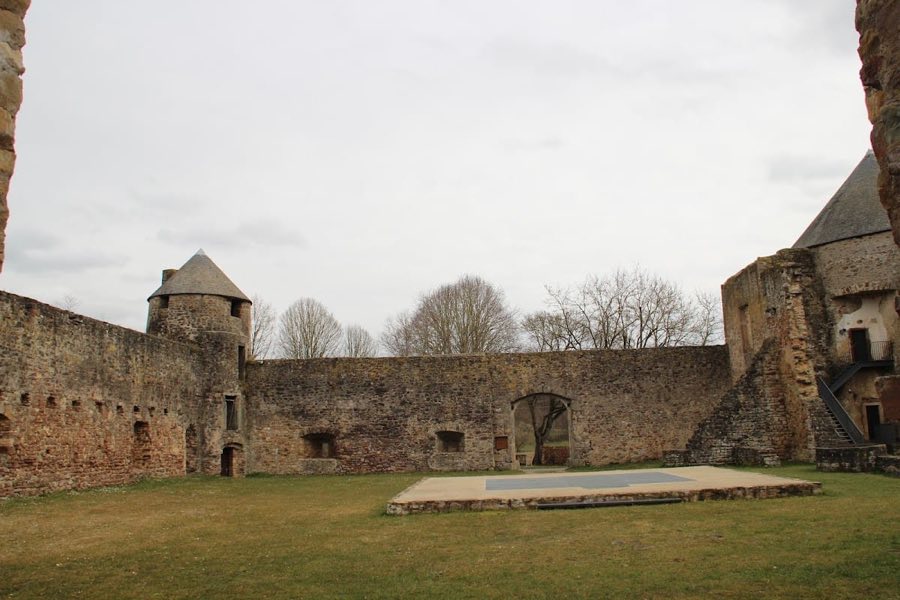
Beyond the donjon, the castle complex includes a corner tower, a curtain wall forming a defensive barrier, and residential structures. Entrance to the site is gained via a stone bridge spanning a defensive moat. This bridge was recently identified in the 2024 archaeological excavations alongside two previously unrecognized medieval defensive towers.
One remarkable feature is a secret underground passage linked to a well or fountain within the rock, traditionally used during sieges to supply food or to allow occupants to escape unnoticed. Visitors today can still explore parts of this tunnel.
The great hall inside the donjon boasts a large, functional fireplace that remains in use during special events. The castle now hosts exhibitions on local ecology and serves educational and community functions, with interiors adapted for these modern purposes.
Significant restoration was undertaken in the 20th century to prevent further deterioration, including the installation of a new roof on the donjon in 1973. Earlier renovations between 1920 and 1929 restored much of the castle’s historic fabric.
The recent archaeological work in 2024 brought to light substantial medieval fortifications never before recorded, including the stone bridge and two defensive towers, deepening understanding of the castle’s defensive design. These finds attest to the complex’s importance as a fortified noble residence through centuries of regional conflict.
No. 12840
No. 80930
No. 37381
No. 31328
Comments
Comments for Hollenfels Castle will require a verified account before posting.
We'll send a verification link before your first comment is published.