No. 46812
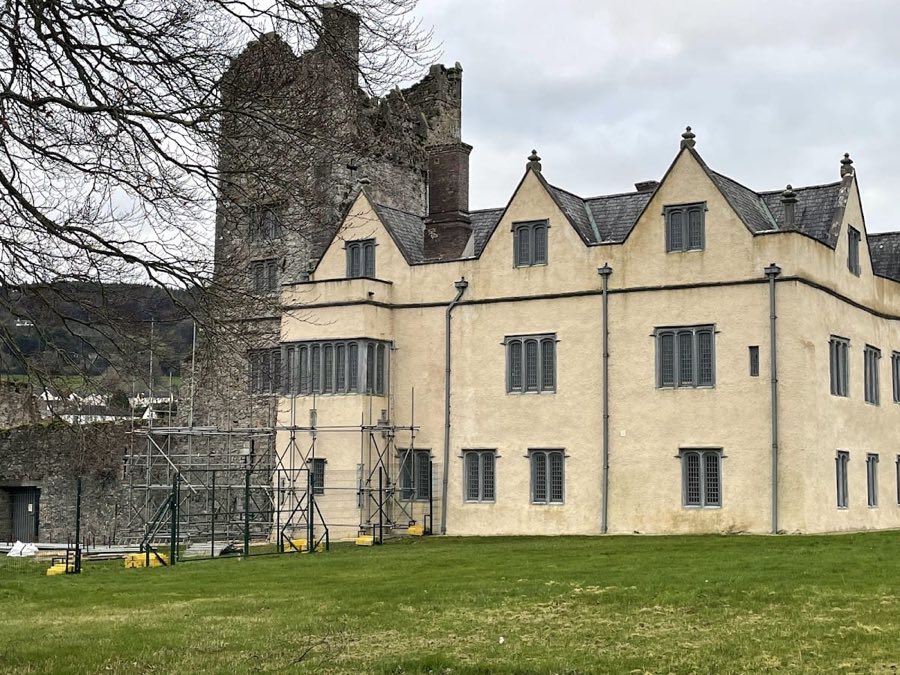
Ormonde Castle
Ireland
CastleIntact16th century
No. 27026
Tower house · Ireland
No. 27026 · 52.398 N, 7.521 W
For events
Kilcash Castle is marked as a château or castle venue lead. Capacity, indoor/outdoor spaces, catering rules, and accommodation options are published only after public verification.
Event types: Private events, Cultural gatherings, Filming and photography
Quick summary
Kilcash Castle is a tower house in Ireland with origins associated with the 5th century.
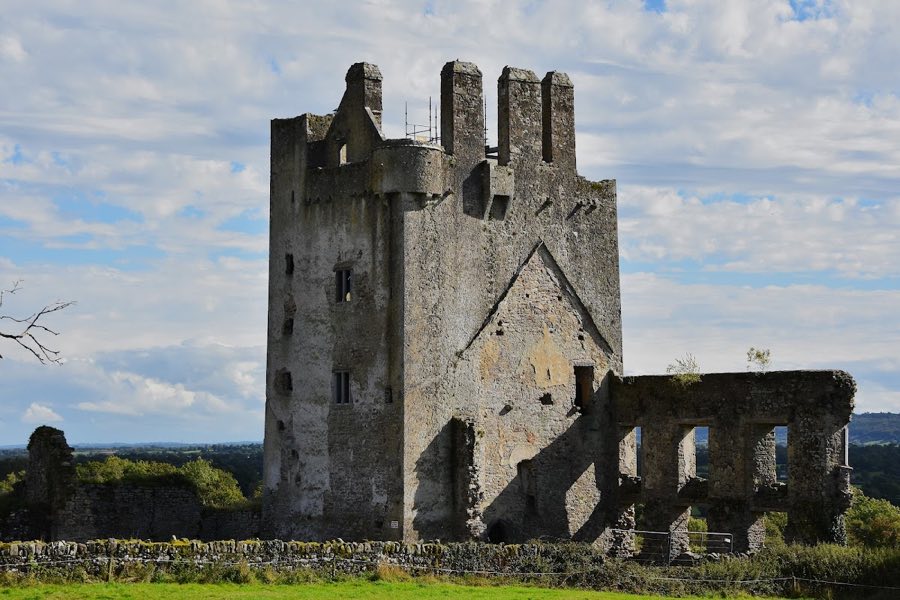
See all castles in IrelandThe ruins known as Kilcash Castle lie at Kilcash in County Tipperary, Ireland; the main tower was raised in the sixteenth century during a period of local Irish and Anglo-Irish lordship.
Ownership of the manor changed hands early in the modern era when control passed from the Wall family to the Butlers of Ormond. That transfer is dated in some accounts to the sixteenth century and is also associated with events following the Irish Confederate Wars of 1641–1652.
In 1614 Walter Butler, later the 11th Earl of Ormond, took up residence at Kilcash after inheriting the earldom from his uncle Thomas, the 10th Earl. Walter’s claim to the family estates was contested; he was detained in London from 1619 until 1625 while King James sought to force him to give up much of his property. Walter later conveyed the manor to his grandson, Colonel Richard Butler of Kilcash, who died in 1701.
The third Earl of Castlehaven, known for his role as a Confederate Catholic commander during the 1641–1652 wars, was a frequent visitor to Kilcash. His sister Lady Frances had married Richard of Kilcash, and Castlehaven wrote his memoirs at the site, later published under the title The Earl of Castlehaven’s Review.
During the nineteenth century the castle declined after portions of the Kilcash estate were sold around 1800, and the building fell into ruin. In the Irish Civil War the site was occupied by Anti-Treaty forces in an effort to delay Pro-Treaty troops moving toward Clonmel; those occupants were driven out by artillery fire commanded by Commandant-General John T. Prout, an action that caused further damage to the structure.
By the late twentieth century the castle had become dangerous. The property was sold to the Irish State in 1997 for £500 and came into state care. Extensive conservation work to stabilise and repair the ruined building began in 2011.
Kilcash is linked in local cultural memory to the song “Kilcash” (Irish, Cill Chaise), a lament that mourns the decay of the house and commemorates the death of Margaret Magennis, Viscountess Iveagh. The ballad has been attributed to Father John Lane, who died in 1776, but surviving manuscripts do not appear until the mid-nineteenth century and some verses contain details that postdate Lane’s lifetime.
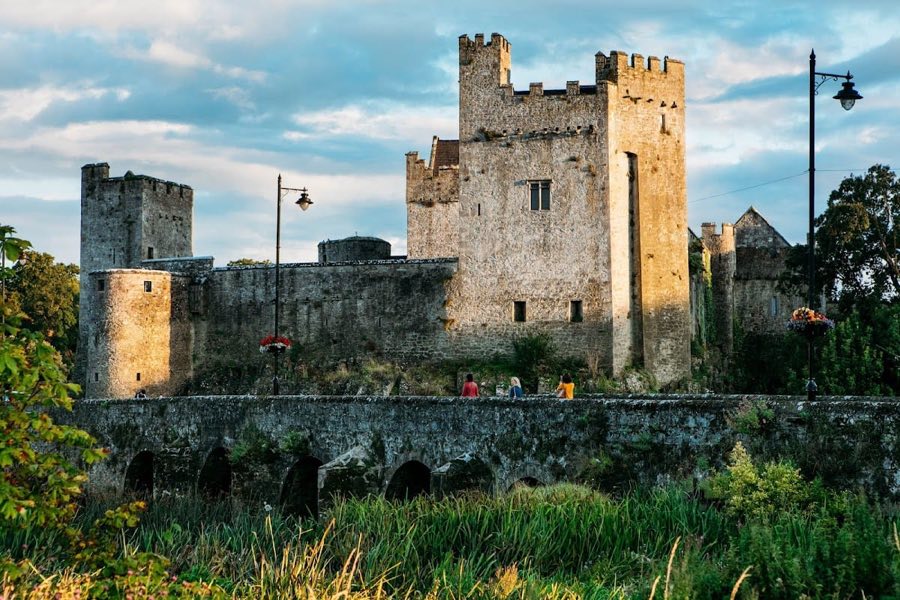
The site comprises the ruined castle and a medieval church with its graveyard close by, set west of Ballydine beside the N24 road. The principal surviving castle element is the defensive tower constructed in the 1500s, with a larger hall built on to it at a later period when defensive requirements lessened and larger windows became acceptable. The castle stands as a ruin; it was in a hazardous condition by the end of the twentieth century and has been subject to major conservation work since 2011 to prevent collapse.
Adjacent to the castle are the masonry remains of a medieval church formed by a chancel and a nave. A Romanesque doorway survives in the south wall of the church, and the fabric of the building received partial repair work in the 1980s. The church is accessible to the public following those repairs.
The churchyard contains a substantial Butler family mausoleum, described as nearly as large as the church itself. This burial chamber holds several named interments, among them Thomas Butler of Garryricken, Christopher Butler who served as Roman Catholic Archbishop of Cashel from 1673 until 1757, Margaret Magennis, Viscountess Iveagh (1673–1744), Walter Butler, the 16th Earl of Ormonde (died 1773), and John Butler, the 17th Earl of Ormonde (died 1795). Several eighteenth-century grave markers in the yard are carved with detailed crucifixion scenes. The arrangement of castle, church and graveyard in close proximity reflects the site’s long use as both a defensive residence and a local burial place.
No. 46812
No. 70227
No. 29603
No. 63259
Comments
Comments for Kilcash Castle will require a verified account before posting.
We'll send a verification link before your first comment is published.