No. 63350
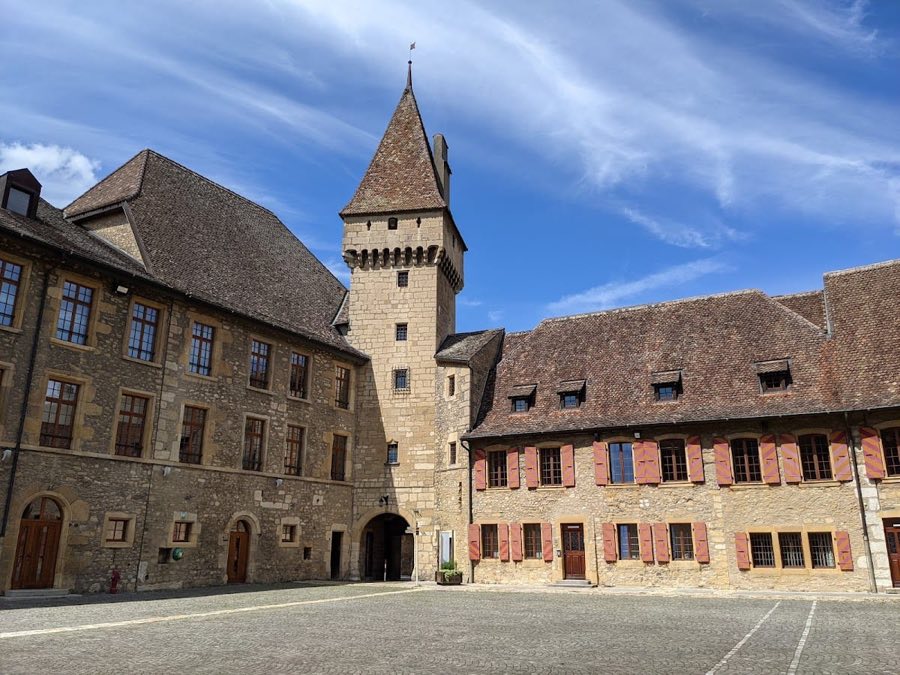
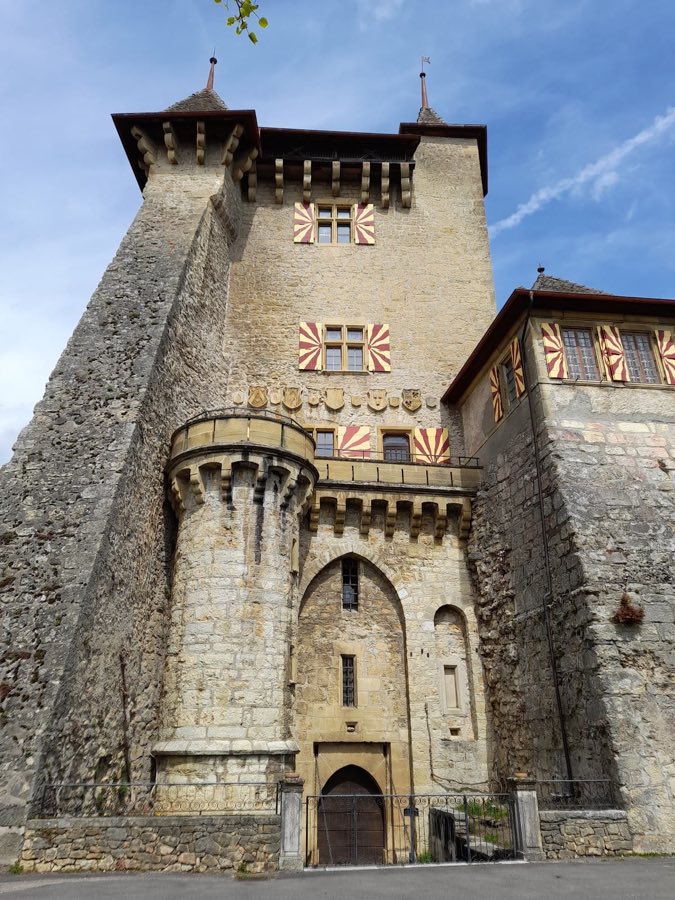
Colombier Castle
Switzerland
CastleRestoredFor events14th century
No. 56579
Château · Switzerland
No. 56579 · 46.967 N, 6.799 E
Quick summary
Le Château de Rochefort is a château in Switzerland with origins associated with the 12th century.
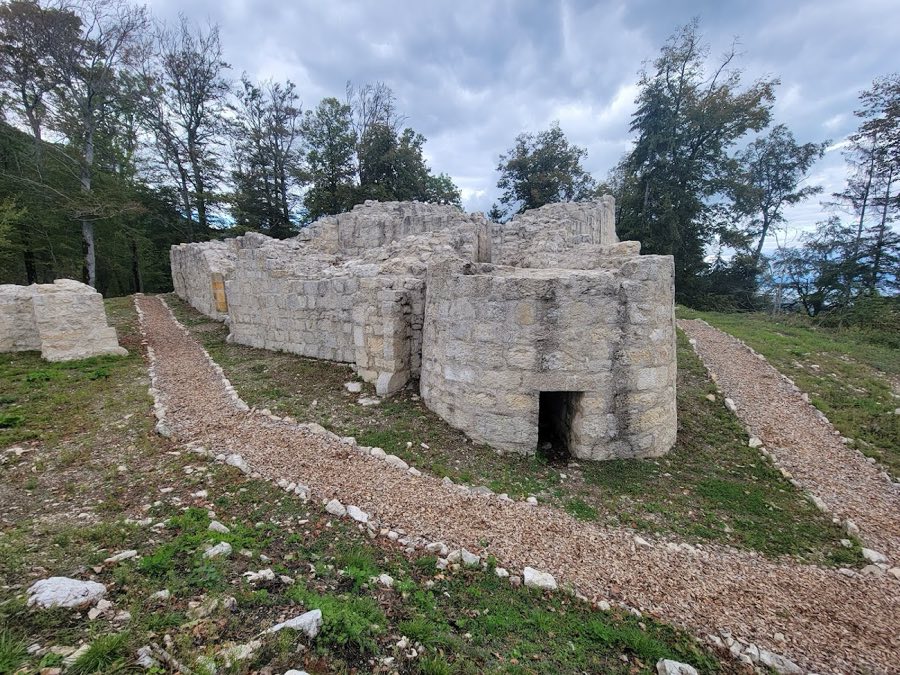
See all castles in SwitzerlandLe Château, the ruins of Rochefort castle, is located in the municipality of Rochefort, Switzerland. The surviving earthworks and stonework were erected and modified by medieval local lords who controlled the surrounding territory.
Human presence on the promontory long predates the medieval fortress. Finds now show activity in prehistory, including Bronze Age pottery and a probable protohistoric cup-marked stone, and Roman-period objects such as coins and roof tiles record occupation in Antiquity and the existence of a Roman-built structure at the site. The place-name, recorded without a definite article, indicates the location was occupied before the eleventh century, and the first written mention appears in 1294.
During the Middle Ages the fortification developed into a multilayered castle complex. A knight named Humbert of Rochefort is attested in 1180, and the original Rochefort lineage disappears from records in 1268. Before 1294 the counts of Neuchâtel acquired the stronghold. Between the eleventh and fourteenth centuries the castle was remade and enlarged on several occasions; researchers have reconstructed phases of modification in the thirteenth and fifteenth centuries and identify at least three separate episodes of rebuilding and extension during the medieval period.
In the fourteenth century Comte Louis of Neuchâtel (1301–1372) carried out significant works, notably constructing a new northern lodging. By his will he left the seigneury of Rochefort and Verrières to his illegitimate son Vauthier. That bequest triggered a long inheritance dispute that involved Louis’s daughter Isabelle and later Conrad. Archaeological finds dated mainly to the thirteenth and fourteenth centuries, including horseshoes, harness fittings, fragments of mail and crossbow bolts, indicate a sustained armed presence at the castle during that period. Numismatic material — flans and a die — point to an alleged counterfeiters’ workshop around 1300, with related objects found at the castle and in the nearby Cotencher cave.
Control of Rochefort shifted during the succession conflict, passing through the hands of Isabelle, Burgundian envoys and Conrad. Vauthier was deprived of his holdings in 1411 and executed in 1413. Under Conrad Rochefort became a comital administrative center, a mairie, but it remained poorly garrisoned and was only sporadically occupied until the middle of the fifteenth century. The castle ceased to serve as a primary defensive point in the fifteenth century, as regional defenses centered on the castle of Môtiers, and Rochefort fell into disuse before the end of that century; a document from 1512 records the site as a ruin.
Interest in the ruins persisted into modern times. Amateur excavations took place in 1861 and a first organized dig occurred in the summer of 1862 under the direction of pastor James Lardy, followed by further unsystematic work through the late nineteenth and twentieth centuries. Since 2017 the site has been part of a revalorization program; official archaeological campaigns were conducted in 2018 and 2019 by the regional heritage office in collaboration with the universities of Neuchâtel and Lausanne, consolidation and conservation of exposed structures took place, and additional fieldwork was planned for 2020 while study of the remains continues.
The ruins stand on the rounded summit of a rocky spur at 805 metres above sea level and command views over the Neuchâtel shoreline and the eastern approach to the Val-de-Travers. The castle plan rises from an oval summit surface and is organized around a primary gateway facing south. A walled forecourt protected the entrance and opened into the main courtyard. On entering the gate the seigneurial rear enclosure lies immediately to the right, and at the far side of the courtyard the principal dwelling and a chapel were sited. A feature identified as a viorbe is recorded at the castle’s northern tip, and an access path partly cut into the rock runs down the east face of the spur from north to south.
The principal rear enclosure occupies the highest point of the promontory and is roughly rectangular, about 14 by 17 metres. Its perimeter walls are around 1.2 metres thick and the interior was divided by partition walls into an aula (a large hall), a lordly courtyard and a square refuge tower. That tower measures approximately 6.5 metres on each side and its walls are thicker, close to 1.6 metres. Masonry visible today shows successive building phases, and these structural changes match documentary evidence that by the end of the fourteenth century the castle contained two separate residential blocks, one reserved for the seigneur and another for the castellan.
At the northern extremity a second residential block with thinner walls contained a chapel and the recorded viorbe, elements attributed to the counts’ lodging. The surrounding enceinte follows the irregularities of the rock, and parts of the wall facing have slipped downhill, which makes some sections hard to trace. The north-facing walls remain more prominent in the landscape and display later workmanship distinct from the southern works; standing masonry throughout the site reveals several construction episodes.
Before recent work only a few stones hinted at the presence of a tower, but clearances in 2018 and 2019 revealed extensive stretches of walling and clarified the layout of the fortifications. Exposed walls proved unstable after clearing, and consolidation and restorative measures were undertaken in 2018 to secure the elevations and conserve the revealed ruins while preserving their discovered appearance. Today the masonry and recovered structural elements remain in situ as stabilized ruins.
No. 63350
No. 64214
No. 38734
No. 59678
Comments
Comments for Le Château de Rochefort will require a verified account before posting.
We'll send a verification link before your first comment is published.