No. 58601
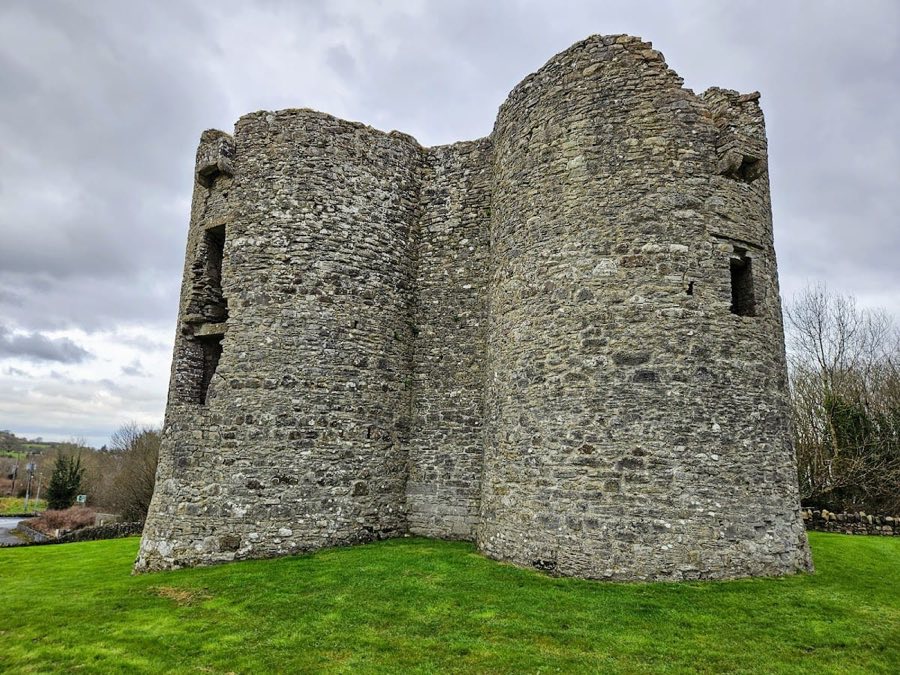
Ballinafad Castle
Ireland
CastleRuin16th century

No. 98939
No. 98939 · 53.989 N, 8.233 W
Quick summary
McDermott's Castle is a castle in Ireland with origins associated with the 10th century.
See all castles in IrelandMcDermott’s Castle is situated on Castle Island within Lough Key, in the municipality of Rockingham Demesne, County Roscommon, Ireland. It was established by the Gaelic Mac Diarmada clan, who ruled the Magh Luirg region from the 10th century onward and used the castle as their royal residence.
The site has a recorded history stretching back at least to the 12th century. In 1184, the castle was struck by lightning, resulting in a catastrophic fire that caused the deaths of many nobles, including members of the Mac Diarmada family. This event is noted in the medieval Irish chronicle, the Annals of Loch Cé. By the early 13th century, the strategic importance of the castle was highlighted during the Anglo-Norman expansion into Connacht. In 1235, Richard Mór de Burgh led a siege against the fortress, employing innovative tactics such as raft-mounted catapults and fire ships. Despite resistance, Cormac MacDermott, the reigning King of Moylurg, ultimately surrendered the stronghold.
After this period of occupation, the Mac Diarmada clan managed to regain control of the castle, which remained an important seat through the 15th century. A notable cultural tradition associated with the site stems from a local legend about the Hag of Lough Key, who is said to have resided at the castle for a year. According to this tale, her presence imposed a lasting obligation of hospitality upon the Mac Diarmada family, reflecting the intertwined relationship between the clan and their ancestral stronghold.
By the late 16th century, specifically in 1586, the Mac Diarmada lost possession of the castle and the island. Over the following centuries, the structure gradually fell into ruin. In the early 1800s, the renowned architect John Nash undertook a redevelopment, transforming the remnants into a summer house or folly. This structure incorporated some medieval elements but was largely an imaginative redesign meant for leisure rather than defense. Unfortunately, Nash’s summer house was destroyed by fire in the mid-20th century.
In recent times, archaeological investigations conducted in 2019 revealed multiple phases of construction and occupation on Castle Island. These discoveries included fortifications from various periods, medieval buildings dating to the 13th century, as well as high-status Gaelic objects such as silver pins and gaming pieces, shedding light on the castle’s prolonged significance. McDermott’s Castle has also appeared in modern media and remains privately owned in Ireland.
The archaeological footprint of McDermott’s Castle is concentrated on Castle Island, a small landmass covering approximately 0.23 hectares (0.57 acres) situated in the southeastern part of Lough Key. The island’s defenses are characterized by stone enclosure walls that surround its perimeter. The visible medieval enclosure wall likely dates to the Middle Ages, though excavations revealed an earlier, thicker wall beneath it, indicating a sequence of fortification efforts over time.
At the heart of the site stands a late medieval tower house, a multi-story stone structure that served as a fortified residence. This tower features narrow vertical openings known as arrow slits, designed for archery defense, as well as medieval windows located on its western face. The tower forms the central element of the surviving structure and represents the main defensive and domestic building still evident today.
In the early 19th century, John Nash added extensions to the medieval tower, including wings flanking it and a kitchen area on the eastern side. He also altered parts of the existing northern enclosure wall to create vantage points for viewing across the lake. Nash introduced new windows into the medieval tower, blending historical fabric with his contemporary design. A description from 1832 by Isaac Weld records two large rooms stacked vertically within the building, each measuring roughly 36 by 22 feet (11.0 by 6.7 meters) with thick walls around 2.3 meters wide. Whether these rooms refer completely to original medieval spaces or include Nash’s modifications is uncertain.
Archaeological work uncovered additional medieval buildings situated on the northern section of the island, positioned above earlier defensive structures. These buildings appear to have functioned independently of the main enclosure wall, possibly serving specialized roles related to the castle’s occupation.
Excavations also brought to light a collection of refined Gaelic artifacts. Among these were silver pins that suggest high-status personal adornment, along with gaming pieces implying leisure activities took place onsite. Large quantities of butchered animal bones—mainly cattle, boar, and sheep—were found, indicating food preparation consistent with the castle’s role as a noble residence. Together, these finds underscore the settlement’s importance as a center of power and domestic life in medieval Ireland.
No. 58601
No. 29615
No. 90030
No. 51487
Comments
Comments for McDermott's Castle will require a verified account before posting.
We'll send a verification link before your first comment is published.