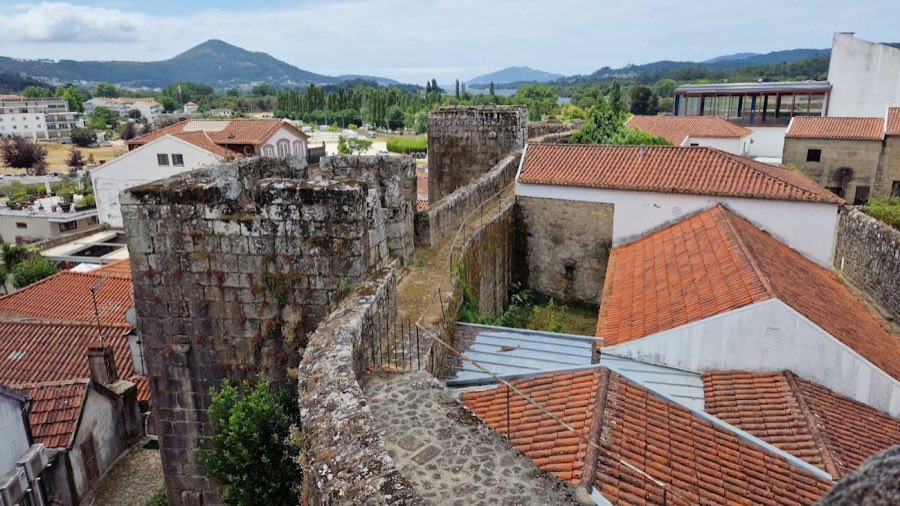
No. 86341
Castle of Vila Nova de Cerveira
Portugal
CastleRestoredFor rent13th century
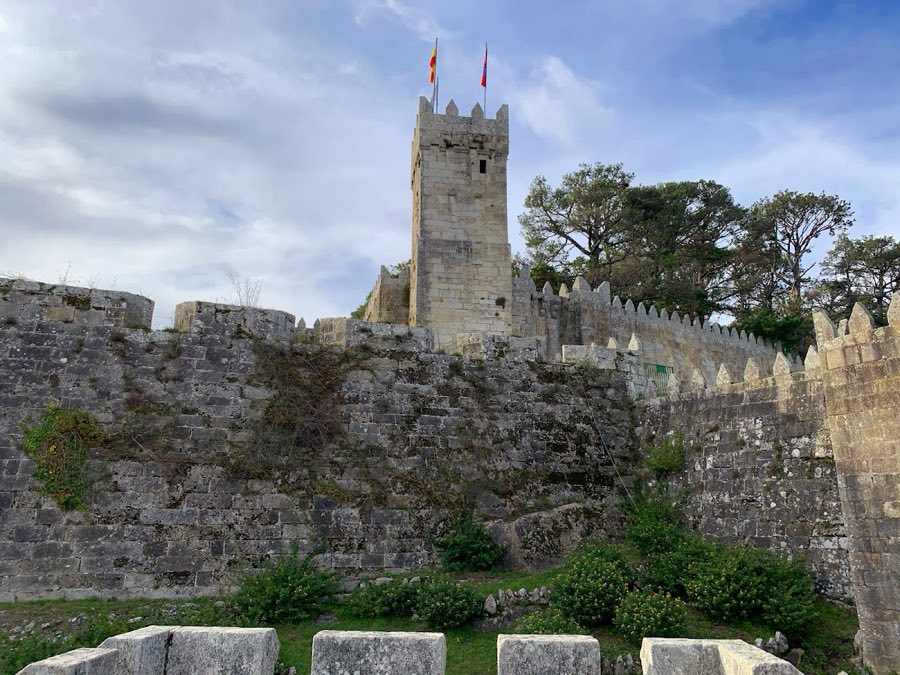
No. 70550
Castle · Spain
No. 70550 · 42.126 N, 8.850 W
Quick summary
Monterreal Castle, Baiona is a castle in Baiona, Spain with origins associated with the 2th century.
See all castles in SpainMonterreal Castle in Baiona, Spain occupies a site whose earliest fortification was a castro or castellum from the 2nd century BCE. Its recorded history resumes in 60 BCE when Julius Caesar conquered Baiona, and the place later bore traces of Roman, Visigothic and Muslim occupation.
Major building at the site began in the 12th century and continued over later centuries. In 1331 a Portuguese fleet led by Admiral Peñaza attacked the fortress and King Fernando I of Portugal established his residence there during that campaign. In 1474 Pedro Madruga erected a tower on nearby Monte Boi; vestiges of that structure survive. During the 15th and 16th centuries the settlement reached its greatest prosperity after Juan II of Castile granted Bayona and A Coruña the right to trade with foreign ports. The town and castle also suffered maritime violence, including attacks by pirates and actions involving Francis Drake. On 1 March 1493 the caravel La Pinta arrived and Martín Alonso Pinzón returned to the coasts of Bayona, an event described as making the town among the first places in Europe to learn of the discovery of the New World. The Catholic Monarchs granted a carta puebla that converted the fortress into a villa, permitting two hundred families to settle inside the walls with the same privileges as Bayona’s inhabitants.
The castle’s present form is the result of a 16th-century rebuilding carried out by Diego Sarmiento de Acuña, Count of Gondomar, who gave the fortress the name Monterreal in honour of the Catholic Monarchs. In the 20th century Ángel Bedriñana Meana purchased the property in 1924 and invested in its restoration and conservation; his heirs later sold the complex to the Spanish state. Since 1966 the site has been occupied by a Parador Nacional, the Parador del Conde de Gondomar.
The castle stands as a fortified enclosure showing two main construction phases, medieval and Renaissance, arranged around continuous walls that historically enclosed domestic space. The 16th-century rebuilding reshaped much of the visible silhouette while earlier medieval elements remain readable in the layout. A promenade runs around the rocky headland that frames the site and provides views where waves break against the adjacent rocks.
Three principal towers survive within the enclosure and are given distinct names. The Reloj tower remains as one of the principal vertical elements. The Tenaza tower is notable for its heptagonal plan, a rare geometric base that survives in situ. The Príncipe tower forms part of the same defended circuit. These towers date within the castle’s medieval and Renaissance phases and stand as preserved components of the defensive system.
The castle’s defensive entrance is the Gate of the Sun, which connects to a defensive ramp fitted with a lifting drawbridge. Three large towers anchor the fortress’s outer face and, together with the wall circuit, defended the space that was later used to settle two hundred families under the carta puebla. The ramp, gate and towers functioned as the principal controlled approaches to the interior and remain observable as part of the preserved fortification.
Remains of the tower built by Pedro Madruga in 1474 on Monte Boi are also conserved as vestiges linked to the late medieval phase of the site. In the twentieth century restoration and conservation work carried out after the 1924 purchase helped stabilise and preserve the standing fabric, and the complex is now maintained under state ownership.
No. 86341
No. 93935
No. 78922
No. 64574
Comments
Comments for Monterreal Castle, Baiona will require a verified account before posting.
We'll send a verification link before your first comment is published.