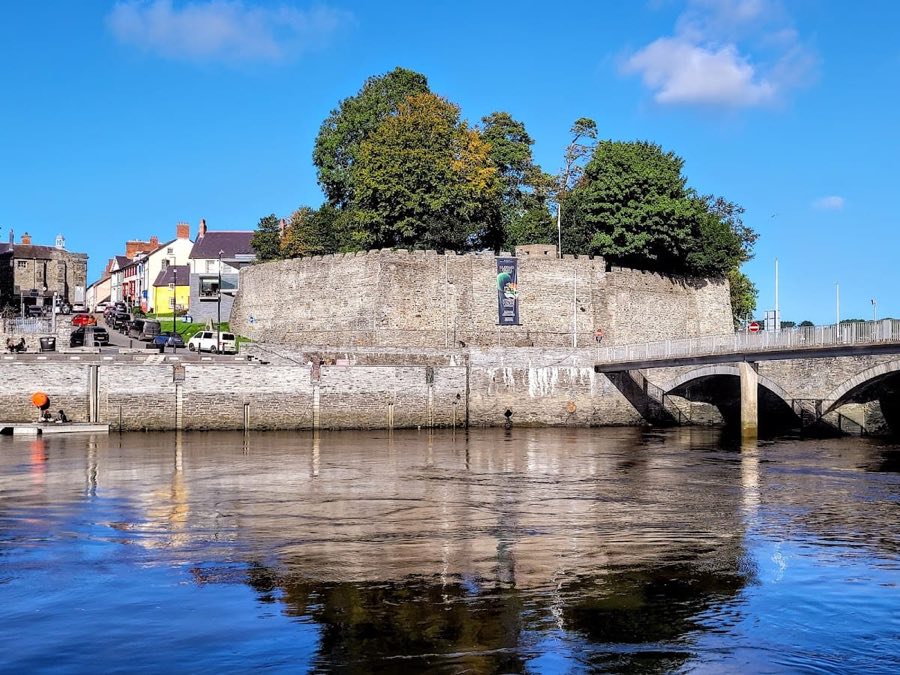
No. 43193
Cardigan Castle
United Kingdom
CastleRuin18th century
No. 71150
Castle · United Kingdom
No. 71150 · 52.039 N, 4.463 W
Quick summary
Newcastle Emlyn Castle is a castle in United Kingdom with origins associated with the 13th century.
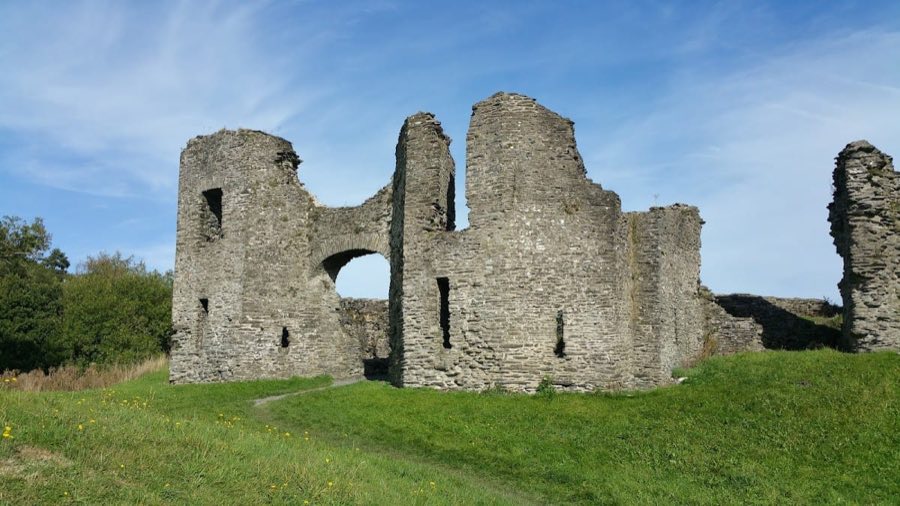
See all castles in United KingdomNewcastle Emlyn Castle stands in the town of Newcastle Emlyn, Wales. It was erected by the Welsh during the mid-13th century as a stronghold to defend the western boundaries of Deheubarth, a Welsh principality.
The castle’s origins trace back to around 1240 when Maredudd ap Rhys, a Welsh lord of Deheubarth, established it to guard against English threats. Its first recorded mention dates to 1257. In 1287, the castle gained military significance during Rhys ap Maredudd’s rebellion against English rule. English forces laid siege to Newcastle Emlyn, bringing with them a large siege engine transported from Dryslwyn Castle. After a sustained attack, the defenders surrendered, and Newcastle Emlyn fell into English hands.
Following its capture, the castle underwent expansion in the early 14th century, including the construction of a gatehouse. During this period, an English settlement developed to the west of the fortress, reflecting its new role under English control. Ownership passed through several notable individuals, such as Richard de la Bere, South Wales’s royal Justiciar, and later Gruffudd ap Nicolas. The castle eventually came under the possession of Rhys ap Thomas, Gruffudd’s grandson, who adapted it into a hunting retreat and established an extensive deer park nearby.
In 1403, during the uprising led by Owain Glyndŵr, Welsh rebels briefly recaptured Newcastle Emlyn. The castle was swiftly reclaimed by English forces, but reports from 1428 describe it as dilapidated, signaling a decline in its strategic importance. Centuries later, during the English Civil War in the mid-17th century, the castle was held by Parliamentarian troops before being taken by Royalists in 1644. By 1648, Parliamentarians regained control and deliberately damaged the fortress to prevent further use, after which it fell into ruin and was used as a source of building stone.
Archaeological work conducted in the 1980s has since studied the site’s remains, contributing valuable insights into its varied history.
Newcastle Emlyn Castle occupies a steep promontory encircled by a loop of the River Teifi, with access limited to the western approach. The inner ward has a roughly triangular shape, stretching approximately 45 meters from west to east and reaching about 25 meters in width at its broadest western point. Constructed primarily of stone, the fortress’s layout is compact and defensive in character.
The most prominent surviving structure is a twin-towered gatehouse situated on the west side of the inner ward. This gatehouse stands two stories high, featuring semi-octagonal towers on the exterior and rectangular shapes within. Below the northern tower lies a vaulted cellar that remains well preserved. An external staircase on the east wall near the same tower provided access to the upper floor and possibly led to a walkway along the curtain wall, although much of this wall no longer survives. Latrines were built on both sides of the gatehouse towers, indicating attention to hygiene and comfort for occupants. Around 1500, Sir Rhys ap Thomas improved the gatehouse’s habitability by adding large windows, marking its conversion for residential use.
South of the gatehouse lie the ruins of a 14th-century square tower and a 23-meter fragment of curtain wall defending the inner ward. Foundations on the south side reveal the outlines of a great hall, an adjoining kitchen, a chapel, and a larder, suggesting the presence of substantial domestic and religious buildings within the castle’s enclosed space. Another building’s remains are found just east of the gatehouse, though details of its function remain limited.
The castle’s outer bailey, estimated to be around 50 meters in length, was protected by earthworks topped with wooden defenses. Few traces of these remain visible today, reflecting their perishable construction. Additional earthwork fortifications from the 1640s remain as well, including a ravelin—a triangular outwork constructed during the Civil War to defend the landward side of the castle. These later modifications highlight the site’s continued military use in the early modern period before its abandonment.
No. 43193
No. 18995
No. 66050
No. 97377
Comments
Comments for Newcastle Emlyn Castle will require a verified account before posting.
We'll send a verification link before your first comment is published.