
No. 44548
Čakovec Castle
Croatia
CastleRestored13th century
No. 48831
Castle · Croatia
No. 48831 · 46.310 N, 16.334 E
Quick summary
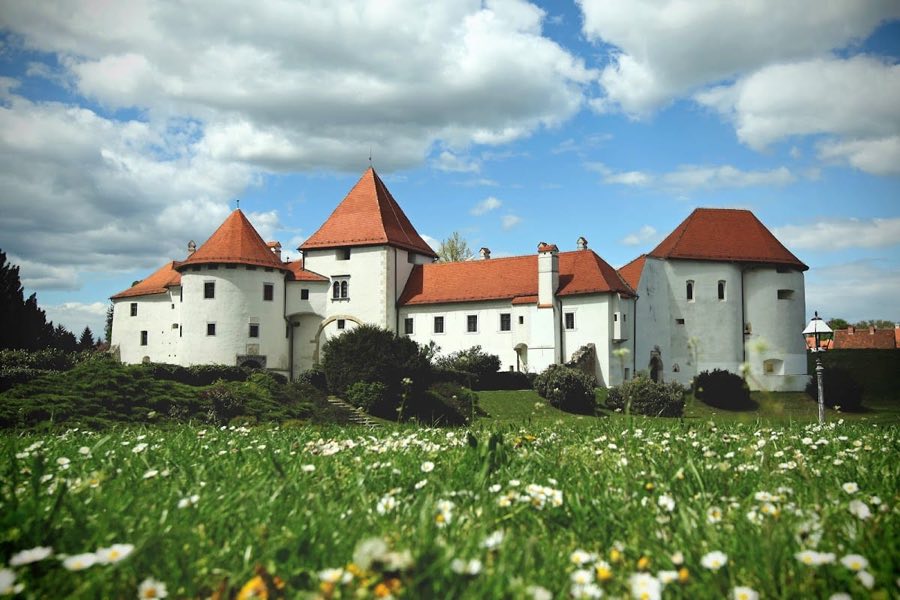
Old Town Varaždin is a castle in Croatia with origins associated with the 13th century.
See all castles in CroatiaOld Town of Varaždin, situated in the municipality of Varaždin, Croatia, was originally constructed by the medieval Hungarian kingdom. It first appears in historical records from 1181 under the name “castrum Garestin,” serving as the administrative center for Varaždin County during the reign of King Béla III of Hungary.
The fortress suffered destruction during the Mongol invasion of the mid-13th century, a catastrophic event that affected much of the region. In its aftermath, King Béla IV ordered its reconstruction as part of his wider efforts to restore and fortify the kingdom. Ownership of the fortress subsequently passed through prominent noble houses, including the Counts of Celje in the late 14th century. This family undertook significant Gothic-style rebuilding, establishing structures such as the main defensive tower and granary.
By the mid-15th century, the growing Ottoman threat influenced further military enhancements. The settlement was fortified with defensive earthworks and wooden palisades. In 1544, reflecting ongoing concerns over Ottoman advances, the fortress was reinforced with strong stone walls and bastions, strengthening its strategic position in the region.
At this time, under the supervision of Italian architect Domenico dell’Allio, the fortress was rebuilt in the Renaissance style, including the addition of a Renaissance palace. The design introduced elements such as two floors featuring arcades and corridors oriented toward inner courtyards. By the 16th century, Varaždin emerged as a key fortified stronghold, becoming the seat of the Vend captaincy responsible for three subordinate captaincies overseeing the wider area.
During the 17th and 18th centuries, the fortress gradually lost its military significance. The Erdődy family, who held ownership from the late 16th century until 1925, made Baroque-style alterations to parts of the castle. Among these changes was the installation of a statue honoring St. John of Nepomuk in front of the castle, reflecting religious dedications of the period.
In the 19th century, parts of the outer defenses and earthworks were removed to accommodate urban expansion, yet the core structure persisted. Since 1925, the castle has served as the home of the Varaždin City Museum, which has continuously undertaken research, maintenance, and restoration projects. The site is recognized as a protected cultural monument of national importance and was included on Croatia’s tentative list for UNESCO World Heritage status in 2005.
The fortress of Old Town Varaždin is located in the northwest section of Varaždin’s historic center, originally encircled by a wide moat once filled with water. Remnants of this moat can still be seen today, framing the layout of the site. The fortress itself reflects a layered architectural history, transitioning from a medieval stronghold to a Renaissance residence.
Key surviving elements date back to the gothic reconstruction under the Counts of Celje in the late 14th century, notably the main defensive tower and a granary. These stone structures illustrate the medieval phase of the fortress before its transformation in the 16th century.
The Renaissance period, initiated by Domenico dell’Allio beginning in 1544, introduced two-story constructions with arcades and corridors facing inward toward courtyards. The fortress’s military upgrades included large, rectangular bastions located at the corner points of the complex. The presence of ramparts from this era, enhanced by the Erdődy family in the late 1500s, attests to the emphasis on fortification during times of heightened Ottoman threat. Traces of these bastions remain visible along the line where the moat once ran.
Access to the fortress was originally controlled through a gatehouse known as the watchtower. This defensive entrance was approached over a double drawbridge spanning the water-filled moat, emphasizing its role in security and controlled access. Today, the watchtower houses the Varaždin City Museum, linking the site’s historical function with its contemporary use.
Many of the outer walls and earthworks that once enclosed the fortress were dismantled, particularly during the 19th century, to facilitate the growing town’s development. Despite these losses, the core castle remains well preserved. Baroque modifications introduced by the Erdődy family further altered parts of the castle, adding ornamental features and the statue of St. John of Nepomuk placed in the castle’s forecourt, lending a religious and artistic dimension to the site’s later history.
No. 44548
No. 22166
No. 18970
No. 26849
Comments
Comments for Old Town Varaždin will require a verified account before posting.
We'll send a verification link before your first comment is published.