No. 47070
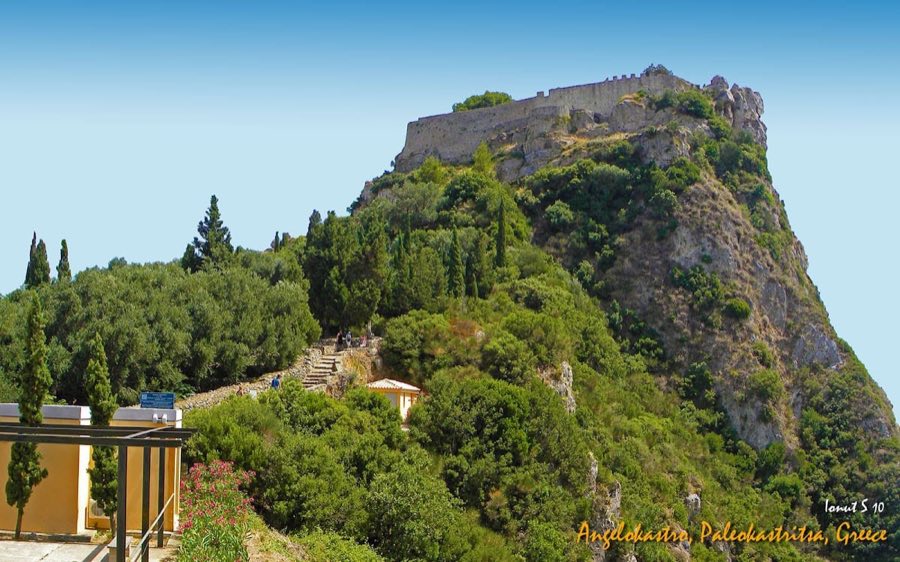
Angelokastro
Greece
CastleRuin16th century
No. 36134
Palace · Greece
No. 36134 · 39.626 N, 19.925 E
For events
Palace of St. Michael and St. George is marked as a château or castle venue lead. Capacity, indoor/outdoor spaces, catering rules, and accommodation options are published only after public verification.
Event types: Private events, Cultural gatherings, Filming and photography
Quick summary
Palace of St. Michael and St. George is a palace in Greece with origins associated with the 19th century.
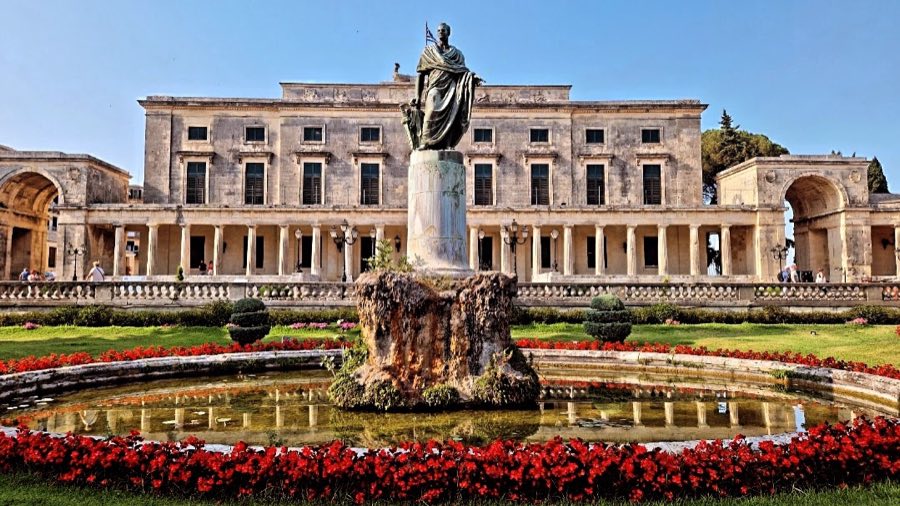
See all castles in GreeceThe Palace of St. Michael and St. George in Corfu, Greece, is a neoclassical palace erected by the British administration of the Ionian Islands in the early nineteenth century. Work began when the foundation stone was laid on St George’s Day 1819 and the building was finished in 1824. From the start it combined residential and governmental roles, serving as the home of the British Lord High Commissioner for the islands and housing the Ionian Senate and the order established for imperial honours. Its central location between Corfu’s old town and the Venetian-era fortress made it a focal point for the British protectorate and for later state ceremonies.
During the second half of the nineteenth century the palace entered a new phase after the Ionian Islands were united with the Kingdom of Greece in 1864. The building became part of the Greek royal estate and was used for official occasions when the king stayed nearby at the villa Mon Repos. This pattern of occasional royal use continued until 1967, with the palace hosting state events while remaining part of the island’s public architecture.
The palace experienced damage related to twentieth-century conflicts. It withstood Italian aerial bombardment during the 1923 Corfu Incident, an episode in which Italian forces shelled parts of Corfu. The building suffered more substantial harm during and after the Greek Civil War of 1946–1949, when it was adapted as temporary housing for refugees from Epirus, a use that put heavy strain on its interiors. A private trust organized by the British ambassador Sir Charles Peake supported a major interior restoration in 1954, and a further renovation was carried out in 1994 in preparation for a European Union summit of heads of state.
The palace is also the home of Corfu’s Museum of Asian Art. The museum’s origins date to 1927, when Gregorios Manos donated a large group of Chinese and Japanese objects; later gifts increased the collection to roughly fifteen thousand items. A 1973 donation of works from South and Southeast Asia by Nikolaos Hadjivasiliou led to the museum’s renaming as the Museum of Asian Art, and an important 1980 gift by Harilaos Hiotakis added further porcelain, bronze and ivory pieces. Today the palace continues to accommodate the island’s Asian art collection within its historic interior.
The palace presents a balanced, three-storey neoclassical block completed in 1824, built mainly from limestone imported from Malta and erected with the labour of Maltese workmen. The principal façade features two triumphal arches, each dedicated to one of the palace’s patron saints, flanked by columns and two named gateways — the Gate of St Michael and the Gate of St George. Behind those arches smaller buildings sit in mirror-image pairs beside the main block, creating a formal, symmetrical complex approached by a wide exterior staircase.
That grand stair leads up to a central rotunda, a round covered hall that opens into the palace’s principal ceremonial rooms. The rotunda gives access to the Throne Room, which contains a throne, and to the state dining room; the palace also contains separate dining and ball rooms. On the first floor sits the former chamber of the Ionian Parliament, preserved as part of the building’s sequence of public and representational spaces. A glass dome in the centre admits daylight to the main internal circulation, and interior finishes emphasize marble and bronze.
Sculpture and painted decoration form a notable layer of the palace fabric. Work by Maltese sculptors Vincenzo and Ferdinando Dimech appears alongside sculpture by the Corfiot artist Pavlos Prosalentis. Along the horizontal decorative band at the top of the main façade, carved figures represent the seven Ionian Islands, with a central island shown holding a horn that was interpreted as an English emblem. Frescoes and other sculptural elements enrich the primary rooms.
The palace sits within gardens to its side and rear that look out toward the sea through older Venetian fortifications and turrets. These grounds contain old Venetian stone water features described as aquariums, planted exotic trees and flowers, and they slope down toward local sea baths at the foot of the fortifications. A wrought-iron aerial staircase set into the garden descends to the water; this iron stairway, now closed to visitors, was once used by members of the Greek royal family as a direct route to the baths. The former royal grounds are now known as the Garden of the People. Parts of the complex have been repaired and restored at different times, and the palace remains in use as the home of the Museum of Asian Art while also forming a route through the city fabric.
No. 47070
No. 59099
No. 28659
No. 69543
Comments
Comments for Palace of St. Michael and St. George will require a verified account before posting.
We'll send a verification link before your first comment is published.