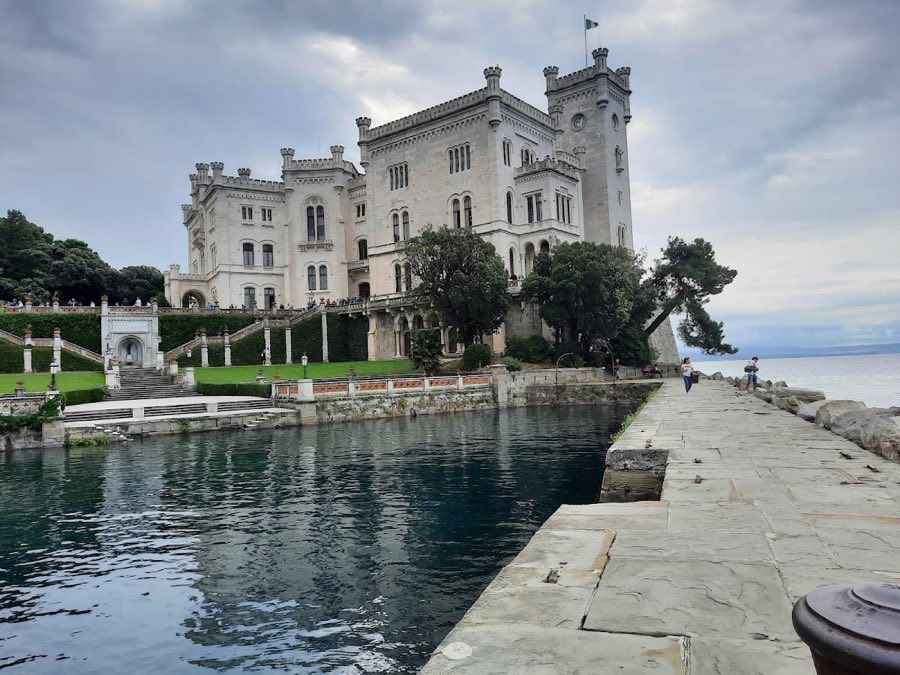
No. 30429
Miramare Castle
Italy
CastleIntactFor events19th century
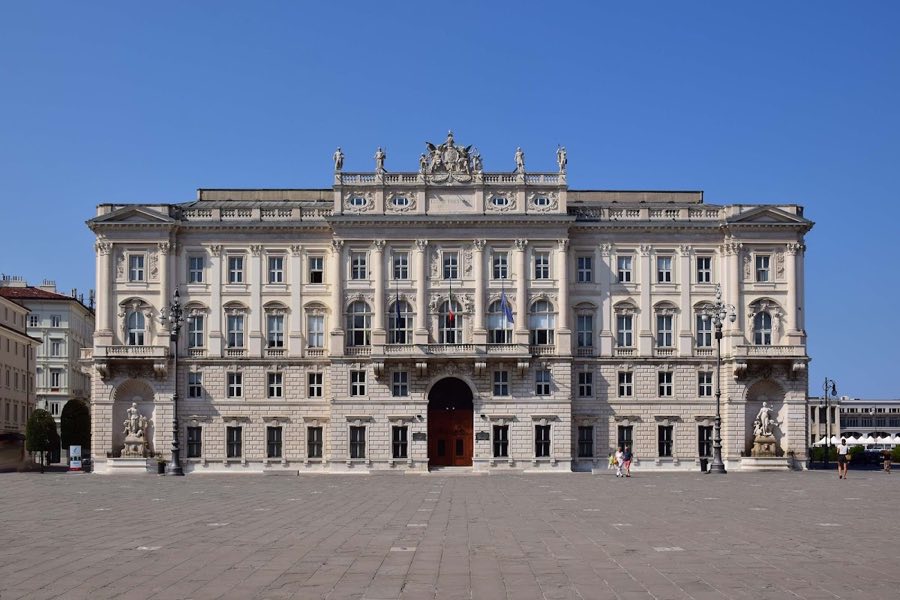
No. 76129
Palace · Italy
No. 76129 · 45.650 N, 13.767 E
Quick summary
Palazzo del Lloyd Triestino is a palace in Italy with origins associated with the 19th century.
See all castles in ItalyPalazzo del Lloyd Triestino in Trieste, Italy, is a four-storey Renaissance-style palace erected for the Lloyd Triestino shipping company in the late 19th century. The company, founded in 1833, commissioned a purpose-built headquarters that reflected its commercial role in the port city; construction took place between 1880 and 1883 and the building later became an important administrative seat for the region.
During the company’s early decades its offices occupied Piazza Tommaseo and then Piazza della Borsa. After seeking larger premises from 1878, the firm acquired the plot of the fish market in 1880 to erect a new palace. A competition did not meet the company’s brief, and a senior building consultant was appointed to carry the project forward. The foundation stone was placed on 6 December 1880 and the new headquarters was completed in 1883. Because the land at the site consisted of soft, reclaimed ground, the designer adopted broad, shallow foundations, and a planned seaward tower was not realised for the same reason.
At the turn of the century a large covered space was inserted into the central courtyard to serve as offices, altering the court’s original open layout. On 1 May 1945 artillery fire from German forces caused serious damage to the palace. In 1966–1967 the building underwent a major restoration and consolidation program that also enlarged parts of the structure, including the addition of an extra floor facing the inner courtyard. From 1991 the palace has been occupied by the presidency and administration of the Autonomous Region of Friuli Venezia Giulia, having been renovated and altered on several occasions across its history.
The palace occupies a city block with its principal face oriented toward the Square of the Unity of Italy and secondary façades on Via dell’Orologio, Riva del Mandracchio, and Via del Mercato Vecchio. The street-facing elevation presents a subtly projecting central section and two slightly forward corner bays, giving the front a measured rhythm. The exterior shows a clear division between a rusticated base on the lower levels and smoother plaster finishes on the two upper storeys, with a horizontal moulding marking the change between the first and second floors and a wide cornice crowning the roofline.
Windows are set in regular rows with stone surrounds. On the second floor the openings in the central area and at the corners are round-arched and fitted with balconies supported on spiral-shaped brackets, above which classical Ionic columns extend up two storeys to the cornice. Between those projecting sections, the second-floor windows carry false balconies and are flanked by flat vertical half-columns, with semicircular decorative panels above the lintels. Where the corner bays and the central bay meet the street, the ground and first floors lack external windows and instead contain two fountain niches that display figures identified as Thetis for fresh water and Venus for salt water. The principal entrance occupies the central bay and takes the form of a large wooden round-arched portal.
The roofline is defined by continuous stone balustrades. The central rooftop balustrade is embellished with six sculpted figures and a major sculptural ensemble that incorporates the coat of arms of the Austro-Hungarian Lloyd together with the inscription “Lloyd Triestino.” Allegorical statues decorate the ground floor and the main pediment; these sculptural elements were produced in Vienna by Josef Pokorny and Hugo Haerdtl. Within the former open courtyard, a substantial covered office hall erected in 1899 fills much of the court and reflects the building’s adaptation for administrative use. The palace’s masonry and decorative program survive in a restored state after the mid-20th-century damage and the conservation work of the 1960s, and the structure today functions as the regional presidency and administrative offices.
No. 30429
No. 59130
No. 98483
No. 42274
Comments
Comments for Palazzo del Lloyd Triestino will require a verified account before posting.
We'll send a verification link before your first comment is published.