No. 55576
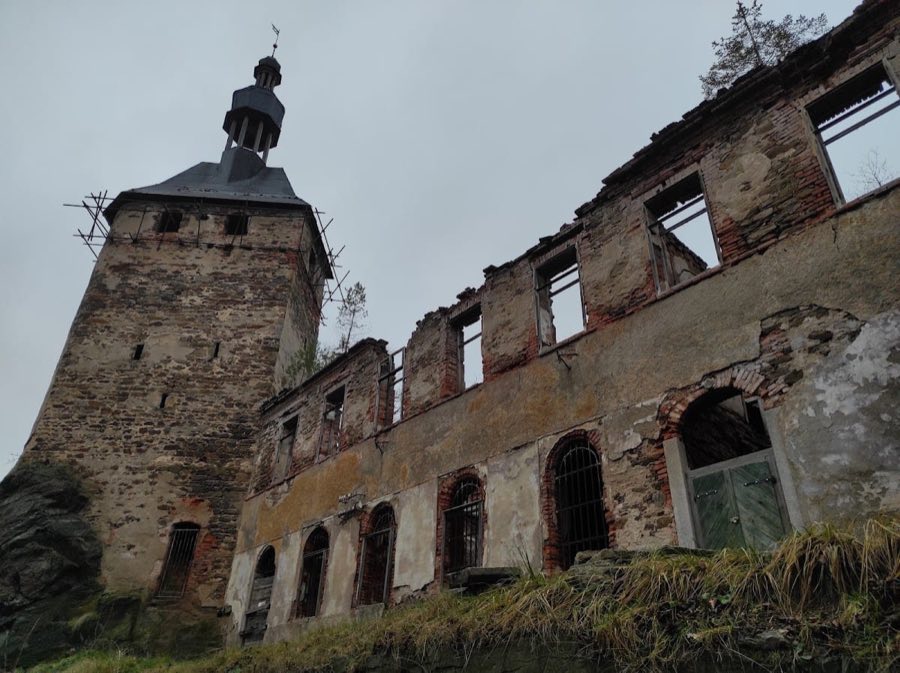
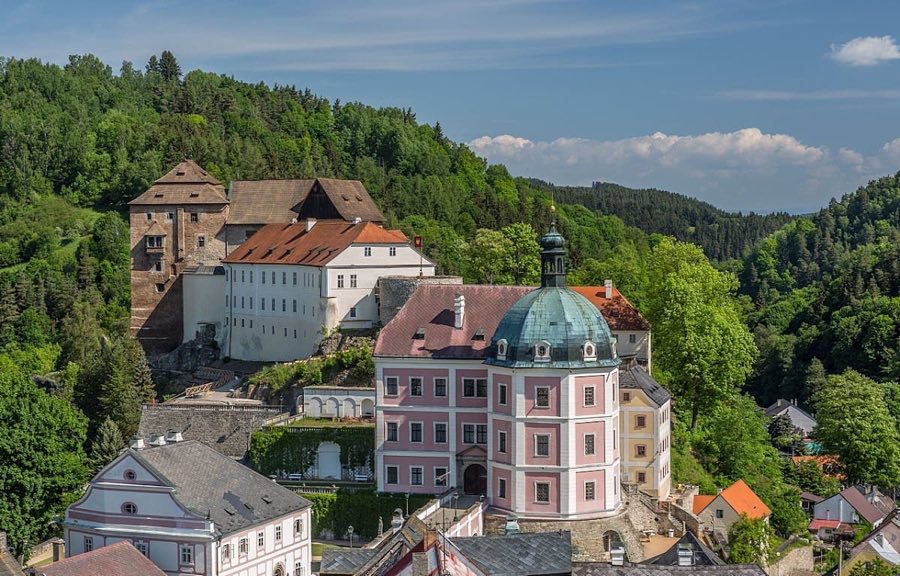
Hartenberg Castle
Czechia
CastleRuin13th century
No. 29402
Château · Czechia
No. 29402 · 50.179 N, 12.642 E
Quick summary
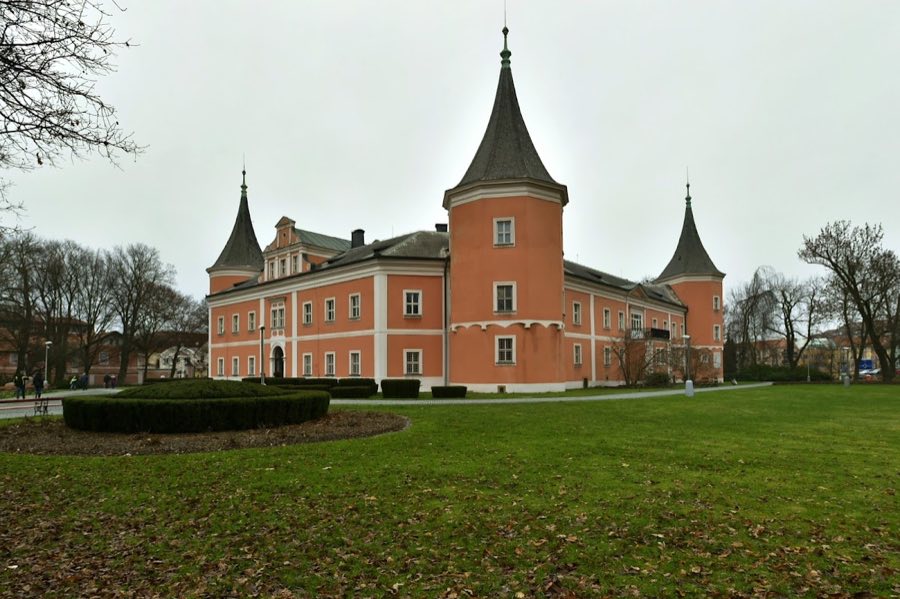
Sokolov Chateau is a château in Czechia with origins associated with the 13th century.
See all castles in CzechiaSokolov Chateau stands in the town of Sokolov, Czech Republic, and its earliest documentary reference dates to 13 April 1279, when it existed as a medieval stronghold built during the Middle Ages.
The site began as a circular fortified place with a rectangular residential block and a surrounding wall. Early ownership passed through the Nothaft family before the property was sold in 1339 to the Winklere family and entered royal administration in 1366. In 1434 Kašpar Šlik acquired the estate. Around 1480 the Šlik family transformed the old stronghold into an almost-square castle with towers at each corner.
Later members of the Šlik family carried out further rebuilding in the Renaissance style. Wolf Šlik and his nephew Albín, also recorded as Johann Albin Schlick, were responsible for these works. Jan Albín, the same Johann Albin, took part in the 1618 uprising. After the defeat at the Battle of White Mountain on 8 November 1620 he fled; the estate was confiscated in 1621 and sold to the Nostitz family in 1622.
During the Thirty Years’ War the castle served as a defensive position and received troops from various armies, including forces from Saxony, Bavaria, and Sweden. In 1648 Swedish troops burned the town and caused severe damage to the castle, leaving it nearly destroyed. Between 1659 and 1663 Johann Hartwig von Nostitz-Rieneck carried out rebuilding, giving the château a late-Renaissance form.
Around 1730 the surrounding park was reshaped in the French-garden manner and enriched with sculptural decoration. The château saw military occupation in later wars: French forces occupied it in 1742 during the War of the Austrian Succession, and Prussian troops plundered it in 1762 during the Seven Years’ War. At the start of the nineteenth century Count Friedrich Nostitz‑Rieneck directed a restoration and classical remodelling dated to about 1800–1805. Minor structural changes took place in 1870 and roof coverings were renewed around 1880.
After 1945 the Nostitz family lost the property under the postwar decrees of that year. Immediately after the war the château was used by the United States Army and later by Soviet forces; military occupation led to substantial damage and parts of the interior inventory, including fittings from the family chapel, were destroyed or burned. In 1960 the château became the home of a district mining museum. The museum was reorganized in 1982 and opened a new permanent exhibition in 1986. Restoration work was carried out during the mid-twentieth century and a major restoration concluded in 1993–1994; as part of that campaign the facades were repainted in a brick colour in 1994. The complex is listed as a cultural monument of the Czech Republic under catalogue number 1000138914.
The château complex preserves the imprint of its long evolution from a medieval water-defended stronghold to a multiwing residence. The plan now reads as four wings set around a large internal courtyard, a layout that follows the rebuilding carried out from about 1480 when the site was reshaped into an almost-square castle with corner towers. Stone was the principal material in the defensive and residential fabric, and a museum model presents the earlier palace as a predominantly stone-built defensive enclosure with a surrounding wall and water moat.
The internal courtyard remains a significant feature. It is large and centered on a fountain, and parts of the courtyard are framed by arcades or porticoes that provide sheltered circulation along the sides of the yard. These arcade elements survive in a form that reflects the château’s later residential character and continued use as a ceremonial and communal open space.
Four corner towers survive from the medieval and Gothic phases through later rebuildings. The two towers on the north side are cylindrical in form while the southern pair are square. The present roofs of the towers are tent-shaped and date to the roof renewal campaign around 1880. The towers bear evidence of continuous reuse as elements of the residence after the defensive role diminished.
The family chapel retains Baroque furnishings that testify to interior decoration from the seventeenth and eighteenth centuries. The chapel ceiling carries stucco work that dates to the classicist rebuilding around 1805. Some fittings originally in the chapel were lost during military occupations after 1945, but the chapel’s Baroque and Classicist elements remain part of the interior ensemble.
The main entrance carries a portal surmounted by the family coat of arms, a decorative marker of noble ownership. During the late twentieth-century restoration the facades were repainted in a brick tone, a visible change completed in 1994. The large former château park survives with its perimeter walls and several access points. Within the complex’s historical estate were ancillary buildings such as a market building for the town and an agricultural structure used as stables. An eighteenth-century hunting casino built for the estate still stands and now houses the Sokolov library.
Traces of the site’s water-defence system are recorded into the early modern period. The castle functioned as a water-castle with a surrounding moat crossed by several stone bridges that remained in place into the seventeenth century. The present condition of the complex reflects cycles of destruction and repair: severe damage and near-total destruction occurred in 1648 and the château was rebuilt between 1659 and 1663; further harm followed military use after 1945; twentieth-century interventions and the comprehensive restoration completed in 1993–1994 have stabilized and conserved the surviving fabric.
No. 55576
No. 40284
No. 87850
No. 67372
Comments
Comments for Sokolov Chateau will require a verified account before posting.
We'll send a verification link before your first comment is published.