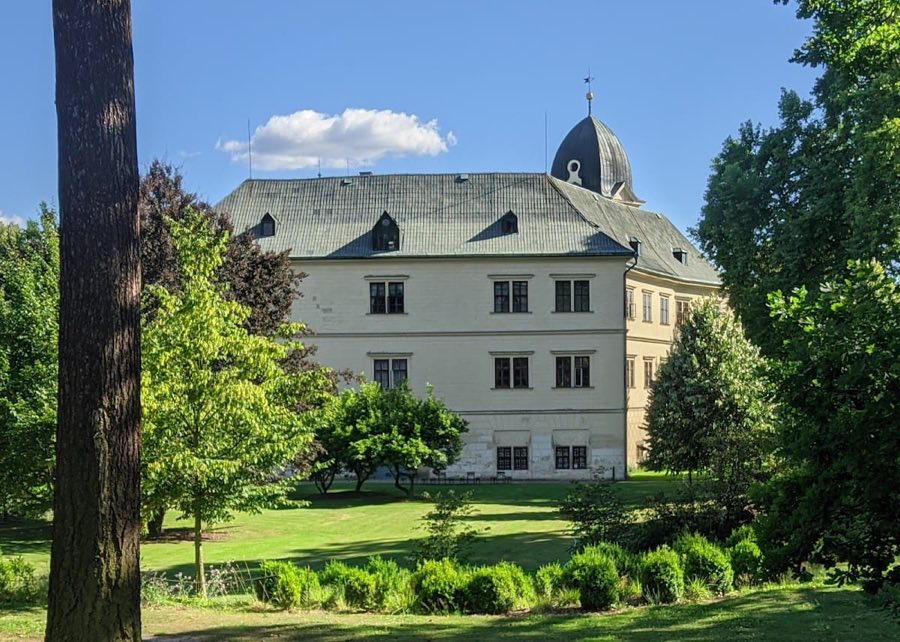
No. 54373
Hrubý Rohozec Castle
Czechia
PalaceIntact14th century
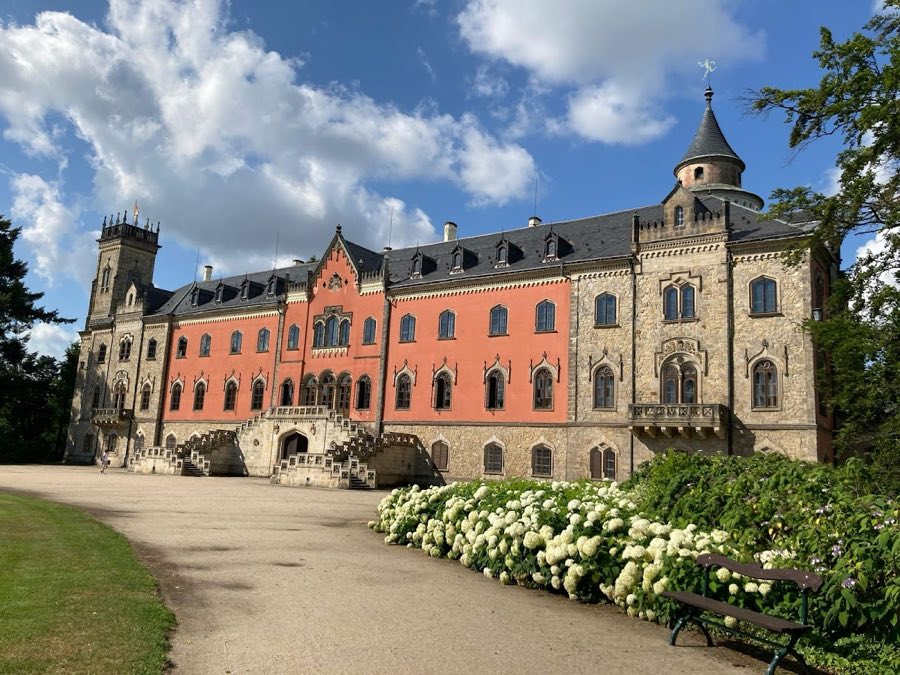
No. 91392
Castle · Czechia
No. 91392 · 50.626 N, 15.089 E
For events
Sychrov Castle is marked as a château or castle venue lead. Capacity, indoor/outdoor spaces, catering rules, and accommodation options are published only after public verification.
Event types: Private events, Cultural gatherings, Filming and photography
Quick summary
Sychrov Castle is a castle in Czechia with origins associated with the 19th century.
See all castles in CzechiaSychrov Castle, Sychrov, Czechia, began as a medieval Gothic fortress constructed in the medieval period and later developed into a noble residence whose present appearance dates mainly to the mid‑19th century neo‑Gothic fashion. Its long sequence of rebuilding and changing ownership made the place a regional seat of aristocratic life, a centre for high‑quality decorative art, and a repository of a large historical collection assembled by its owners.
A fortified medieval stronghold stood on the site until it was destroyed during the Thirty Years’ War, the pan‑European conflict of 1618–1648. After that destruction a modest two‑storey Baroque manor was erected between 1690 and 1693 by the Lamotte family, descendants of the Wallenstein line, and parts of those Baroque walls survive today within the wing facing the park.
In 1740 the estate passed into the hands of František von Waldstein. The Waldstein family used the buildings only from time to time; for roughly eighty years the house largely served agricultural functions and provided housing for estate staff rather than acting as a principal family residence.
The castle’s most transformative phase began when French émigré nobles of the Rohan family acquired the property in 1820. The Rohans, displaced by the French Revolution that overthrew the ancien régime, established Sychrov as one of their main homes and enlarged the house in the Empire and late‑classical manner, work that was completed around 1834. After a damaging fire, Prince Camille de Rohan undertook a sweeping reconstruction between 1847 and 1862 that reshaped the complex into the picturesque neo‑Gothic form modelled on large English country houses, giving the palace the broad silhouette and romantic vocabulary seen today.
Interior decoration in the later nineteenth century was lavish. The sculptor Petr Bušek led an extensive program of carved woodwork over nearly four decades, producing high‑relief and openwork carving for ceilings and walls. Other artists and craftsmen contributed painting, sculpture, upholstery and ironwork, and the family accumulated large collections of portraits, stained glass, porcelain, paintings and wooden sculpture. The surrounding landscape was laid out in the English romantic style under the Rohan ownership and later influenced other Czech arboretums.
In the 1920s a period of functionalist modernization altered many neo‑Gothic elements; some carved features and decorative hangings were removed and the tower surfaces were stripped of plaster and refaced with quarry masonry. The last private owner, Alain Rohan, who took German citizenship in the 1930s, lost the estate after the Second World War when the Czechoslovak state applied post‑war confiscation measures, including Decree No. 12/1945 Coll. and the set of post‑war measures known as the Beneš decrees, which led to wider confiscations of property from persons classified as Sudeten German or from members of former imperial nobility.
The castle opened to the public in the middle decades of the twentieth century, with records showing public access from about 1950 (some accounts give 1970 as an alternative date). A program of rehabilitation in the early 1980s and further reconstruction from the 1990s onward sought to recover the palace and park’s mid‑nineteenth‑century character. The site received formal national recognition on 16 August 1995 when it was declared a national cultural monument.
Sychrov hosted several notable nineteenth‑century visitors. The former French king Charles X visited in September 1834. During the military events of 1866, Emperor Wilhelm I and Prince Otto von Bismarck visited the estate in the days around the Battle of Königgrätz, a decisive engagement of the Austro‑Prussian War, and Emperor Franz Joseph I came in November 1866 to inspect the battlefields from July. Later visits included Crown Prince Rudolf on 10 July 1871 and other members of the Habsburg family. The composer Antonín Dvořák was a frequent guest in the late nineteenth century, and a local music festival bearing his name has been held regularly since the mid‑twentieth century, with a Sychrov–Turnov musical festival on record from 1951. In more recent decades the palace and park have served repeatedly as film locations.
The palace complex combines an older Baroque two‑storey house, several buildings grouped to form an inner courtyard and a castle yard, and a large surrounding landscape park of about 23 hectares laid out in the English romantic manner. The assembled buildings and the park function together as a single estate complex, with approach avenues and sightlines that link the principal house to its garden setting.
Inside the palace more than forty richly furnished halls and rooms survive, many retaining original nineteenth‑century furnishings. Extensive carved woodwork dominates the interiors: high‑relief and openwork carving on ceilings and walls, flourishing decorative motifs and intricate boiseries were produced under the direction of the sculptor Petr Bušek, whose work there spanned nearly four decades. Painters, sculptors and craftsmen provided complementary pieces, and the castle once held an extensive portrait gallery and collections of stained glass, porcelain, paintings and wooden sculpture. The 1920s modernization removed certain external sculptural details and some interior hangings, while later conservation and restoration work has aimed to return rooms toward their mid‑nineteenth‑century appearance; many original fittings remain in situ.
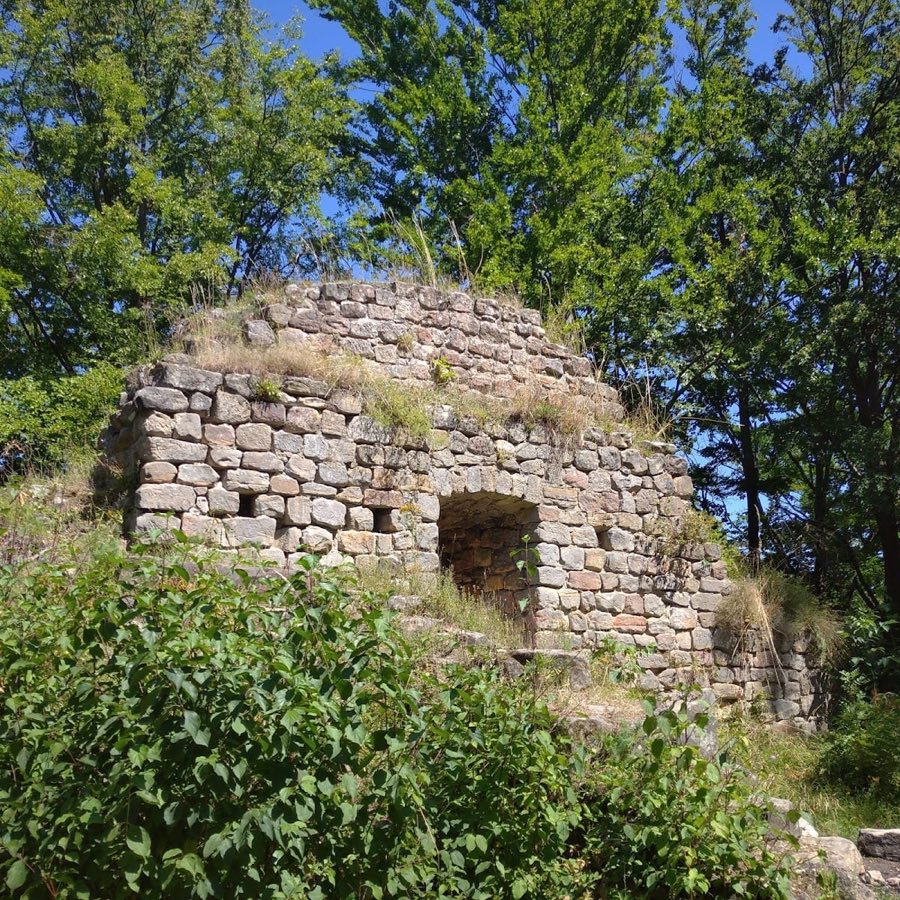
The park contains a varied set of auxiliary buildings and garden features placed to enrich the romantic landscape. An orangery first built in the 1830s and enlarged in 1852 in a neo‑Renaissance mode, with an arcade corridor and staircases leading to porticos, served as a flower gallery and summer house and was reconstructed between 2009 and 2011. A water tower dated 1891 stands within the grounds. Romantic garden constructions include a deliberately ruined folly known as Arthur’s Castle, which is linked to an underground corridor used as a garden attraction. The grounds also hold a keeper’s house, a dovecote, a stone pump, five smaller ponds and a Chinese pond with a bridge, a small house associated with Crown Prince Rudolf on the park’s northern edge, and a wooden Swiss‑style farm house.
The landscape follows a three‑axis plan radiating outward from the palace, a goose‑foot arrangement that structures the main vistas. Planting schemes include long avenues of oaks, a lime tree alley called the Rohanka, and notable specimen and cultivated trees such as two European beech cultivars associated with the estate (Fagus sylvatica ‘Rohanii’ and Fagus sylvatica ‘Rohan Gold’), plane trees and a ginkgo. Craftsmanship across the site is visible in fine wood joinery, carved sculpture, upholstery and ironwork produced by named local artisans, and in masonry work; in the 1920s tower faces were stripped of plaster and refaced in quarry stone as part of repair work. Overall, the palace and its park survive as a largely coherent ensemble that preserves many of the mid‑nineteenth‑century layout and decorative intentions, with later restorations reinforcing that historical appearance.
No. 54373

No. 58100
No. 32350
No. 57051
Comments
Comments for Sychrov Castle will require a verified account before posting.
We'll send a verification link before your first comment is published.