No. 59747
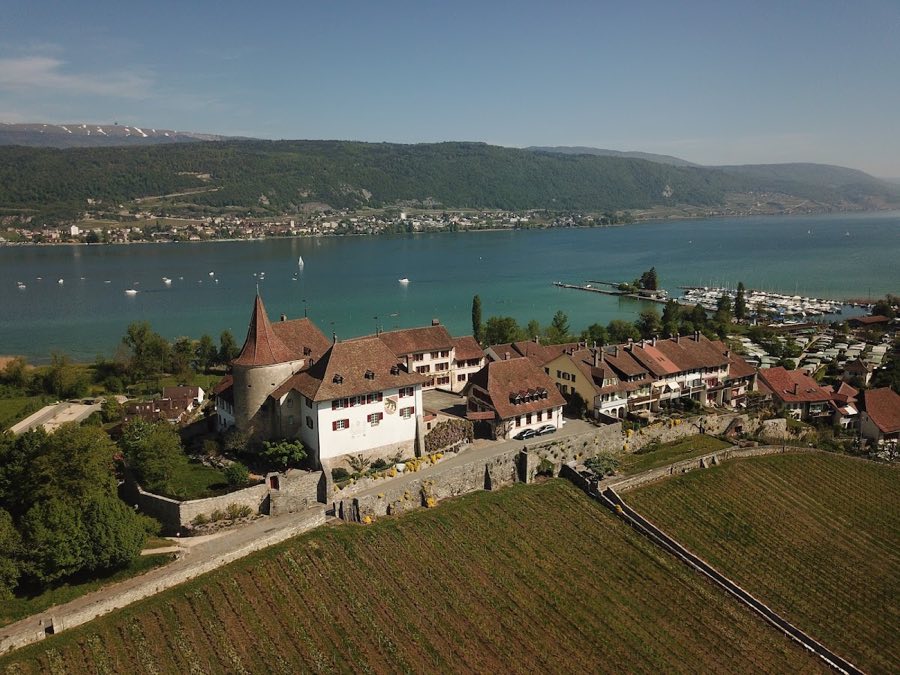
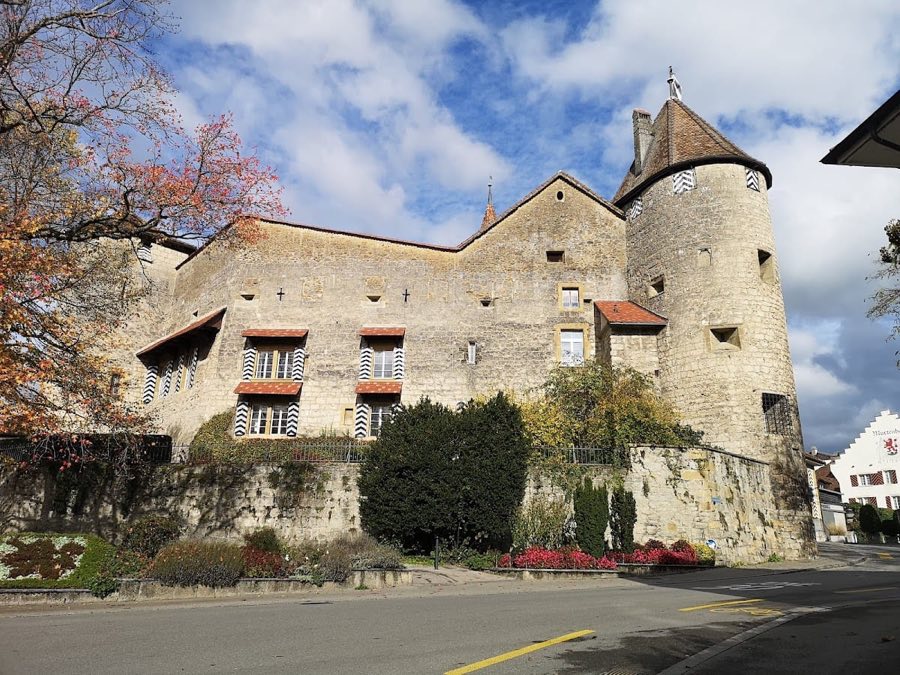
Erlach Castle
Switzerland
CastleIntact11th century
No. 50575
No. 50575 · 47.022 N, 7.034 E
Quick summary
Thielle Castle is a castle in Switzerland with origins associated with the 13th century.
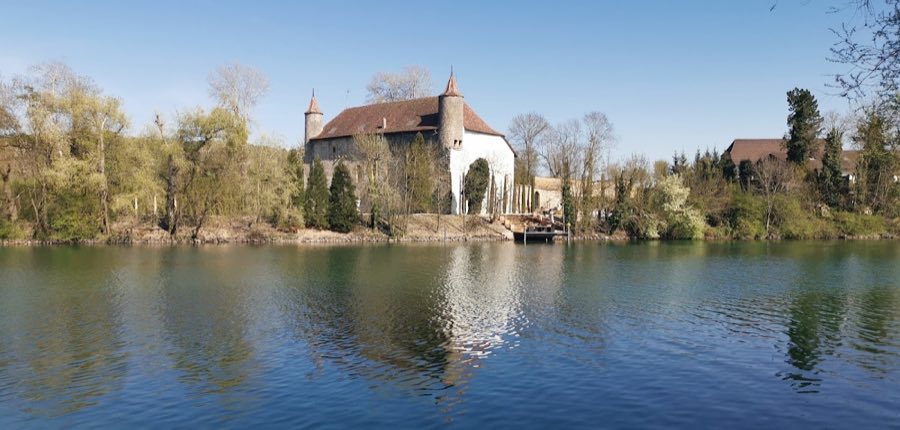
See all castles in SwitzerlandThielle Castle is situated in the municipality of Gals, Switzerland. It was constructed by the medieval Counts of Neuchâtel during the 13th century to secure an important crossing over the Zihl river. This stronghold emerged within the context of the feudal landscape in what is now western Switzerland.
The castle’s origins date back to a commission in 1261 by Count Berchtold of Neuchâtel. Its primary purpose was to safeguard the Zihl bridge near the village of Thielle, which was a significant crossing point at the time. The construction phase lasted from approximately 1270 to 1300. Around this period, Berchtold’s son Rudolf assumed the title Baron de Thielle. This family status change coincided with the closure of the previously open Zihl bridge, enhancing the strategic role of the castle in controlling local passage.
By 1311, the castle is historically referenced as “chastel du pont de Tele,” reflecting its close connection to the bridge it protected. In the decades that followed, between 1320 and 1325, the castle underwent rebuilding efforts. These renovations introduced architectural influences from the late Gothic style, along with Baroque elements, indicating evolving tastes and the castle’s ongoing importance.
In the late 15th century, the castle played a military role during the Burgundian Wars. In 1476, it was part of the defensive line organized by the Swiss Confederation against invasions by Burgundian forces. This involvement highlights the castle’s continued strategic significance well into the Middle Ages.
For several centuries thereafter, Thielle Castle served as the administrative seat of a Neuchâtel bailiwick, a form of regional jurisdiction, until 1807. Following this period, it was repurposed as a prison, a function it maintained until 1848. From 1861 onward, the castle passed into private ownership, marking a shift from public and military use to a more personal and residential role.
Historical writings have documented the castle over time. In 1843, David Guillaume Huguenin produced a detailed account, while an earlier source, the March-Buch by Samuel Bodmer from around 1710, mentioned the site within the context of the marches (border districts) of the Bernese Republic. These texts contribute to understanding the castle’s role within regional governance and its historical footprint.
Thielle Castle is an example of a water castle originally positioned on the left bank of the Zihl river, although the course of the river changed due to the construction of the Zihl Canal in 1883, placing the castle on the canal’s right bank. Its layout centers around a nearly rectangular courtyard, enclosed by the remains of former ring walls and oriented northwest to southeast, which shelters a spacious inner yard.
Two round towers, now reduced to stumps, stand on either side of an entrance portal designed in the Baroque style. This portal faces the former main road, marking the access point to the complex. The main residential building is a rectangular structure rising three to four stories high, crowned by a half-hipped roof, a design commonly known as a Krüppelwalmdach, which slopes on all sides except part of the gable ends.
At two of the building’s corners, tall and narrow stair towers with pointed conical roofs integrate smoothly into the main structure, providing vertical circulation within the castle. The exterior walls display slender, tall windows characteristic of Romanesque architecture, distinguished by their simple, elongated openings that likely allowed light while maintaining defense.
Inside, the first floor houses a knight’s hall notable for its high ceiling, indicative of a large gathering or ceremonial space within the castle. Surrounding the castle is a park covering an area of about 5,300 square meters, featuring a collection of mature, large trees that contribute to the site’s historic landscape.
The castle remains appear in a condition reflecting both their medieval origins and subsequent periods of reconstruction and restoration. Notably, extensive restoration efforts took place during the 1960s and again in the 1980s, preserving the castle’s architectural heritage and maintaining its structural integrity. These restorations respect the historical layers that span Gothic to Baroque styles, ensuring that the site continues to convey its complex past.
No. 59747
No. 38734
No. 64214
No. 49965
Comments
Comments for Thielle Castle will require a verified account before posting.
We'll send a verification link before your first comment is published.