No. 49832
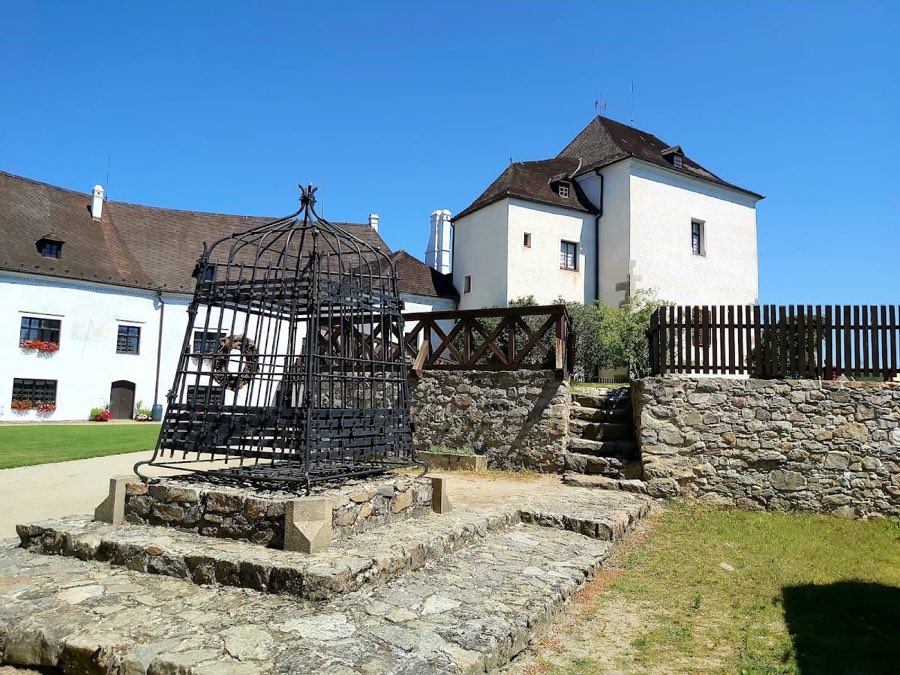
Nóve Hrady Castle
Czechia
CastleRestored13th century
No. 83934
Palace · Austria
No. 83934 · 48.699 N, 14.894 E
Quick summary
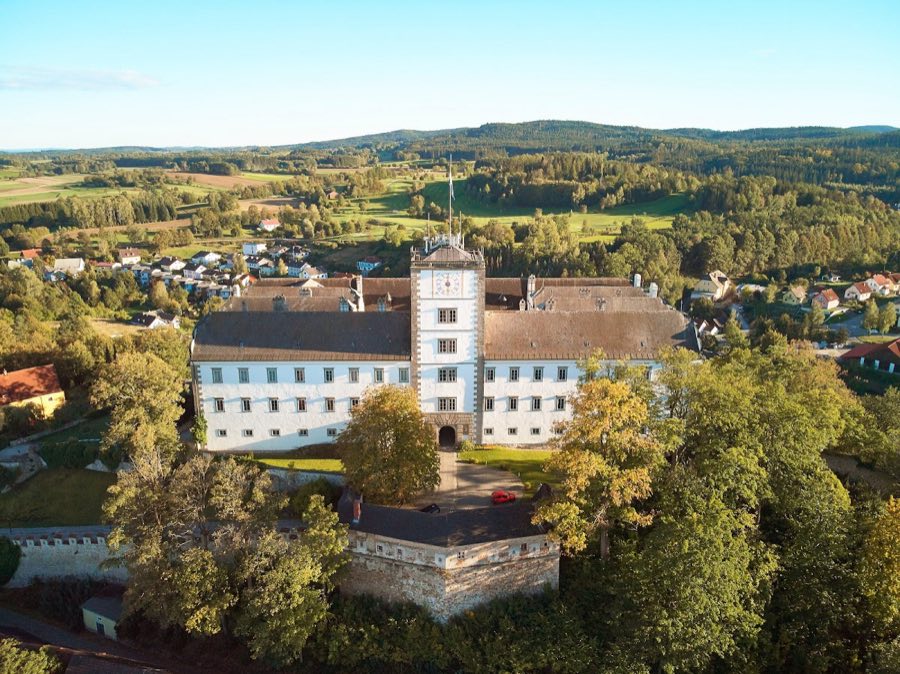
Weitra Palace is a palace in Austria with origins associated with the 16th century.
See all castles in AustriaWeitra Palace in Weitra, Austria is a Renaissance palace erected on the site of a medieval castle originally founded by the Kuenring family in the early 1200s. The complex that stands today reflects a major rebuilding at the end of the 16th century in the Renaissance style and occupies a long-lived strategic position; over the centuries it figured in regional power struggles, changed hands among noble households, and was repeatedly attacked in wartime.
The earliest phase began between 1201 and 1208 when Hadmar II of Kuenring established the castle and the surrounding settlement. In the late 13th century Heinrich IV of Kuenring, who served as marshal of Austria from 1274, took refuge at the site after rebelling against King Rudolf I. In the aftermath of the Battle of Dürnkrut and Jedenspeigen in 1278, a decisive encounter that consolidated Habsburg authority in the region, the lordship was besieged by Stephen of Maissau and confiscated by Rudolf I; the property was briefly regranted by Rudolf’s sons to a member of the Kuenring family.
During the later Middle Ages the castle endured several assaults. Forces associated with the Hussite movement laid siege to Weitra in 1426 and again in 1431. It faced another military attack in 1486 by Hungarian troops. Political and financial pressures shifted ownership in 1508 when the lordship was pawned to Laslav of Prague, Baron of Windhag. In 1582 Emperor Rudolf II granted the castle and town to his chamberlain Wolf Rumpf, Baron von Wullroß. Following Rumpf’s death his widow, Maria (born Countess Arco), married Count Friedrich of Fürstenberg‑Heiligenberg, and she left the rebuilt estate to him after the structure had been transformed into a Renaissance residence. By 1606 the site belonged to the Princes and Landgraves of Fürstenberg.
The late 16th‑century rebuilding gave the palace its Renaissance character through a comprehensive remodeling of the medieval fortifications. Swedish forces besieged the complex in 1645 but failed to take it. After several destructive fires, decorative Baroque and Rococo elements were added, producing the layered appearance visible in later centuries. The Fürstenberg‑Heiligenberg line ended in 1716; in 1744 the palace passed to Landgrave Ludwig, brother of Prince Joseph Wilhelm Ernst of Fürstenberg‑Stühlingen, who established the Fürstenberg‑Weitra branch. That family later divided into Weitra and Taikowitz branches and counted Cardinal Friedrich Egon von Fürstenberg among its members, who died in 1892.
In the twentieth century the palace suffered damage at the end of the Second World War when Soviet occupation troops caused destructions to the ensemble. After the war the proximity of the site to the Iron Curtain and a weakened regional economy contributed to a period of decline. Restoration work carried out by Johannes Prince of Fürstenberg prepared the complex for the Lower Austria Provincial Exhibition in 1994 and made it accessible once more. From the 1980s the palace hosted a traditional garrison ball. A festival named Schloss‑Weitra‑Festival was founded in 2006 and has been held in the palace’s covered and heated inner courtyard; leadership of the festival passed to Peter Hofbauer in 2014, and a 2020 performance was postponed to 2022 because of the COVID‑19 pandemic.
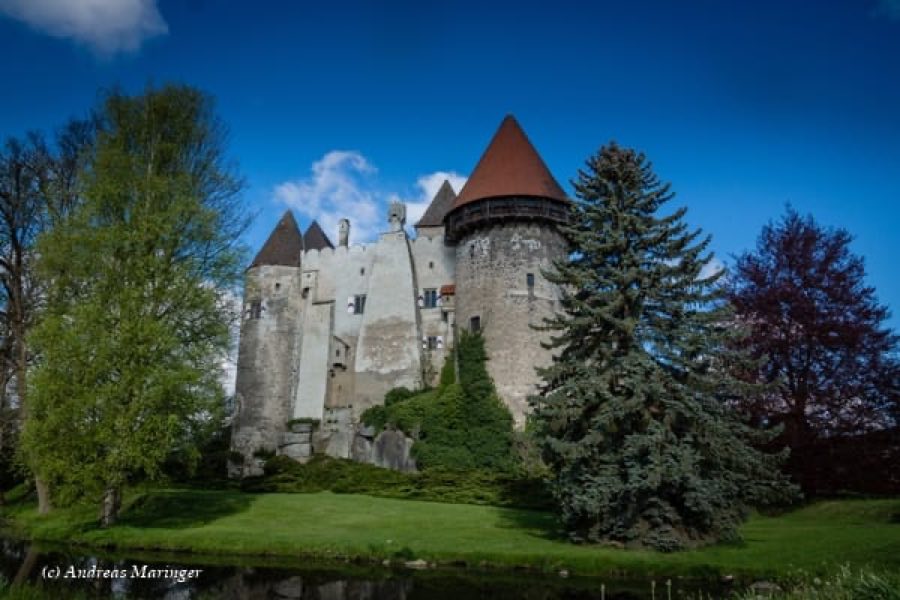
The palace occupies a raised site south of Weitra’s old town and stands directly on the footprint of the medieval fortress. The existing building is the result of a late 16th‑century conversion that remodelled the older castle into a Renaissance residence, creating a compact complex arranged around a central enclosed space. Later repair and decorative campaigns left Baroque and Rococo additions superimposed on the Renaissance fabric.
At the heart of the complex is an inner courtyard that dates to the Renaissance rebuilding and served as the palace’s central open area. The courtyard has been adapted in modern times so it can be enclosed and heated, allowing large gatherings to be held there in cold weather. For protection against poor weather, large umbrellas have been installed to provide cover across parts of the court.
Repeated fires led to later stylistic layers being applied to the building, introducing Baroque and Rococo detailing into the palace’s elevations and interior finishes. These later additions were integrated into the earlier Renaissance structure rather than replacing it, producing a palimpsest of phases that reflect successive repair and redecoration.
The palace ensemble sustained destructions during fighting at the end of the Second World War, after which parts of the complex fell into neglect until the 1990s. A major renovation prepared the restored rooms and circulation spaces for public use in 1994. Today the building accommodates a brewery museum and a permanent exhibition dedicated to the Iron Curtain, reflecting both the site’s material history and its twentieth‑century geopolitical context.
No. 49832
No. 45305
No. 33687
No. 64880
Comments
Comments for Weitra Palace will require a verified account before posting.
We'll send a verification link before your first comment is published.