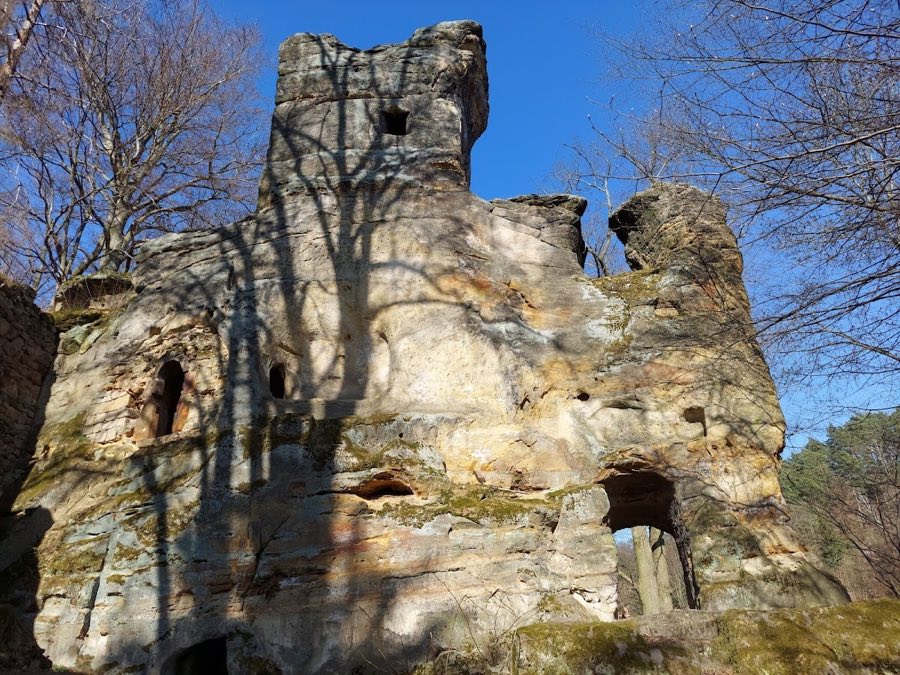
No. 89639
Svojkov Castle
Czechia
CastleRuin15th century
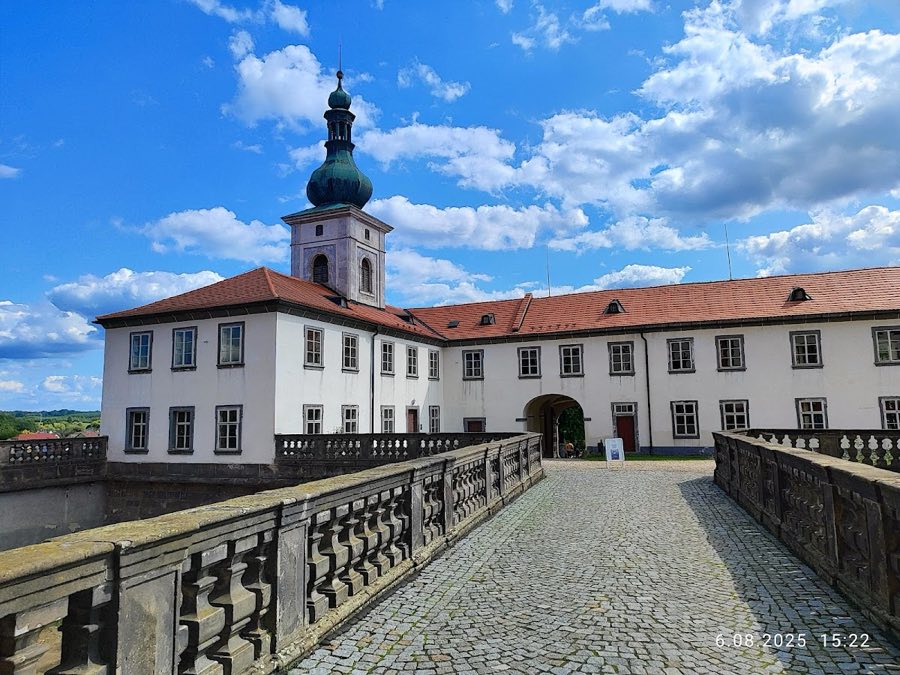
No. 42608
Palace · Czechia
No. 42608 · 50.687 N, 14.644 E
For events
Zákupy Castle is marked as a château or castle venue lead. Capacity, indoor/outdoor spaces, catering rules, and accommodation options are published only after public verification.
Event types: Weddings, Private events, Cultural gatherings, Filming and photography
Ceremony spaces: Ceremony setting to verify
Quick summary
Zákupy Castle is a palace in Czechia with origins associated with the 16th century.
See all castles in CzechiaZákupy Castle in Zákupy, Czechia, began as a stronghold established by medieval Bohemian noble families and later developed into a Renaissance residence around 1559. That sixteenth-century rebuilding, followed by a full Baroque reconstruction in the late 1600s, made the site a long-standing noble and imperial seat and the setting for important political and dynastic events in Central Europe.
The hilltop site first served as a fortified residence of local knights and lords, who held the place through the Middle Ages. In 1532 the Berka von Dubá family brought the neighbouring lordships together, and about a generation later they raised a Renaissance castle on the older masonry. This sixteenth-century house burned roughly twenty years after it was completed and remained vulnerable in the decades that followed.
In the early seventeenth century the property changed hands, and by 1612 it belonged to Johann von Kolowrat‑Nowohradský. His widow’s marriage in 1632 linked the estate to the Saxe‑Lauenburg family. Two years later, in 1634, Protestant Swedish forces destroyed the building during the Thirty Years’ War, the large-scale Central European conflict fought between 1618 and 1648.
From 1670 to 1683 the complex was comprehensively rebuilt in the Baroque manner under the patronage of Duke Julius Franz of Saxe‑Lauenburg. After the duke’s death the residence housed members of his family, and over the following century and a half it passed by marriage and inheritance among several dynastic houses, including branches connected with the Palatinate and Bavaria. In the first decades of the nineteenth century ownership shifted with dynastic rearrangements; when a Bavarian ruler accepted a kingship in 1806 he ceded his Bohemian holdings to an Austrian archduke.
A family agreement in 1815 grouped several Bohemian estates under the title Duchy of Reichstadt, and in 1818 Emperor Francis I assigned that title to his grandson Napoleon Franz Bonaparte, who died in 1832 without ever visiting the property. The duchy then returned to the imperial family and was discontinued. Mid‑century transfers brought the castle into the main Habsburg line. In 1848 the former emperor Ferdinand I made the house one of his residences and commissioned a lavish refitting of the interior.
The castle continued to figure in high-level affairs. On 8 July 1876 Emperor Franz Joseph I met Tsar Alexander II there to discuss Austrian neutrality ahead of a conflict between Russia and the Ottoman Empire. The castle chapel hosted the wedding of Archduke Franz Ferdinand and Countess Sophie Chotek on 1 July 1900. During the First World War the building served as a military hospital. After the collapse of the Austro-Hungarian Empire the Czechoslovak land reform removed the estate from its private owners. The site opened as a museum in 1951, was renovated in 1977, and since 1995 has functioned as a cultural centre set beside a park laid out in the Baroque manner.
The castle stands as a compact Baroque palace built upon older stonework. Four two‑storey wings enclose a large central courtyard, the plan resulting from the major rebuilding of the late seventeenth century. Much of the present structure rests on masonry that belonged to the medieval fortress and to the later Renaissance house, so the visible fabric combines successive phases of construction in solid stone and brick.
The entrance front preserves an early Baroque portal that bears the coat of arms of the Berka von Dubá family, set into the main façade as a heraldic marker. A dedicated chapel, executed in Baroque style, occupies one wing and retains its liturgical function within the complex’s layout. Interior decoration reflects a nineteenth‑century campaign of refitting carried out when the palace served as an imperial residence; work inside includes architectural remodelling by an architect of that period, painted panels and murals by Josef Navrátil and Wilhelm Kandler, sculptural work by Václav Levý, and stucco ornament by J. Effenberger.
The sequence of repairs and reuse is visible in the fabric. The Renaissance dwelling constructed around 1559 was raised on older walls and then suffered a destructive fire about twenty years later; the shell that survived those events was knocked down again in 1634 by Swedish troops during the Thirty Years’ War and later rebuilt in Baroque form between 1670 and 1683. Today the ensemble appears as a largely preserved Baroque palace with later nineteenth‑century interior fittings; the complex has been conserved for public use following mid‑ and late‑twentieth‑century renovation, and it stands within a park laid out in the Baroque manner.
No. 89639
No. 13169
No. 98321
No. 82697
Comments
Comments for Zákupy Castle will require a verified account before posting.
We'll send a verification link before your first comment is published.