No. 88736
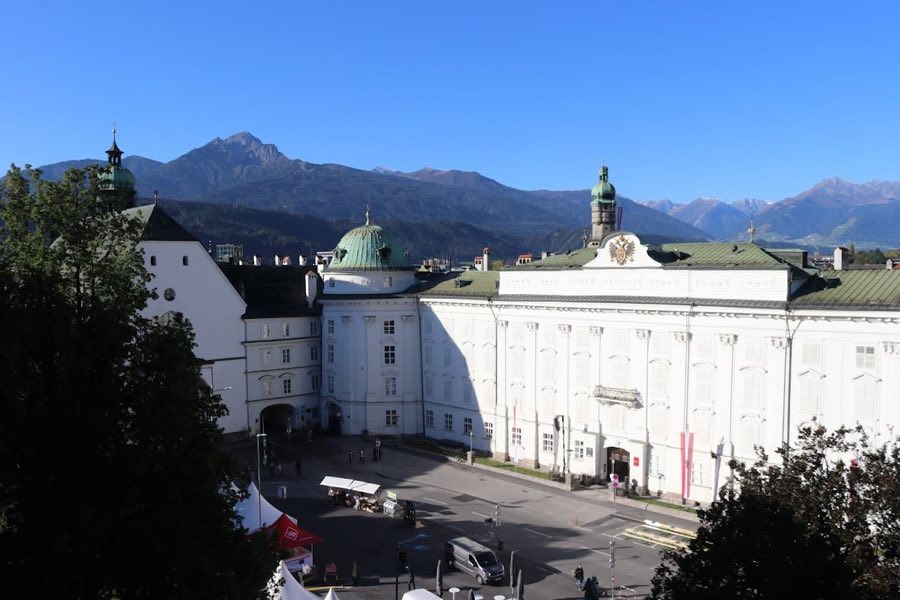
Hofburg Palace Innsbruck
Austria
PalaceRestoredFor events15th century
No. 61998
Palace · Austria
No. 61998 · 47.257 N, 11.435 E
Quick summary
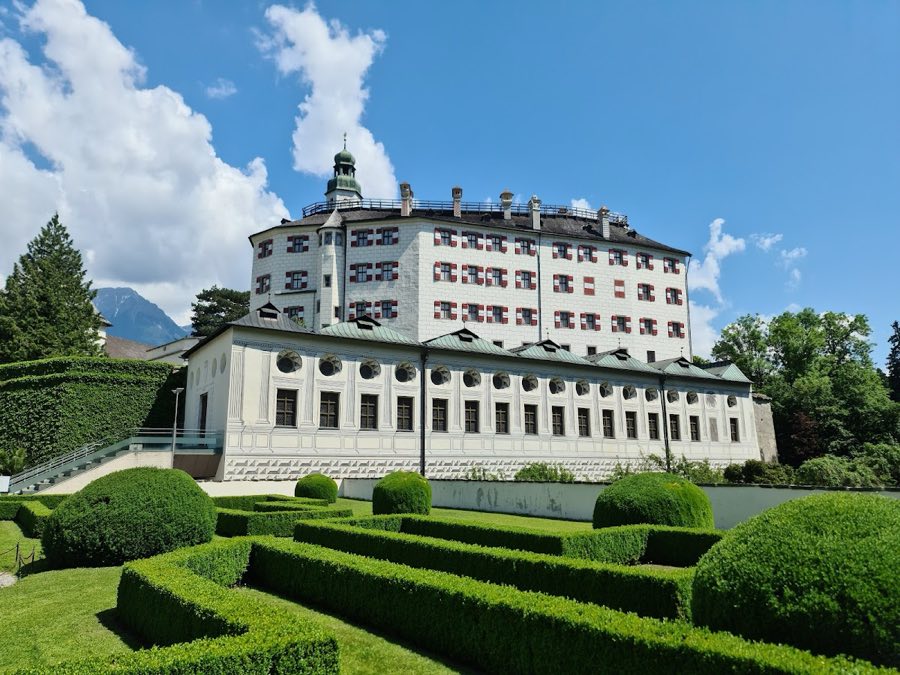
Ambras Castle, Innsbruck is a palace in Innsbruck, Austria with origins associated with the 10th century.
See all castles in AustriaAmbras Castle in Innsbruck, Austria, began as a fortified seat of the Counts of Andechs in the early medieval period, with a settlement on the site by the 10th century. Its origins lie in the regional feudal polity of the Andechs family, and over the centuries the site evolved from a medieval stronghold into a Renaissance princely palace and a repository for systematic collections, giving it lasting cultural significance.
During the Middle Ages the original fortification was destroyed in 1133 and rebuilt roughly a century and a half later. Ownership passed through several local noble lines: after the Andechs and Merania houses the estate came under the control of Albert of Tyrol in the mid-13th century, then passed through Hirschberg and the Meinhard/Gorizia line. In 1363 the castle became part of Habsburg holdings. Emperor Maximilian I used the complex as a hunting castle.
The castle’s most intensive transformation took place under Archduke Ferdinand II in the later 16th century. Beginning in the 1560s he remodelled the residential sector into a Renaissance palace, lived there with his family from 1567 until his death in 1595, and gave the rebuilt residence to his wife Philippine Welser. From about 1570 Ferdinand commissioned a purpose-built Lower Castle to house an expanding library and art collections; this building was created expressly to hold and display those items. Between the 1560s and 1589 new display spaces were added, including the freestanding ceremonial hall built in 1569–1571, the library and antiquarian rooms of 1570–1572, the Kunstkammer and three armouries established 1572–1583, and an additional Heroes’ Armoury installed in 1589 for the systematic exhibition of famous armours.
On Ferdinand’s death in 1595 the castle and its collections passed to his son Charles, Margrave of Burgau. Charles negotiated their sale to Emperor Rudolf II, a transaction ratified in 1606, and after that date Ambras ceased to function as an active princely residence. From the 17th century onward important parts of the library and several objects were moved to Vienna, beginning with transfers under Emperor Leopold I from 1665, an order by Maria Theresa in 1745, and further relocations during the Napoleonic period and later decades.
In later centuries the complex served a variety of practical roles. It was used as military quarters, a hospital, and as barracks until 1842. In the mid-19th century the site returned to residential use under Archduke Karl Ludwig, and nineteenth-century conversions reshaped parts of the ensemble. The castle opened to the public as the imperial Ambras collections museum in 1880, a change accompanied by removals and demolitions of some later structures. Work to adapt the site again began in 1913, aiming to make it the summer residence of Archduke Franz Ferdinand, but these refurbishments were halted after his assassination in 1914.
Following the end of the monarchy in 1919 the castle became property of the Republic of Austria. The museum reopened in 1922 after interruptions caused by World War I, closed during World War II, and resumed public operations after 1948. Today the collections are housed and administered by the Kunsthistorisches Museum in Vienna, and the castle is maintained as a federal museum, for the federal collections the only such institution located outside Vienna. Conservation campaigns have continued into the modern era, including late-19th-century conversion work around 1877–1880, extensive restorations in the 1970s that covered the ceremonial hall, upper residential units and courtyard, a focused courtyard fresco restoration between 1984 and 1991, and the reconstruction of museum displays completed across the 1970s and 1980s. The surrounding park was placed under monument protection in 2007 and is managed by the Austrian Federal Gardens.
The castle complex groups three principal components within an extensive park: the Upper Castle that served as the residential core, the Lower Castle built to hold collections and armories, and the freestanding ceremonial Spanish Hall. Administrative and service buildings lie around these main blocks, and the ensemble preserves garden and landscape features that evolved from the Renaissance onward. Elevation figures associated with the site vary in different accounts, given as 632 metres, 635 metres and 654 metres above sea level.
The Upper Castle contains the oldest masonry on the site. Surviving medieval elements include the keep (bergfried), a fortified tower, the main living hall (palas), and foundation walls of the chapel, all dating to the 13th and 14th centuries. The palas retains a vaulted ceiling attributed to Sigismund. These medieval units were incorporated into later remodelling rather than being entirely replaced, and they remain visible within the later Renaissance fabric.
The Lower Castle, built from about 1570, is an irregular five-sided plan open to the east and was constructed specifically to house Ferdinand II’s library and collections. It contained multiple dedicated rooms: a library and antiquarian suite completed in 1570–1572, the Kunstkammer with tall cabinets established in the 1570s and early 1580s, and three armoury rooms, with an additional Heroes’ Armoury installed in 1589. Several of the original high wooden cabinets used for armour have survived in situ, and the Kunstkammer remains in its original location, preserved as a Renaissance room furnished with the same system of tall display cabinets recorded in late-16th-century inventories.
The Spanish Hall stands apart as a long Renaissance ceremonial room, measuring about 43 metres in length. It features an elaborate inlaid and coffered wooden ceiling and wall decorations that include twenty-seven full-length portraits of regional rulers painted by Giovanni Battista Fontana. Original large doors by the court cabinetmaker date to 1571, and a painted “starry sky” ceiling executed in 1586 remains among the hall’s surface decorations. The hall underwent major restorative work in the 20th century as part of comprehensive conservation of the principal ceremonial spaces.
The inner courtyard of the Upper Castle is decorated with grisaille frescoes painted around 1564–1567 that form a unified scheme across the irregular court, showing princely virtues, muses, heroes and procession scenes. Those murals received significant conservation between 1984 and 1991. Other interior decorations associated with the Ferdinandean phase include the Kornschütt, which housed the library and antiquarium from 1570 to 1572, and the Kunstkammer, originally arranged with eighteen tall cabinets and a systematic order of artificialia, naturalia, scientific objects, exotica and marvels.
A bathing suite associated with Philippine Welser survives largely intact. The suite contains a bathtub set into the floor to a depth of about 1.60 metres and lined with zinced copper sheet, a stone seat with a wooden top, a heating arrangement that used hot stones, and a dressing room paneled in 1567 with a surrounding fresco frieze attributed to Hanns Polhammer. These components form a rare and well-preserved example of late-16th-century bathing arrangements.
The chapel of St. Nicholas has origins in the 14th century, but its present appearance reflects extensive 19th-century redecorations undertaken under Archduke Karl Ludwig with the artist August Wörndle. The ground floor of a tower constructed at the end of the 13th century houses the Gothic sculpture collection, which includes the St George triptych by Sebold Bocksdorfer, displayed within the historic tower space.
The surrounding park preserves a historical three-part layout centered on the Renaissance castle. Landscape features include a large pond, a Bacchus grotto, a Renaissance garden area known as the Keuchengarten, an artificial waterfall supplied by a side arm of the Aldranser Bach, and a wild park. The grounds experienced staged redesigns in the 16th, 19th and 20th centuries and have been managed in recent times to protect their historic character.
Preservation and alteration over time are visible across the complex. The Chamber of Art and Wonders remains located where it was installed in the late 16th century, and the bathing chambers of Philippine Welser survive completely preserved. Some elements associated with the Ferdinandean ensemble were altered or removed during 19th-century interventions, and certain 19th-century structures, including a Heldenrüstkammer and a ball-game house, were demolished around 1880–1881. In the 20th century a series of restorations removed several 19th-century additions in order to restore an earlier architectural appearance. The building complex is managed by the Austrian Burghauptmannschaft, the park is administered by the Austrian Federal Gardens, and the collections are housed and administered by the Kunsthistorisches Museum in Vienna.
No. 88736
No. 36494
No. 24998
No. 22543
Comments
Comments for Ambras Castle, Innsbruck will require a verified account before posting.
We'll send a verification link before your first comment is published.