No. 36494
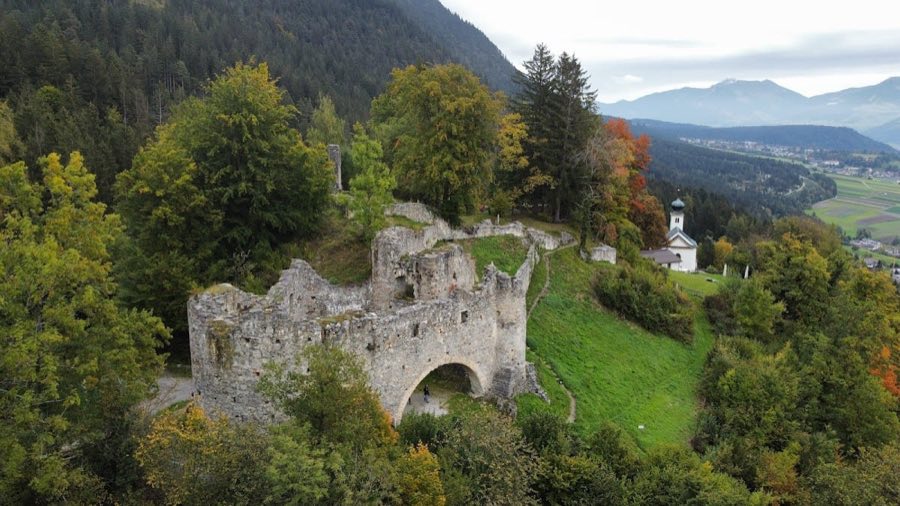
Burgruine Thaur
Austria
CastleRuinFor events12th century
No. 24998
Castle · Austria
No. 24998 · 47.279 N, 11.507 E
Quick summary
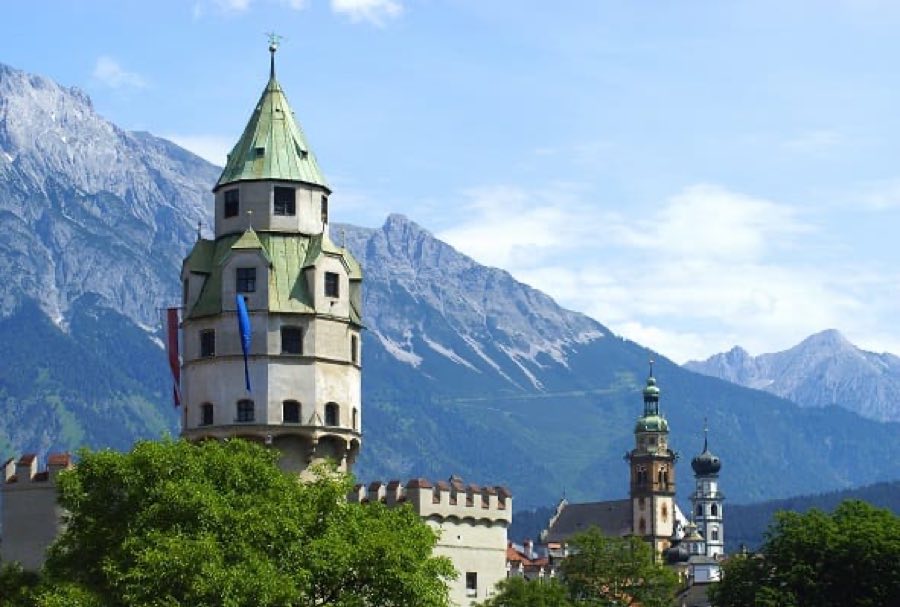
Hasegg Castle is a castle in Austria with origins associated with the 15th century.
See all castles in AustriaHasegg Castle is located in the municipality of Hall in Tirol, Austria. Its origins trace back to the medieval period, built by the local authorities of the town to serve as a part of the city’s defensive fortifications.
The earliest known reference to the site dates from 1306, when the castle functioned as a projecting corner of Hall’s city walls. Originally, it was constructed to protect the valuable saltworks (Saline) nearby, oversee traffic along the Inn River, and control movement along the ancient Roman road crossing in the area. A watchtower mentioned as early as 1296, called “turris in salina,” served as an early fire lookout, vital because the salt production involved large fires that posed significant fire risks.
Significant development occurred under Archduke Sigismund the Rich of Mint during the 15th century. Between 1446 and 1480, the southern section of the saltworks was expanded into a princely residence. Around 1480, the older watchtower was replaced by the Münzerturm, or coin tower, and the Münzertor, or coin gate, was constructed. In 1490, the adjacent Hasegger Tor was strengthened with the addition of a bastion, enhancing the site’s defensive capacity.
The castle became home to the mint in 1477, where the mint master also managed the castle itself. This mint was notable for introducing the first mechanical coin production using rolling presses, marking an important technological advancement. Emperor Maximilian I is said to have held the betrothal celebrations of his second marriage at Hasegg in 1494. He later resumed building efforts in 1515, adding an east wing made of stone and commissioning the Georgskapelle (St. George’s Chapel).
Following Maximilian’s death, parts of the castle’s large halls were adapted for storage of grain, divided by wooden floors. In 1567, Archduke Ferdinand II relocated mint workshops to Hasegg from nearby Sparberegg after establishing a royal ladies’ convent there. The castle also continued to serve as residence for mint officials and occasionally hosted high-ranking visitors. An earthquake in 1670 caused partial damage, lowering the height of the smaller northern tower.
Minting operations ceased in 1809 during the Tyrolean Rebellion when Bavarian forces ruled the area. Afterward, the mint workshops were repurposed, becoming storage areas and living quarters for saltworks employees. Archaeological research in 2015 uncovered artifacts likely related to a 16th-century rolling minting machine’s mechanism, providing physical evidence of the castle’s minting history.
Since 1975, Hasegg Castle has served as the site for the Hall city museum and the Münze Hall coin museum. These institutions display historic minting equipment and produce commemorative coins. Ownership of the castle remains with the Austrian Salines AG, which leases it to the city for a term of 99 years.
Hasegg Castle presents a complex architectural layout reflecting its multi-century evolution. Its construction utilizes rubble masonry and incorporates both medieval defensive features and later residential and industrial adaptations. The castle sits strategically alongside the former saltworks and includes several distinctive structures reflecting its dual roles in defense and coin production.
One of the most striking features is the Münzerturm, or coin tower, completed around 1490 under Archduke Sigismund. The tower rises 45 meters high and is accessed by a spiral staircase winding through five stories of a circular base approximately 10 meters in diameter. Above this base stands a three-story twelve-sided (dodecagonal) structure topped by a matching lantern. The tower originally served as a watchpoint and clock tower for the saltworks, staffed by several guards. Its exterior bears baroque sundials and a mechanical clock, testifying to its role in timekeeping.
The Georgskapelle, built between 1515 and 1617 by Emperor Maximilian I’s order, has a unique design. A small, intimate chapel for the emperor and his close company is enclosed within a larger hall. The chapel’s side walls contain pierced openings allowing a wider congregation to attend mass outside the main chapel area. Above, an opening in the ceiling enabled the emperor to observe services from private chambers. The chapel’s apse extends outward as a delicate oriel window projecting into Münzergasse street, a feature designed so that no one would reside directly above the altar. The chapel is adorned with a net rib vault sustained by seven angelic busts displaying coats of arms from various regions and entities, including Tirol, Carinthia, Burgundy, the Holy Roman Empire, Austria, Styria, and Carniola. Its entrance is an iron-plated door painted with symbols of the Order of the Golden Fleece, set within a red marble Gothic portal. Further decorative elements include 18th-century door wings and a rococo-style grille bearing the imperial eagle. The interior features rich foliate paintings, pointed arch windows with tracery, and a 19th-century rococo altar flanked by statues of saints George, Sebastian, and Florian.
During renovations in 1974, a previously hidden princely chamber was rediscovered, notable for its massive Gothic beam ceiling. Adjacent to this room’s east wall is a preserved 15th-century toilet facility, separated by a wooden door, offering insights into medieval domestic arrangements.
The vaulted cellars at the castle once served as the saltworks’ armory, featuring Gothic net vault ceilings. These underground spaces were equipped with large iron hooks traditionally used to hang leather sacks that stored gunpowder and other materials, protecting them from moisture and pests. Over time, these vaults were adapted for mint storage and later residential use.
The castle courtyard includes a coin office and workshops set into the western outer defensive wall (zwinger), constructed in 1567 to support the mint’s growing operations. The Münzerturm underwent restoration in 2005 and is notable not only as a historical structure but also as the emblem of Hall in Tirol. Its image was once featured on the Austrian ten-schilling banknote issued in 1946.
Today, Hasegg Castle’s buildings serve multiple purposes, including event spaces and a restaurant, integrated within the preserved historical fabric that reflects its long-standing connection to salt production, coin minting, and regional governance.
No. 36494
No. 61998
No. 88736
No. 22543
Comments
Comments for Hasegg Castle will require a verified account before posting.
We'll send a verification link before your first comment is published.