No. 60523
Fortar Castle
United Kingdom
CastleRuinFor events16th century
No. 59681
Tower house · United Kingdom
No. 59681 · 56.585 N, 3.363 W
Quick summary
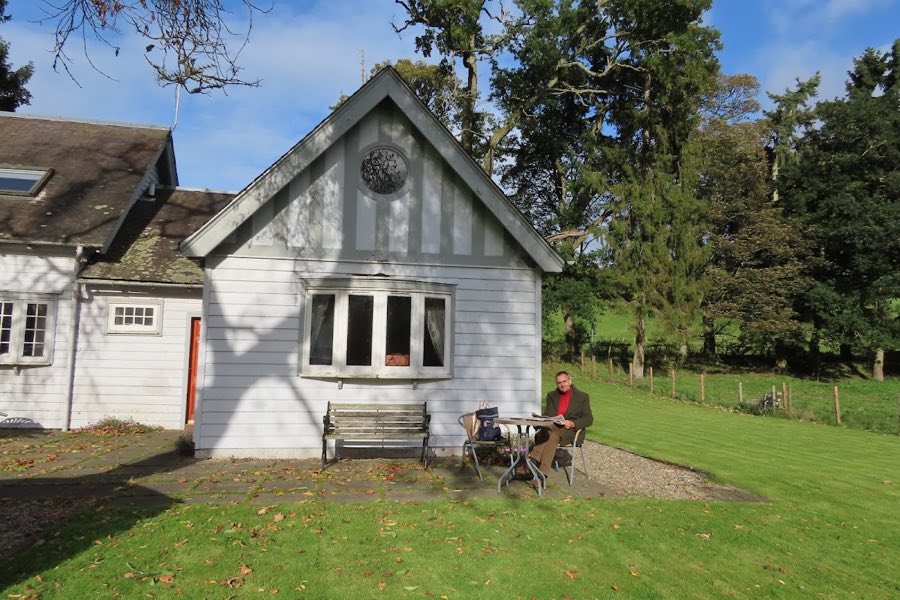
Ardblair Castle is a tower house in United Kingdom with origins associated with the 16th century.
See all castles in United KingdomArdblair Castle, Blairgowrie, Scotland, was established by the Blairs during the Norman period.
The site began as a fort before the Blairs built a castle on the same ground. The property was granted to the Blairs of Balthavock in 1399 by David II. In the mid-16th century a major legal episode affected the family: in 1554 Patrick Blair of Ardblair stood trial and was beheaded for the murder of George Drummond of Ledcrieff and his son.
A new tower house was erected in the 1500s, and later building phases reshaped the complex over the 17th and 18th centuries. A courtyard was formed by subsequent additions, its gateway carrying the date 1668, and a sundial installed in the yard bears the year 1623. Much of the castle interior was updated in the 1700s; the main hall on the first floor received panelling and now functions as a dining room dating from that century. The lands around the castle once included an almost surrounding loch, which was substantially drained in later times.
Ownership passed by marriage to the Oliphants of Gask in 1792, and the estate remains with the Blair Oliphant family. During the 20th century many Jacobite relics were transferred to Ardblair from Gask. Caroline Nairne, the songwriter known as Lady Nairne, was a frequent visitor to the house. Local tradition associates a green lady ghost with the castle, usually identified as Lady Jean Drummond of Newton. The site has been recognised with category A listing by Historic Scotland.
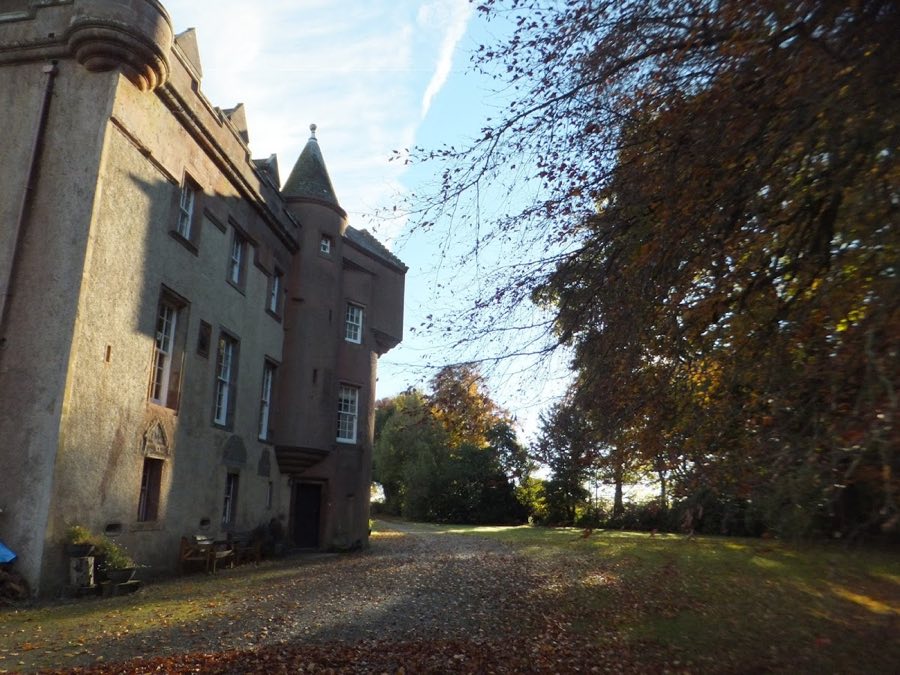
Ardblair stands as an L-plan tower with an additional wing added in later phases, the principal work dating to the 16th century. The north-west tower rises from earlier foundations thought to belong to the original fort on the site, and the main tower originally provided three storeys plus an attic. A stair-turret is corbelled out above the first storey in the re-entrant angle and is finished with a conical roof, a distinctive vertical feature of the building.
The courtyard formed by later extensions is bounded on the north by a wall pierced centrally by an arched entrance that carries the date 1668. Within that enclosed space stands a sundial marked 1623 with a complex set of 25 dials. Above the main entrance there is an ornate panel space, though it bears no inscription.
Below ground level the basement is vaulted and likely housed the kitchen, and it contains a wide fireplace. A large chimney-stack projects from the south side of the building and dominates the silhouette. The principal hall on the first floor was remodelled in the 18th century and survives as a panelled dining-room; much of the interior fabric visible today dates from that same century. During the 20th century a number of Jacobite relics were brought to the castle from Gask and remain part of the house’s historical furnishings. The loch that once nearly surrounded the castle has been largely drained, altering the site’s immediate setting.
No. 60523
No. 22826
No. 67549
No. 98750
Comments
Comments for Ardblair Castle will require a verified account before posting.
We'll send a verification link before your first comment is published.