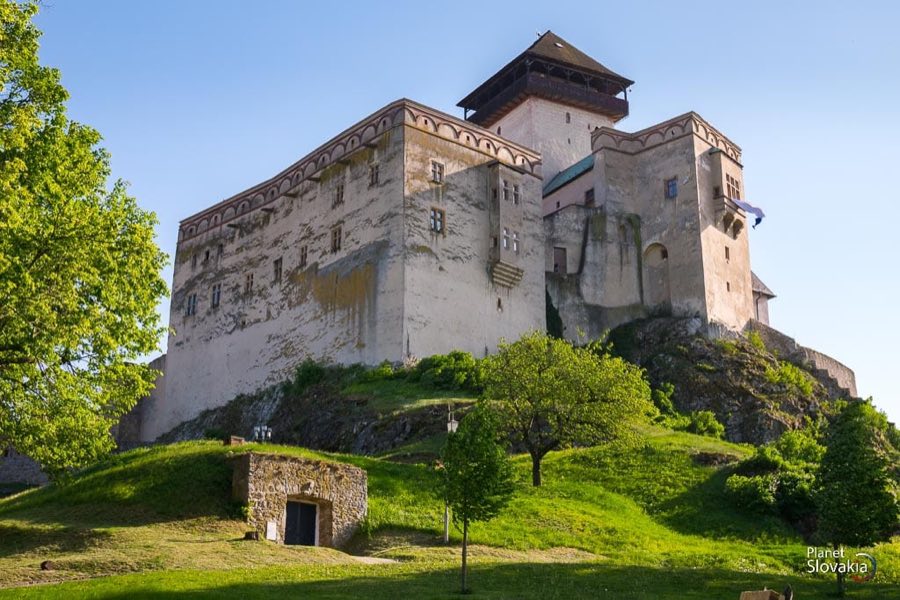
No. 44598
Trenčín Castle
Slovakia
CastleRuin2nd century
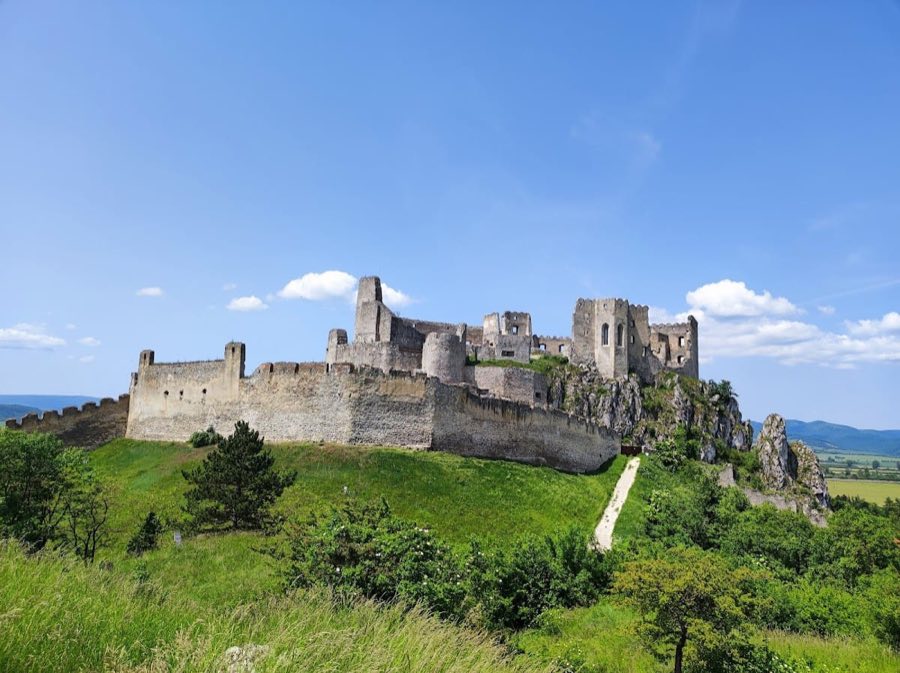
No. 28602
Castle · Slovakia
No. 28602 · 48.791 N, 17.898 E
Quick summary
Beckov Castle is a castle in Slovakia with origins associated with the 12th century.
See all castles in SlovakiaBeckov Castle sits prominently above the village of Beckov in western Slovakia. The site has been settled since around the turn of the era, originally named Blundix in Latin and referred to as Blundus or Bolondos in other sources. The castle itself was constructed in the 12th century by the early medieval civilization that controlled this territory, serving as a defensive stronghold on the borderlands of Great Moravia and later the Kingdom of Hungary.
During the late 13th and early 14th centuries, the fortress was owned and strengthened by Matthew III Csák, a notable regional magnate. Following Matthew’s death in 1321, the castle was overseen by appointed castellans, until King Louis I of Hungary rewarded Miklós Bánffy with the property in 1379 in recognition of military service. About a decade later, in 1388, King Sigismund of Hungary granted Beckov Castle to Stibor of Stiboricz, a powerful noble of Polish descent and royal advisor. Stibor redeveloped the castle in the Gothic style, transforming it into his family’s principal residence. He invited artists from Venice, Poland, Germany, and Bohemia to embellish the interiors, including a richly decorated chapel featuring sculptures and paintings such as the celebrated Black Madonna.
After Stibor’s passing in 1414, ownership followed through his descendants, passing first to his son and then to his daughter Katarína. The royal council, however, placed limits on Katarína’s inheritance. In 1437, King Sigismund transferred the castle to Pál Bánffy, likely on the condition that he marry Katarína, thus uniting the estates.
After the pivotal Battle of Mohács in 1526, when the Hungarian kingdom faced the Ottoman advance, the Bánffy family undertook significant changes to the castle. Beckov was converted into a Renaissance-era fortress and noble residence, adapted to address new military threats. The castle withstood a Tatar siege in 1599, demonstrating its strengthened defenses. The Bánffy family retained ownership until 1646, after which the fortress was repurposed as a prison and military barracks.
In 1729, a fire ravaged the castle’s interiors and roofs, leaving it in ruins. This began a long period of decline until the site was designated a national cultural monument in 1970. Subsequent restoration efforts continued through the late 20th century and into the early 2000s.
Adjacent to the access road leading to the castle lies a Jewish cemetery founded in 1734. With more than one hundred gravestones dating from 1739 onward, this cemetery is recognized as a Slovak cultural monument, reflecting the presence of a long-standing Jewish community near Beckov Castle.
Beckov Castle crowns a steep limestone cliff about 60 meters above the surrounding landscape, offering clear defensive advantages by natural terrain. The original 12th-century stone construction featured a compact design including a quadrangular tower and two-story palace surrounded by protective walls. This early fortification exemplified medieval border defense architecture.
The main entrance to the castle, dating from the 16th century, originally included a drawbridge over a surrounding moat and a barbican—a fortified outpost guarding the gateway. Although the moat and barbican are no longer extant, a wooden bridge now spans the approach, and a 14th-century guard tower near this entrance remains standing, currently serving as the ticket office. The guard tower played a key role in monitoring access to the castle ward.
The castle’s layout consists of two main courtyards. The lower courtyard was enclosed by 14th-century fortification walls and contained practical buildings such as craftsmen’s workshops, a kitchen, a bread oven, smithy, stables, forage storage, and a well that was itself protected by defensive walls on the northern side. Today, this area has been adapted for visitor use, but archaeological evidence confirms its original function as the working heart of the castle complex.
Above the lower courtyard rises the Big Cannon Bastion, a substantial semi-circular tower constructed on the rock face. This bastion provided critical defense and linked the lower castle to the upper castle areas. The upper castle sat atop the cliff and housed the lord’s residential and reception spaces. It was separated defensively from the lower courtyard by a gated entrance with a drawbridge and included terraced areas and fortifications arranged to form a defensive maze on the southern side.
Within the upper castle, walls of the noble quarters were painted green with elaborate decoration, while supporting service and farm structures were finished in white limewash, and the defensive walls displayed a brick-pink hue.
Several important buildings remain or are visible as ruins in the upper castle. The Renaissance Western Palace, once a winter garden, has been restored and now functions as a café space. Near the central courtyard lie the ruins of a service building and a water tank. The Cross Entry Palace survives only as ruins, as does the three-story Northern Palace where the main reception room known as the Knights’ Hall was located. This Northern Palace featured Gothic windows, some glazed or covered with oiled parchment and wooden shutters during the era of Sigismund and Stibor.
The castle chapel, constructed during the time of Stibor of Stiboricz and linked to the living quarters in the Northern Palace, was richly decorated with sculptures and paintings. A stone tympanum bearing the Stibor family coat of arms adorned the entrance. Today, the chapel portal is preserved in the Beckov museum, while the Gothic sculpture of the Black Madonna originally housed in the chapel is now kept in Koryčany in Moravia.
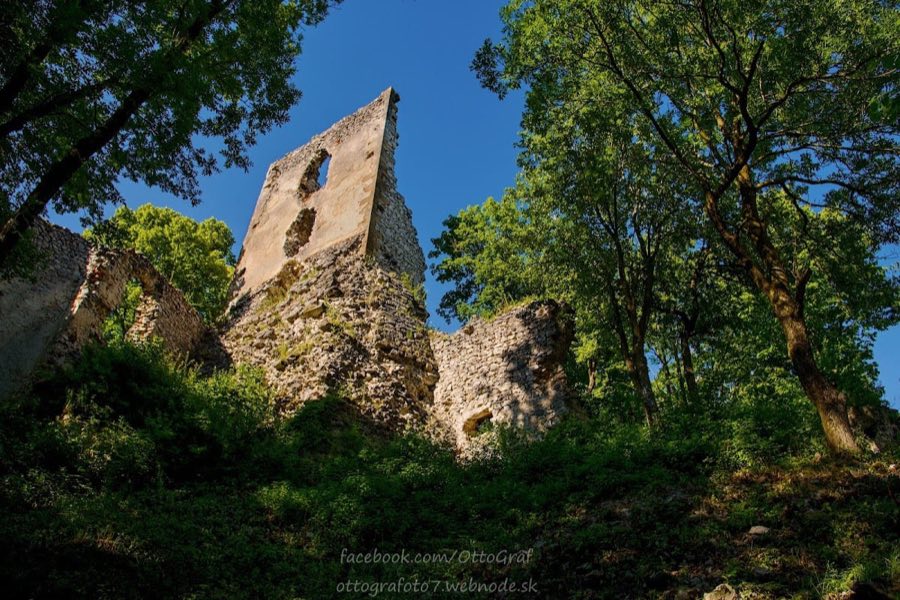
Overall, the ruins reflect a mixture of restored structures and protected fragments. Some upper castle buildings have been reconstructed, whereas important elements such as Stibor’s palaces, the chapel, the lower castle with its well, entrance gates, and the large cannon bastion remain in a ruinous state.
Adjacent to the castle road, the Jewish cemetery lies divided by the roadway into older and newer sections. Its gravestones, inscribed primarily in Hebrew and some in German, date from the 18th and 19th centuries. This cemetery stands as a preserved cultural monument that attests to the historical Jewish presence near Beckov Castle.
No. 44598
No. 10128
No. 91323
No. 78114
Comments
Comments for Beckov Castle will require a verified account before posting.
We'll send a verification link before your first comment is published.