No. 21962
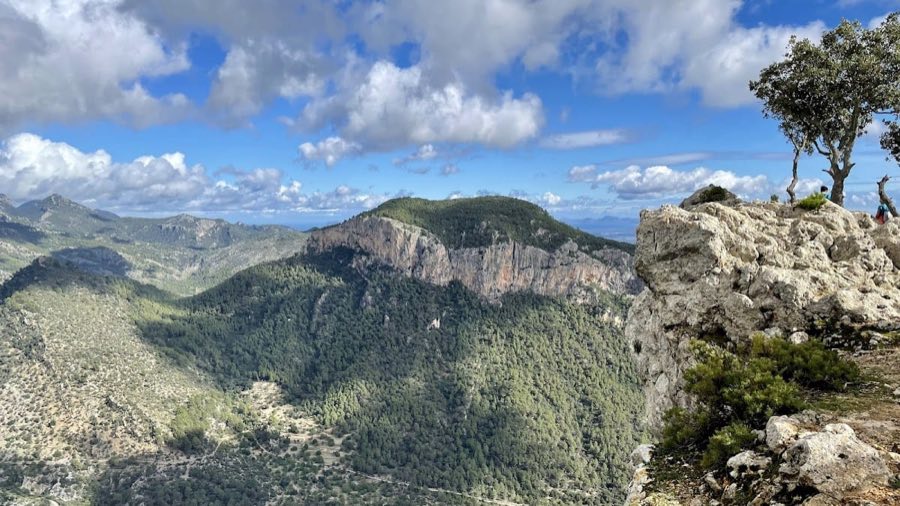
Castell d'Alaró
Spain
CastleRuin10th century
No. 31994
Castle · Spain
No. 31994 · 39.546 N, 2.578 E
For sale
Bendinat Castle in Spain is marked with a public sale signal. Asking price, tenure, land area, floor area, and room counts are shown only after public verification.
Status: Public sale signal
Price: Price on application or not publicly verified
Property type: Castle
Notable features: Restored historic fabric, Museum or cultural use, Public-access operations
Availability note: Submit an official public listing or register buying interest to complete the sale record.
Quick summary
Bendinat Castle is a castle in Spain with origins associated with the 19th century.
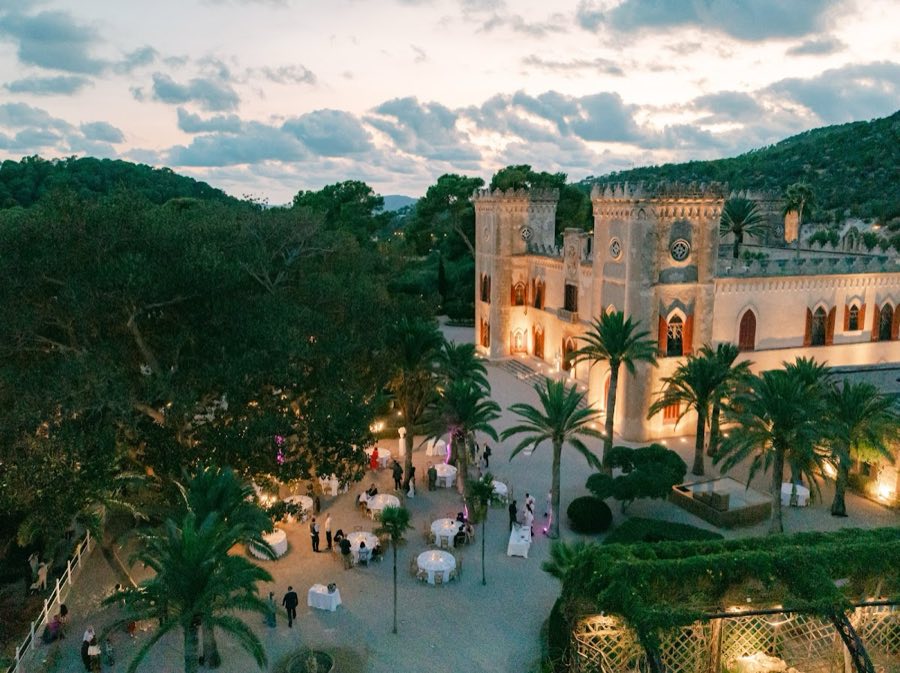
See all castles in SpainCastle of Bendinat, in the municipality of Calvià, Spain, was built in the 19th century by the fifth Marqués de la Romana.
The place where the castle stands had been occupied long before the modern building was raised. In the 15th century the site contained an Islamic rural settlement that belonged to the Burgues d’Ençà family. Later construction in the 1800s was carried out directly over the houses of that earlier settlement, so the castle’s footprint records continuity of use from the medieval period into the modern era. The name of the locality evolved over time; Arabic forms such as Ibn‑Dinat or Bendinex appear in documents from the 1200s, and local tradition links the place name to a phrase attributed to King Jaime I when he is said to have camped in the area.
In the 19th century Pedro Caro y Álvarez de Toledo, the fifth Marqués de la Romana, commissioned the present building, shaping it in a neo‑Gothic manner inspired by central European castles. In 1880 the Marqués de la Romana sold the property to the Truyols family. The rear façade of the house came to display the Truyols family coat of arms, centered above the building; the shield shows a trull (a type of press or mill) with a beam above it, topped by a helmet and encircled by a wreath of vegetal motifs.
Ownership of the castle passed through several families in the 20th century and beyond. One named owner was Joana‑Adelaida Dameto i de Verí, countess of Perelada; after her death titles and ownership transferred through Juan Miguel de Sureda (Marqués de Vivot), the Fortuny family in 1912, the Montaner family in 1973, and members of the extended family of Ferran Truyols i Despuig (Marqués de la Torre). In 1999 the castle’s movable collection was dispersed at an exceptional auction, with furniture dating between the 17th and 20th centuries selling for in excess of 400 million pesetas and roughly 240 paintings from the private collection offered for sale; at least one lot, an 18th‑century French porcelain plate, entered the Museo Nacional de Artes Decorativas in Madrid. In 2008 Carlos Delgado Truyols and other heirs sold the castle together with about 700 hectares of adjoining land to the Astroc foundation, which converted the property for use as a museum.
The standing building follows a 19th‑century neo‑Gothic design modeled on castles of central Europe, and it occupies the site of the earlier Islamic settlement. Construction in the 1800s reused the footprint of the medieval houses, so the plan of the estate reflects layers of occupation. The rear façade is marked by the Truyols family shield, set prominently at its center; the emblem is carved or mounted to show a trull or mill with a beam above, surmounted by a helmet and surrounded by a wreath of vegetal elements.
Within the grounds there survives a cistern that once stored water and the visible remains of an aqueduct that conveyed water across the property. Both the cistern and the aqueduct remains are catalogued as ethnological assets, and they remain on site as material evidence of the estate’s water management. Their fabric is preserved as archaeological features in situ and they are identified in site inventories for their cultural value.
The estate sits between the town of Bendinat and the Sierra de Na Burguesa and is set within a wooded landscape. The surrounding vegetation includes Aleppo pine (Pinus halepensis), stone pine (Pinus pinea), members of the Pistacia genus, and the carob tree (Ceratonia siliqua), all of which form the present forested setting around the castle.
No. 21962
No. 45481
No. 72234
No. 27626
Comments
Comments for Bendinat Castle will require a verified account before posting.
We'll send a verification link before your first comment is published.