No. 31994
Bendinat Castle
Spain
CastleRestoredFor sale19th century
No. 45481
Castle · Spain
No. 45481 · 39.153 N, 2.932 E
Quick summary
Castell de Cabrera is a castle in Spain with origins associated with the 14th century.
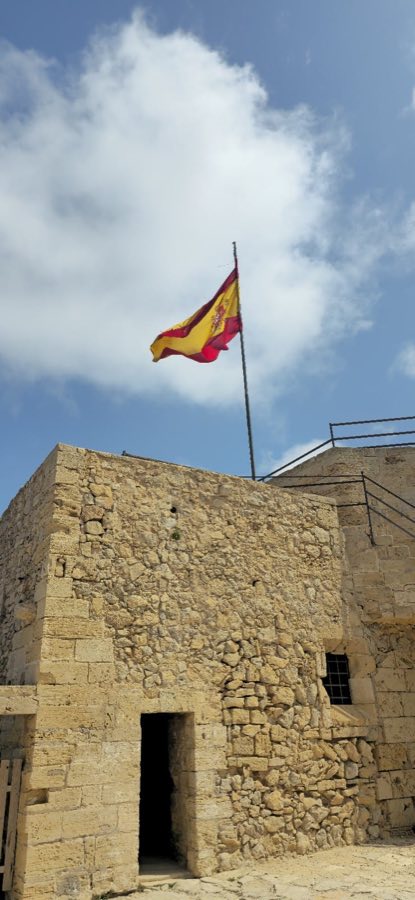
See all castles in SpainThe Castell de Cabrera is located in the municipality of Algaida, Spain, within the Balearic Islands, and was constructed by medieval Christian forces during the late 14th century. Initially serving most likely as a watchtower, the fortress’s earliest recorded mention appears in 1410, confirming its operation by that date.
By 1425, the site’s strategic importance had grown, prompting Bernat Zaragoza, who held rights over Cabrera, to arrange with the University of the City and Kingdom of Mallorca for a permanent military garrison. This agreement corresponded with an expansion of the original structure, reflecting its evolving role from a lookout point to a more substantial defensive castle tasked with repelling pirate incursions to protect the island.
Throughout the 16th century, the fortress endured several violent episodes. In 1510, Berber galleys attacked, capturing guards and fishermen before destroying the tower. Later, in 1550, the Turkish corsair Dragut led a formidable force of 1,500 men to seize the island. His troops captured the castle’s artillery and demolished the structure entirely, an action demonstrating the castle’s significance as a military target.
During this same century, a chapel was constructed within the complex to serve the spiritual needs of the garrison. Clergy from the nearby town of Santañí conducted masses there, indicating the castle’s function extended beyond military defense to include religious practice for its occupants.
The castle was restored in 1698, at which point administration transferred to the University of Mallorca. Its defensive role continued into the early 18th century, particularly during the War of the Spanish Succession. In 1715, the fortress, commanded by Governor Francisco Mariscal and defended by approximately twenty soldiers, monitored Bourbon movements across the Balearic Islands. This period marked the final documented use of the castle’s artillery. From 1716 onward, control shifted to direct royal authority, signaling a change in administrative oversight.
Life as a castle guard was notably hazardous and isolated. The post offered few opportunities for retreat during attacks, which led to very high wages—among the highest paid in the Balearic Islands. To fill these risky positions, authorities often employed convicts granted reduced sentences in exchange for their service at the castle.
Over the centuries, the Castell de Cabrera underwent at least ten phases of reconstruction, especially throughout the 16th century when it faced repeated attacks and destructions. While recent restoration efforts have taken place, evaluations of these modern interventions have found them only moderately successful in preserving the site’s historical fabric.
The Castell de Cabrera stands as a robust, slightly elongated hexagonal fortress perched 72 meters above sea level at the eastern end of Cabrera Island’s natural harbor entrance. Its current form reflects extensive rebuilding following numerous assaults and demolitions, resulting in a structure significantly altered from the original late 14th-century watchtower.
Constructed primarily from solid masonry appropriate for defensive fortifications, the castle’s layout leverages its strategic position overlooking the harbor. This vantage point allowed defenders to surveil and control maritime access to the island, maintaining its crucial role in repelling seaborne threats.
Among the surviving elements, the 16th-century chapel remains an integral part of the site. Historically, this chapel hosted religious services conducted by priests from Santañí, serving the spiritual needs of the garrison stationed within the fortress. The chapel’s inclusion within the fortress walls illustrates the dual military and religious functions the castle fulfilled during its active period.
Today, the castle’s structure reflects layers of modifications resulting from repeated reconstructions after attacks, including extensive damage sustained from pirate raids and deliberate demolitions in the 16th century. While restoration efforts have aimed to preserve and stabilize the remains, the castle continues to bear the marks of its turbulent history on Cabrera Island.
No. 31994
No. 21962
No. 72234
No. 14228
Comments
Comments for Castell de Cabrera will require a verified account before posting.
We'll send a verification link before your first comment is published.