No. 35694
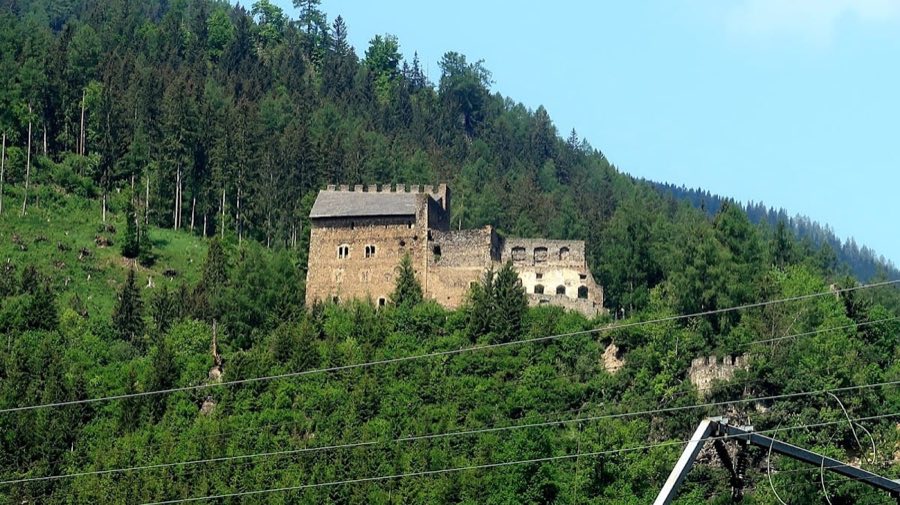
Burgruine Steinschloß
Austria
CastleRuin12th century
No. 29833
Castle · Austria
No. 29833 · 47.130 N, 14.366 E
Quick summary
Burg Alt-Teuffenbach is a castle in Austria with origins associated with the 11th century.
See all castles in AustriaBurg Alt-Teuffenbach stands above the village of Teufenbach in Austria. The lands around the settlement entered recorded history in the ninth century when the archbishop of Salzburg received territory there from the German emperor. Members of the Teuffenbach family appear in documents from 1074, with a man named Dietmar recorded; the family served as ministeriales to the dukes of Carinthia and Styria. The castle itself was probably constructed by the family in the early to mid twelfth century as a privately held stronghold. By 1358 the place was referred to as Alt-Teufenbach. In 1440 King Friedrich III granted jurisdiction over the local land court to Tristram von Teuffenbach, linking the site to royal administration. In the later fifteenth century Georg von Teuffenbach aligned himself with Matthias Corvinus, lost his ancestral fortress for a time, and recovered it in 1489. The site continued to have military and signaling roles and in 1596 it served as a station for signal fires, taking advantage of its views and control of the valley route.
In 1613 Rudolf von Teuffenbach consolidated ownership by buying out minority shares. His son Hans Friedrich was accused of high treason, had his Styrian property confiscated, emigrated in 1629, and then sold the lordship to his cousin Jakob von Teuffenbach. Alt-Teufenbach changed hands repeatedly in the mid seventeenth century. In 1642 it passed as a gift to Gregor Sidenitsch. After the Peace of Westphalia the property returned to Anna Sidonia, Countess of Löwenstein, who in 1649 transferred the lordship to her cousin Hans Carl von Teuffenbach. Upon Hans Carl’s death in 1671 the estate went to Georg Christian von Saurau, and in 1689 his widow sold the property to Ferdinand, Prince of Schwarzenberg. The Schwarzenberg family moved the administrative center of the lordship to Murau, after which the castle fell into disuse and was recorded as a ruin by 1815. In 1890 the writer Auguste Groner acquired the derelict site, repaired portions of the structure and made parts inhabitable, and a residential building was constructed at the same time. Afterward the Freiherren von Teuffenbach purchased the property, carried out further restoration, and the site has remained with that Styrian family. The complex was rebuilt around the end of the nineteenth century and is described in contemporary records as among the region’s oldest continuously occupied castles, although it is not listed under monument protection.
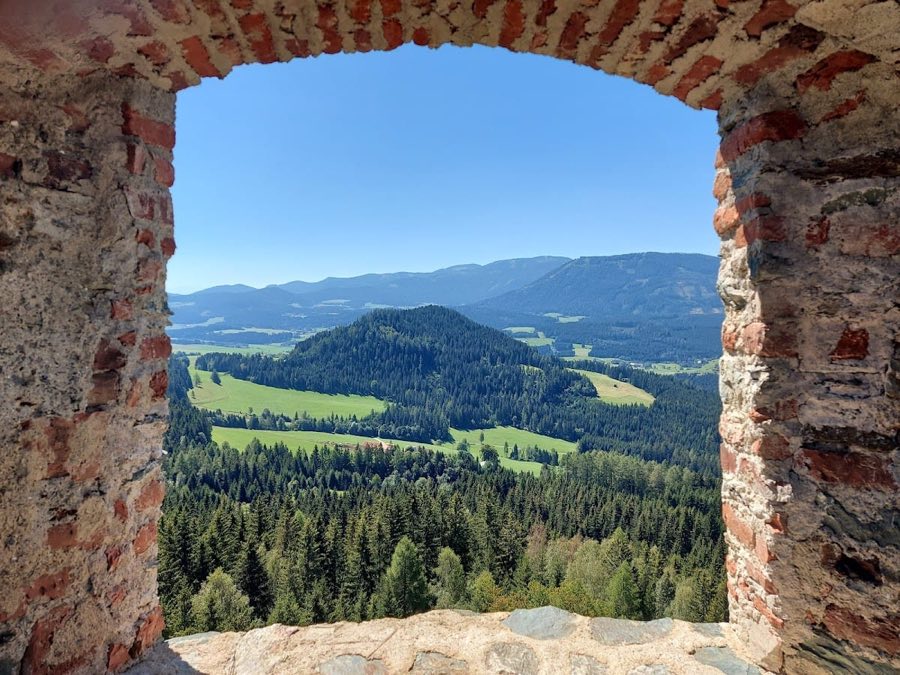
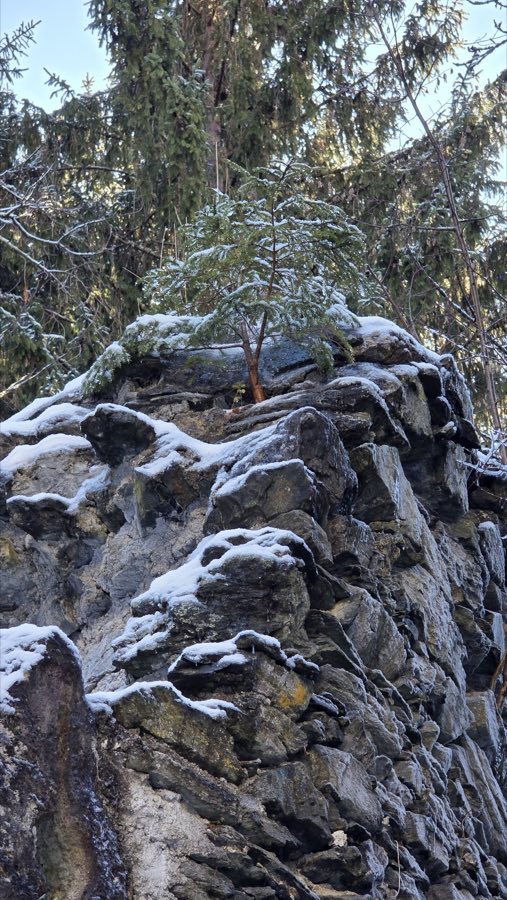
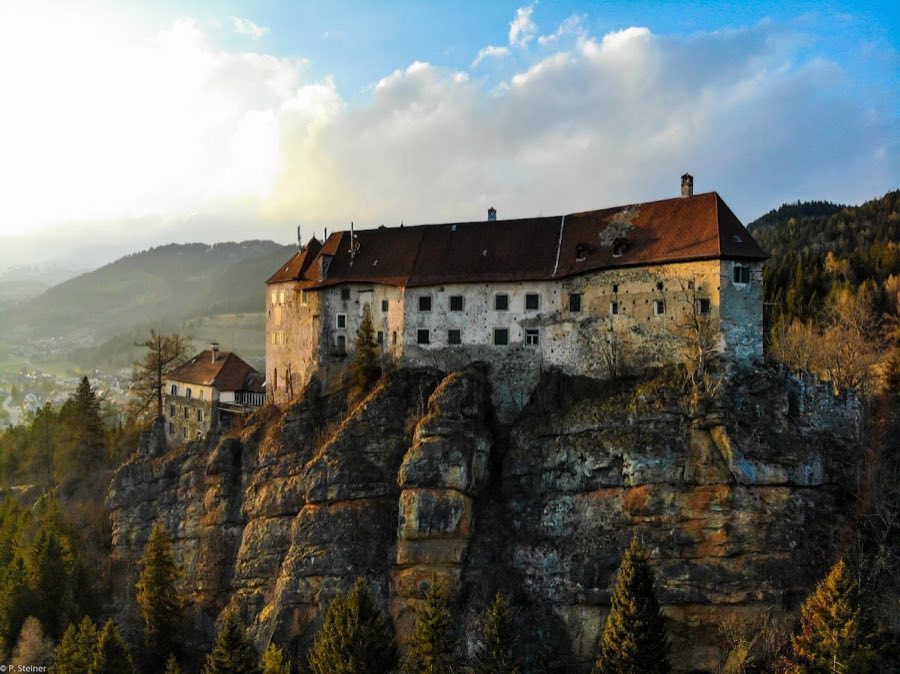
The castle occupies a narrow position on a ridge that drops steeply to the Mur valley, a siting that controlled the approach to the Neumarkter Sattel and permitted oversight of the road below. From this height the place had line of sight links with nearby fortifications and in 1596 functioned as a station for signaling by fire. The medieval core consisted of a three-storey, tower-like residential house connected by a defensive wall to a lower gate building, with that wall enclosing a narrow courtyard on the south side.
These elements reflect the small-scale, compact plan of the site as it evolved in the Middle Ages; the tower-like house dates to the castle’s original high-medieval phase, while the enclosing wall and gate formed the immediate defensive circuit. A round tower at the southwest corner of the enclosing wall dates to the fifteenth century and survives only as fragmentary remains.
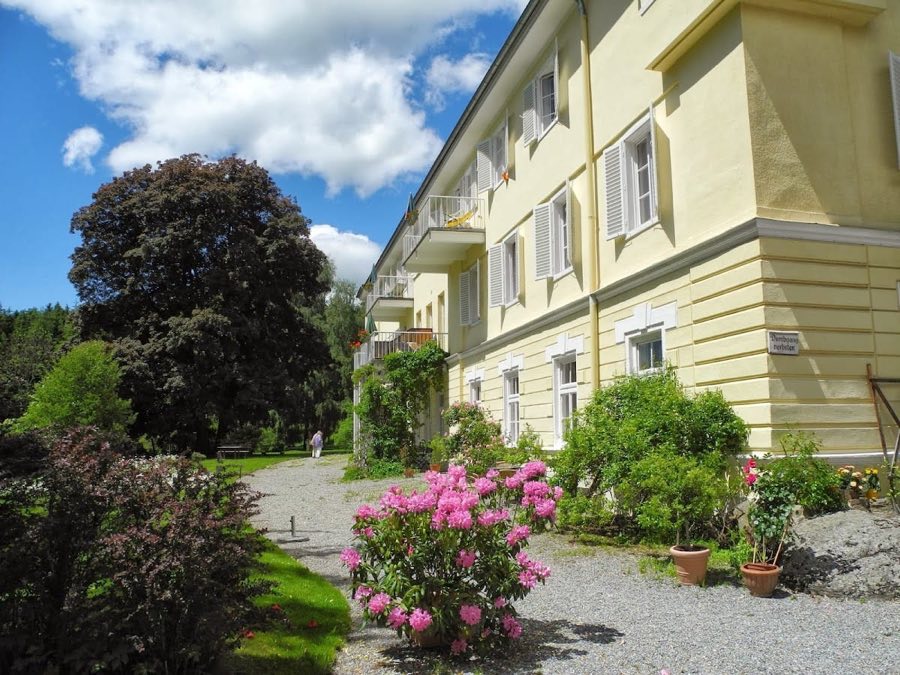
The late-nineteenth-century intervention by Auguste Groner produced a new residential building whose principal façade faces southwest; medieval elements remain in situ beside these newer additions, so the ensemble combines medieval structural fragments with a residential building erected and repaired at the end of the 1800s, reflecting the site’s long sequence of reuse.
No. 35694
No. 16563
No. 82842
No. 69820
Comments
Comments for Burg Alt-Teuffenbach will require a verified account before posting.
We'll send a verification link before your first comment is published.