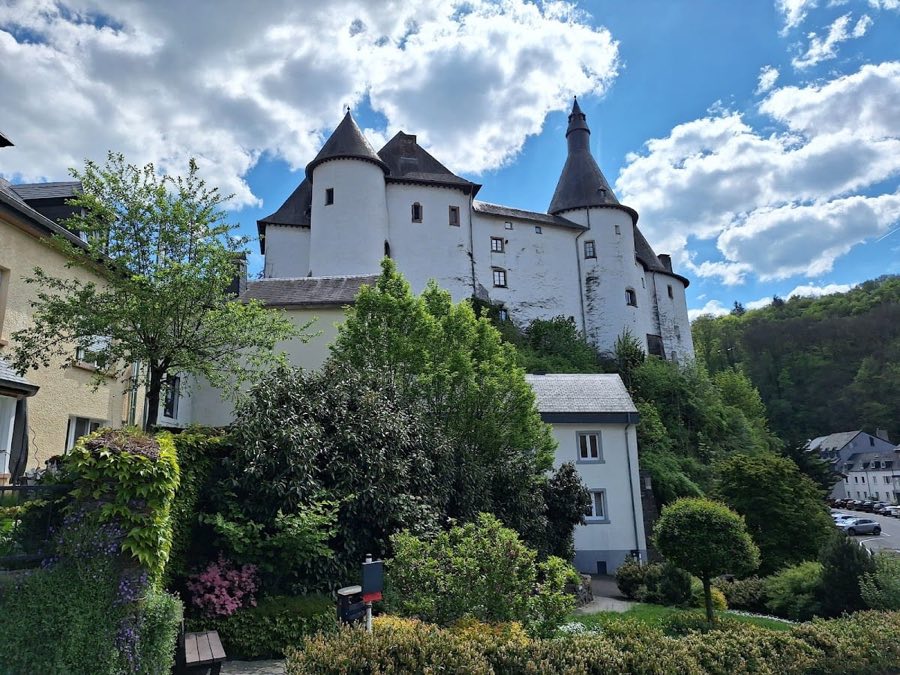
No. 88039
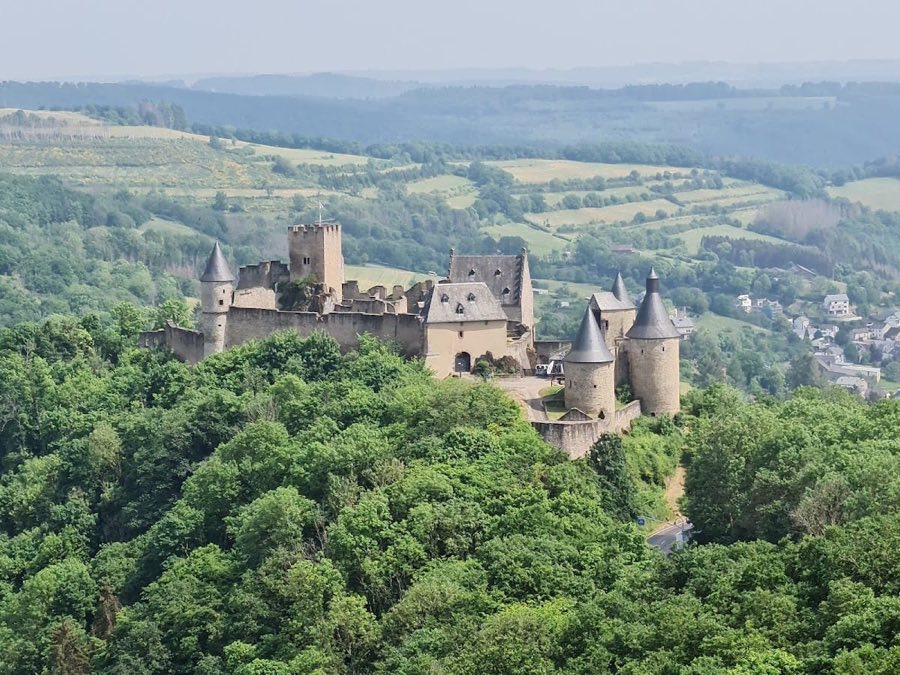
Clervaux Castle
Luxembourg
CastleRuinFor rent12th century
No. 24585
No. 24585 · 50.047 N, 6.132 E
Quick summary
Burg Dasburg is a castle in Germany with origins associated with the 13th century.
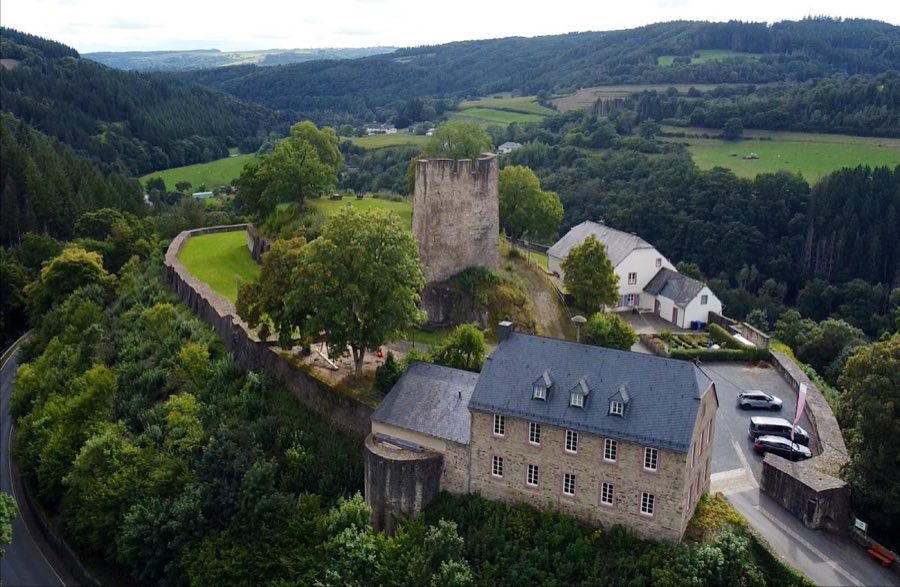
See all castles in GermanyBurg Dasburg stands above the village of Dasburg in Germany and was built by medieval feudal authorities in the early thirteenth century as a defensive stronghold and place of refuge.
The site appears in a 1222 commentary to the Prümer Urbar under the name Daysberhc castrum, attesting its existence by the early 1200s. From its earliest documentary record the castle and its surrounding lordship functioned within the regional feudal order, held by the local counts as a fief of the Abbey of Prüm; the Vianden family carried an obligation to provide protection to the abbey. Over the later Middle Ages the place is connected repeatedly with the houses of Vianden, von Sponheim, Nassau and Orange, and that connection remains in ceremonial form today in the Dutch king’s historical style as Lord of Dasburg.
Political control shifted during the early modern period. In 1417 the Counts of Nassau-Dillenburg took possession. In 1580 King Philip of Spain deprived Count William of Orange of the lordship and handed the site to the governor of the Duchy of Luxembourg, Count von Mansfeld. After the king’s death the castle returned to the House of Nassau-Oranien in 1604 and remained Nassau-Oranien property through the seventeenth and eighteenth centuries.
The lordship administered surrounding agricultural holdings, including the manors of Dasburg and Daleiden and at times Binscheid and Harspelt, and exercised local justice through a court formed by a Schultheiss and Schöffen. In 1625 the cleric Jakob Pott recorded thirty-five named houses in the locality, showing a settled community attached to the castle’s domain.
French Revolutionary forces occupied the site in 1794, an occupation that provoked local resistance known as the Klöppelkrieg, led by the gamekeeper Karl Bormann. In 1813 General Oudinot, having received Dasburg from Napoleon, put the castle up for auction through the notary Dupont. After the Second World War ownership of the ruined site passed to the state of Rhineland-Palatinate, and in 1965 responsibility moved to the state administration for castles. The ruin is currently undergoing restoration and, once work is finished, it is intended to be leased by public advertisement because several parties have expressed interest. On 22 January 2012 larger sections of the exterior masonry and the foundation of the round tower collapsed and slipped in the direction of the adjacent federal road.
Burg Dasburg occupies a hilltop at 356 metres above sea level, positioned to dominate the local landscape. The castle survives as a ruin that preserves the footprint of a compact hill castle with an inner ward and surrounding defensive circuit. Substantial foundations remain that mark the layout of inner and outer enclosures and show the site’s medieval function as a fortified refuge.
From the medieval complex the foundations of the inner defensive wall survive alongside fragments of the outer defensive wall, which includes two projecting half-towers. These wall remains are preserved as masonry foundations and wall sections, and they indicate the original enclosing circuit and flanking positions. A passage runs along the curtain wall, and on the wall’s shorter northern side there was originally a bridge crossing into the site; that northern approach was interrupted by a gate approach and a series of half-towers, traces of which remain at ground level.
The entrance gate survives in fragmentary form, and the north face of a defensive tower remains standing to about twenty metres in height, this tower having formed the centre of the castle’s core that probably dates to the twelfth and thirteenth centuries. The medieval castle also contained a large dungeon, the position of which is retained in the surviving foundations. The surviving masonry and foundation work show later damage and loss: in January 2012 major parts of exterior masonry and the round tower’s foundation collapsed and slipped toward the adjacent federal road, a recent event that has affected the condition of the ruins as they stand today.
No. 88039
No. 62100
No. 57086
No. 91938
Comments
Comments for Burg Dasburg will require a verified account before posting.
We'll send a verification link before your first comment is published.