No. 24585
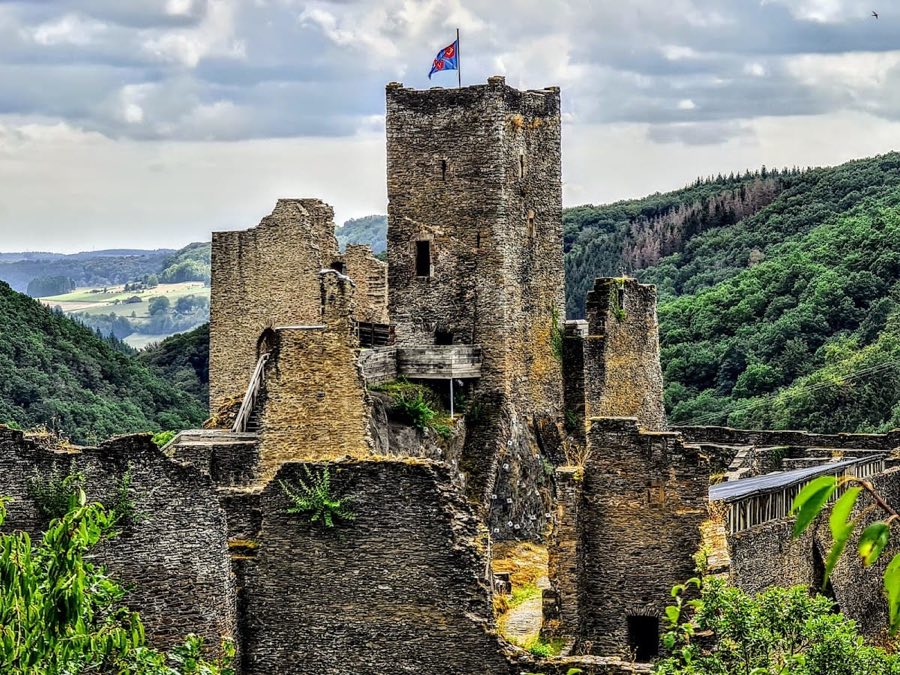
Burg Dasburg
Germany
CastleRuin13th century
No. 88039
Castle · Luxembourg
No. 88039 · 50.054 N, 6.030 E
For rent
Clervaux Castle is marked for bookable castle accommodation. Nightly pricing, sleeps count, stay rules, and amenities are displayed only when public operator data is available.
Rental type: Hotel / bookable stay, Short-stay rental
Short-term availability: Bookable accommodation signal
Quick summary
Clervaux Castle is a castle in Luxembourg with origins associated with the 12th century.
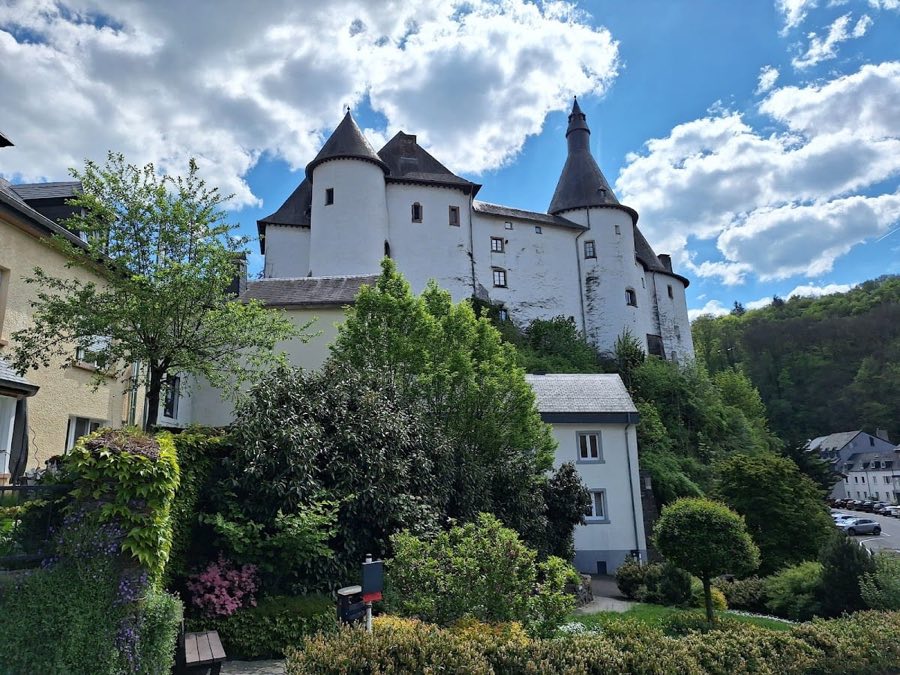
See all castles in LuxembourgClervaux Castle stands on a rocky spur overlooking the town of Clervaux in northern Luxembourg. It was founded in the early 12th century by Gerard I of Sponheim as a hill castle. The first written record of the castle dates to 1126. Initially, it likely served as a Vogtei, a type of protective administrative center, possibly connected to the nearby Abbey of Stavelot. This early role linked the castle to both secular and ecclesiastical authority in the region.
Ownership of the castle changed hands several times over the centuries. After the Sponheim family, it passed to the Meysenburgs and then to a branch of the Counts of Vianden in the early 1400s. Later, the Brandenburg family took possession, followed by the de Heu and von Eltz families. Each transition reflected shifting noble alliances and regional power dynamics.
Between 1595 and 1597, Gottfried von Eltz strengthened the castle’s defenses. This work responded to the dangers posed by the ongoing Eighty Years’ War, a conflict affecting much of Europe. The castle’s fortifications were reinforced to withstand potential attacks during this turbulent period.
In 1617, the castle came into the hands of the de Lannoy family through marriage. They held it for nearly 240 years, transforming the fortress into a more comfortable palace-like residence. Despite these changes, the castle retained its strong defensive character, blending residential and military functions.
The castle briefly became a battlefield during the Klöppelkrieg in 1798, a peasant uprising against French occupation. This conflict marked a moment of local resistance amid wider revolutionary upheavals in Europe.
In the late 19th century, parts of the outer bailey were dismantled. Stones from these demolitions were reused to build a small palace nearby, reflecting changing architectural tastes and needs.
By 1927, Clervaux Castle had entered private bourgeois ownership. It was adapted to house a hotel and a museum, marking a shift from noble residence to public cultural use.
During the Battle of the Bulge in December 1944, German forces heavily shelled the castle. The bombardment caused a fire that destroyed much of the structure, leaving it in ruins by the war’s end.
After World War II, the Luxembourg government purchased the castle and undertook a comprehensive restoration. This work, completed in 1994, carefully rebuilt the castle’s historic form. The restored castle now serves municipal functions and hosts several museums.
Since 1970, the castle has housed three museums. These include a model museum displaying Luxembourg’s castles, a museum dedicated to the Battle of the Ardennes, and the internationally acclaimed photographic exhibition “The Family of Man.” Curated by Edward Steichen, this exhibition has been permanently displayed since 1994 and is recognized by UNESCO’s Memory of the World Register since 2003.
Clervaux Castle occupies an oval-shaped site on a rocky outcrop at 365 meters above sea level. It is surrounded on three sides by a bend in the River Clerve, giving it a natural defensive position above the town. The castle’s core consists of multiple wings arranged around an inner courtyard, with exterior walls up to 2.1 meters thick.
The oldest surviving parts lie on the west side, including the Burgundian Tower and the Pigeon Tower, both dating from before 1400. These towers represent the medieval origins of the fortress and its early defensive structures.
In the early 15th century, the Brandenbourg Tower was added on the south side. Alongside it, a Gothic south wing with extensive cellars was constructed. This wing now accommodates three of the castle’s museums, linking historic architecture with modern cultural use.
During the Renaissance, a large northern wing replaced smaller earlier buildings. This wing features a square stair tower and contains the Knights’ Hall, decorated in Flemish and Spanish styles. Today, this area serves as the municipal administration offices.
The 17th century saw expansion of the outer bailey, creating a new economic courtyard. This area included stables, barns, and a chapel relocated from the Pigeon Tower. Defensive additions from this period include a gatehouse and the semi-circular Hexenturm, or Witch Tower.
The castle suffered near-total destruction by fire in 1944. Post-war restoration meticulously rebuilt the structure, preserving its historical layout and architectural features. The castle today reflects its layered history through careful reconstruction.
The “The Family of Man” exhibition is displayed on two upper floors. Original black-and-white photographic prints are mounted on wooden panels, arranged to replicate the 1955 Museum of Modern Art installation. The exhibition is complemented by a library and contextual materials.
The castle’s museums also include detailed scale models of 22 major Luxembourg castles at a 1:100 scale. These models illustrate the region’s fortress heritage. Additionally, a collection of artifacts related to the Battle of the Ardennes is displayed, featuring documents, weapons, and uniforms mainly from private collections.
No. 24585
No. 91938
No. 10231
No. 57086
Comments
Comments for Clervaux Castle will require a verified account before posting.
We'll send a verification link before your first comment is published.