No. 96852
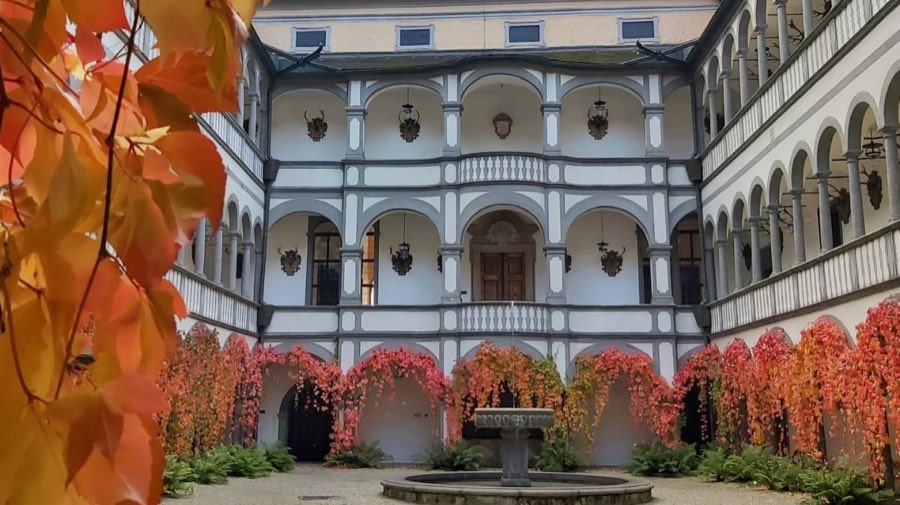
Greinburg Castle
Austria
CastleIntact15th century
No. 11982
Castle · Austria
No. 11982 · 48.259 N, 14.820 E
Quick summary
Burg Kreuzen is a castle in Austria with origins associated with the 16th century.
See all castles in AustriaBurg Kreuzen is a rock castle situated near the municipality of Neuaigen in Austria. It was constructed by the early medieval Bavarian civilization around the year 900, mainly serving as a refuge fortress during turbulent times.
The earliest known written record dates back to 1125 when a pilgrim from Creutzen claimed ownership of the site. By 1209, Hermann von Creutzen appears as the documented lord. In subsequent years, the Volkensdorfer family took residence, subdividing the castle into front and rear sections, which were governed separately by Hans and Alber Volkensdorfer brothers. This division suggests an internal administrative adjustment to accommodate familial branches.
In 1489, the castle changed hands to the Prüschenk brothers, introducing a new noble lineage. About three decades later, Adam Schweinböck acquired the site in 1518. His tenure was followed by Helfried von Meggau, who in the early 16th century reunited the divided castle sections, consolidating its structure and control. The Breuner family inherited the castle through marriage in 1619, demonstrating how noble alliances influenced ownership.
During the late 16th century, Burg Kreuzen played a defensive role amid the Ottoman incursions threatening the region. Later transitions included possession by the Dietrichstein family from 1655, and roughly fifty years afterward, Graf Johann Cavriani took ownership around 1716. The counts of Salburg became custodians in 1754, before sale to the Sachsen-Coburg and Gotha family in 1823. By 1876, Queen Victoria owned half of the castle, exemplifying its connection to prominent European aristocracy.
A catastrophic fire struck in 1880, destroying much of the upper structures, particularly the roof, leaving the castle a ruin. In the 20th century, the property was acquired by a local farmer and mayor in 1965, then passed to the regional tourism association in 1974. Major restoration efforts began in the 1980s and were later expanded with extensive renovations from 2010 to 2012, transforming the ruined fortress into a functional cultural center.
Historically, the castle’s name is linked to a local legend about a pilgrim who brought back a relic believed to be a fragment of Christ’s cross from the Holy Land, adding a spiritual significance to its identity and reinforcing its ties to medieval pilgrimage traditions.
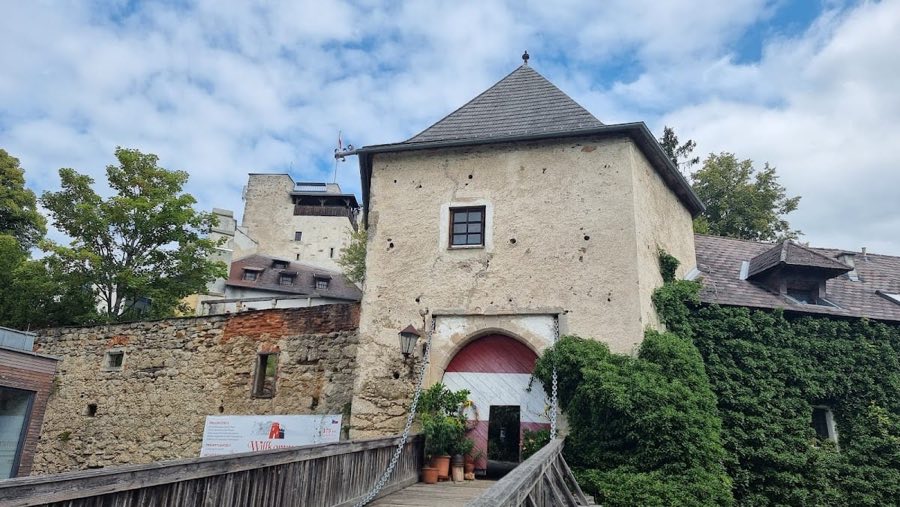
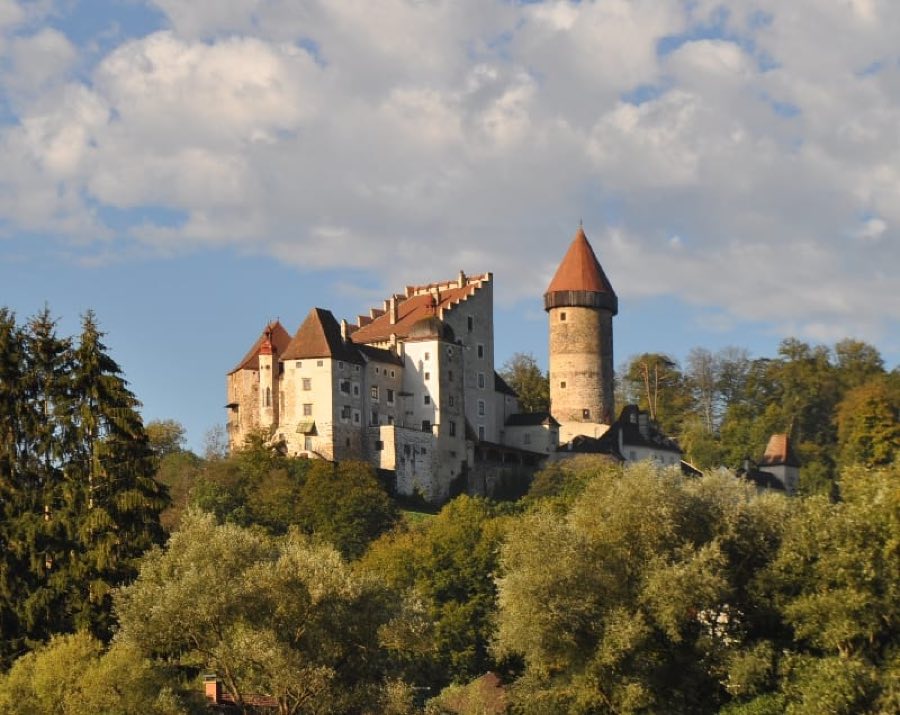
Burg Kreuzen occupies a strategic position atop a wooded ridge, naturally defended by steep slopes on three sides. Its overall size ranks it as the second largest castle complex in Upper Austria, surpassed only by the nearby Schaunberg ruins. The original perimeter was secured by a defensive wall approximately five meters tall, sections of which remain visible, especially near the entrance.
The main gate once featured a drawbridge, replaced in 1983 by a stone bridge. This was later substituted in 2007 with a wooden bridge supported by pillars due to structural wear. Adjacent to the entrance stands the porter’s house, notable for its cross-ribbed vaulting—a vaulted ceiling formed by intersecting curved ribs providing support and architectural interest.
From the gate, a path ascends to the central courtyard, where remnants of an arcade wing survive. This arcade historically connected the front and rear portions of the castle and features barrel vaults, a simple curved ceiling resembling a half-cylinder. On this wing is a sundial dating to 1523, which displays the coat of arms of the Meggau family, one of the castle’s owners from that period. A chapel extends from the courtyard’s western wall, emphasizing the castle’s religious function alongside its military role.
The courtyard contained a well originally dug to a depth of 42 meters, reflecting the necessity for a reliable water source during sieges. In 1974, a square residential tower was reconstructed; measuring 10 by 10 meters with walls 2.5 meters thick, it dates back to the 13th century. Today, this tower functions as both an observation point and an exhibition space, preserving a key medieval element of the castle.
Fragments of the palas, or great hall, are integrated into the modern youth hostel established on the site. Nearby, foundations of two round towers remain visible to the north and northeast, suggesting the castle’s fortified layout involved multiple defensive watchpoints.
The castle’s layout together with these surviving structural elements offers insight into medieval defensive architecture, with clear modifications over the centuries adapting the fortress from its original refuge role toward a noble residence and later cultural monument.
No. 96852
No. 68797
No. 45529
No. 69613
Comments
Comments for Burg Kreuzen will require a verified account before posting.
We'll send a verification link before your first comment is published.