No. 80194
Burg Montfort
Germany
CastleRuin15th century
No. 61332
No. 61332 · 49.805 N, 7.742 E
Quick summary
Burg Schloßböckelheim is a castle in Germany with origins associated with the 9th century.
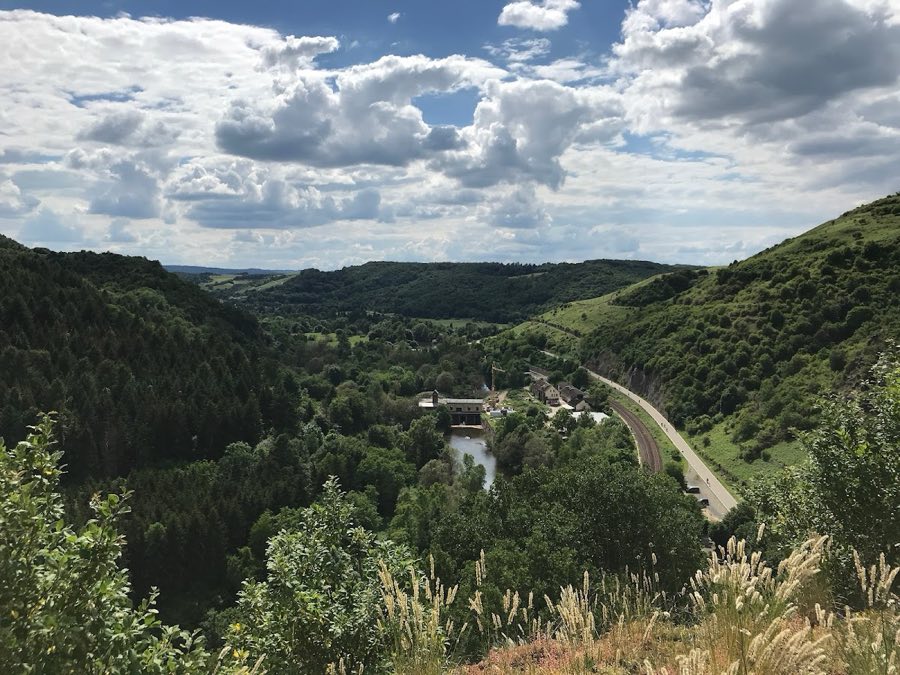
See all castles in GermanyBurg Schloßböckelheim sits on a mountainside at Schloßböckelheim, Germany, and was probably built in the ninth century on top of an earlier Roman settlement.
The place appears in a document of 824 under the name Becchilenheim. Around the turn of the first millennium a later record names a Duke Cuno of Beckilnheim, an individual most likely to be Konrad of Swabia according to that account.
In the eleventh century the castle was held as an imperial fief by Duke Gottfried III of Upper Lorraine, obtained through Mathilde of Swabia. In 1046 Emperor Henry III besieged and destroyed the stronghold and confiscated the fief after Gottfried’s rebellion. It is considered likely that in 1065 the fief over Böckelheim, together with the imperial estate at Kreuznach, passed into the possession of the Bishopric of Speyer, with Count Eberhard VI of Nellenburg acting as the bishopric’s vassal at that time.
In 1105 the castle was the scene of a dramatic political event when Emperor Henry IV was held captive there by his son Henry V and compelled to abdicate; immediately before this Henry V had appointed the Hirsau abbot Gebhard as Bishop of Speyer. The fief later passed through Adalbert of Mörsberg into the hands of the Counts of Sponheim. After a partition within that family Heinrich of Sponheim-Dannenfels sold the castle to the Archbishop of Mainz, and disputes over the site and its rights erupted. Those conflicts culminated in the feud known as the Battle of Sprendlingen in 1279, after which the castle became a permanent possession of the Electorate of Mainz.
Under Mainz administration the management of Sobernheim and other Mainz holdings on the middle Nahe river was transferred from Disibodenberg to the castle, creating the Böckelheim administrative district. In 1327 the Rhine count Siegfried II used the title Burgrave of Böckelheim, and in 1388 Antilmann von Scharfenstein died while serving as the castle’s administrator. Following further changes in ownership, the site was ceded to the Electoral Palatinate in 1471. French troops completely destroyed the castle in 1688 at the start of the Palatine Succession Wars.
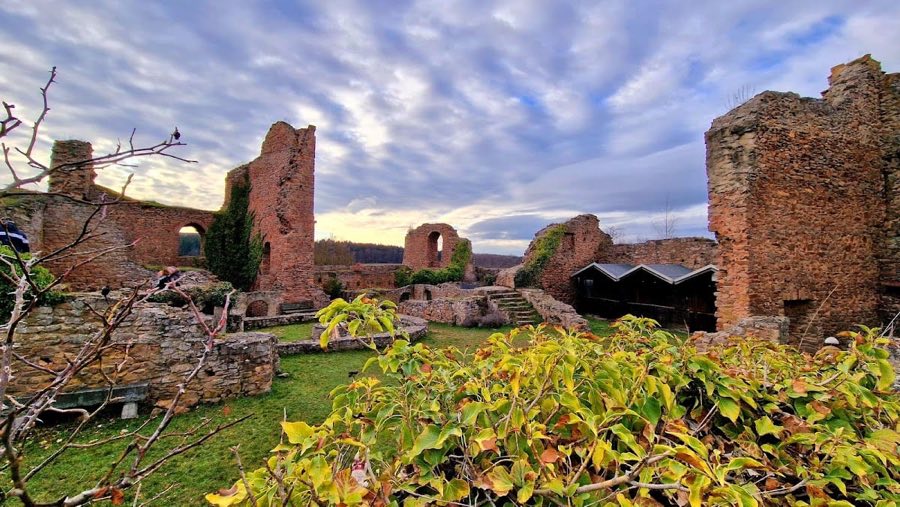
The site survives as the ruin of a hill castle on the mountainside, with structural traces that point to its former layout. The visible remains allow the identification of key defensive elements that belonged to the medieval stronghold which was probably first established in the ninth century.
One notable element indicated in the ruin is a former gate tower, identified from the surviving alignments and massing of the walls. This feature served as the main entrance defense for the castle and belonged to its medieval phase of use. The gate tower is visible only in fragmentary form and survives as earthworks and partial masonry that mark where the entrance once stood.
Another confirmed element is the remains of a stair tower, a vertical structure that contained the castle’s internal staircase. The stair tower relates to the castle’s occupation during the medieval period and survives in situ as ruined masonry showing the footprint and partial vertical courses of the stair projection. The staircase feature is fragmentary but clearly distinguishable as part of the former internal circulation of the stronghold.
No. 80194

No. 93479
No. 36182
No. 37247
Comments
Comments for Burg Schloßböckelheim will require a verified account before posting.
We'll send a verification link before your first comment is published.