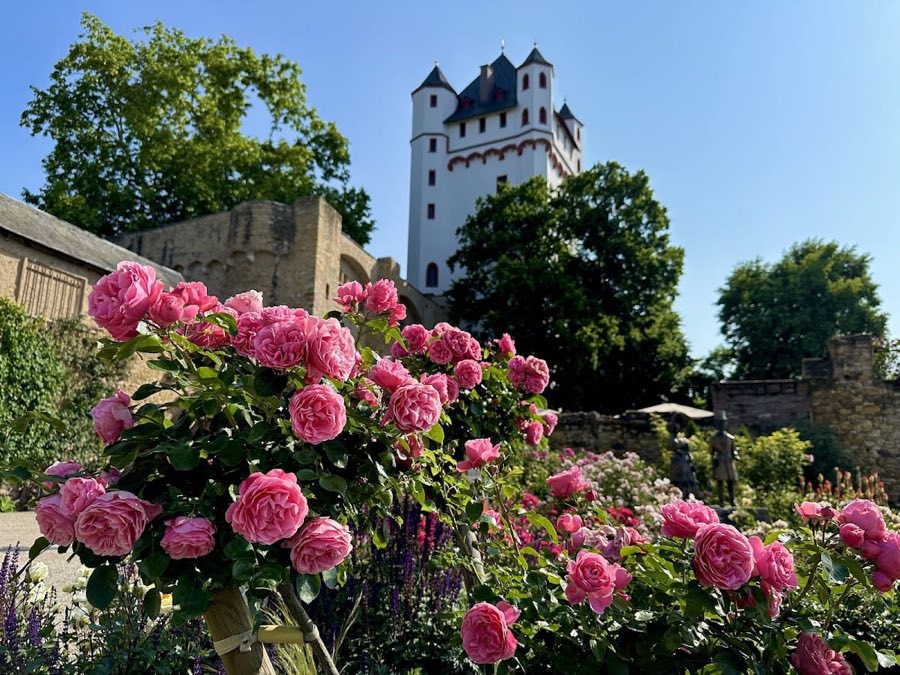
No. 50597
Burg Eltville
Germany
CastleRestoredFor events14th century
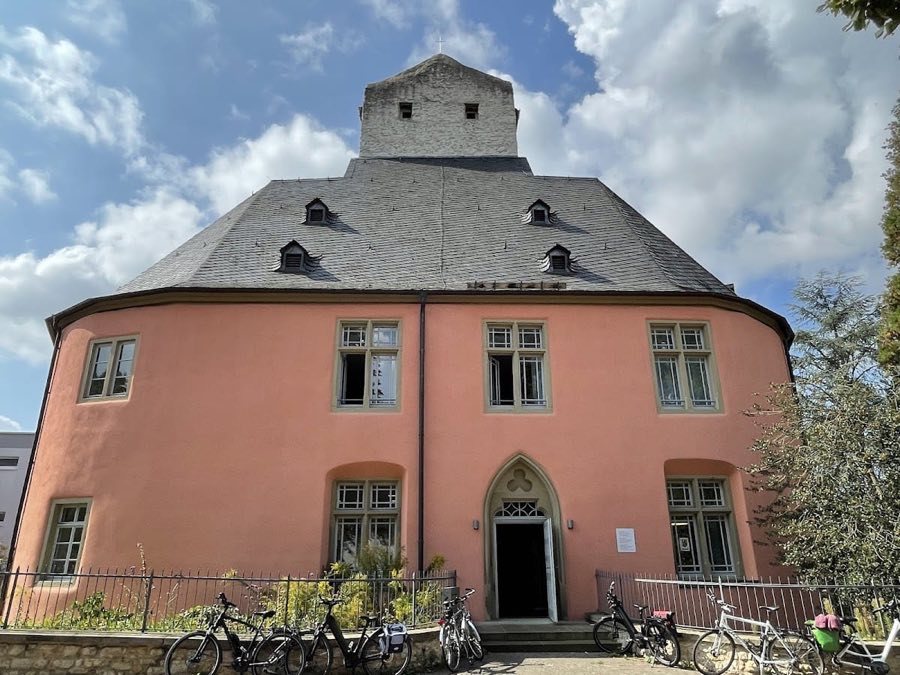
No. 18263
Castle · Germany
No. 18263 · 49.996 N, 8.113 E
Quick summary
Burg Windeck is a castle in Germany with origins associated with the 13th century.
See all castles in GermanyBurg Windeck is situated in the center of Heidesheim am Rhein, Germany, and was established as a small castle complex by medieval German settlers in the 13th century. Its origins trace back to a square defensive tower likely constructed before 1150 by Herdegen I of Winternheim. By the early 13th century, this tower formed the core of what would develop into a fortified refuge for the local nobility.
The castle’s first significant expansion occurred when Herdegen II of Winternheim extended the fortifications before 1209. This included the addition of protective walls and a moat, as recorded in a legal decision from that year. Between 1211 and 1234, the site was further enhanced through a land exchange that facilitated the creation of a surrounding moat filled by water from the nearby Sülzbach stream or a flood ditch. The castle featured a central tower with an elevated entrance and a wooden walkway for defense, encased within inner and outer walls. The small size and challenging access to the tower suggest it was meant primarily as a place of refuge rather than a permanent noble residence.
The lords of Winternheim, later known as the lords of Winterau, occupied Burg Windeck from its early days until their family line died out in the late 14th century. In 1326, this family received the official guardianship, or vogtei, of Heidesheim from the nearby Altmünster monastery in Mainz, marking their role in regional governance. After the Winterau family’s extinction around 1372, ownership of the castle likely transferred first to the Altmünster monastery and, by 1414, to the Archbishop of Mainz, though the exact details remain unclear.
By the late 15th century, the castle served as a residence for Johann Langwert von Simmern, the archiepiscopal bailiff. In the following century, after 1577, a new administrative center was established nearby by Heinrich von Stockheim, yet the castle remained property of the electoral court chamber. In 1626, ownership passed to Samuel Becker, the cellar master of Martinsburg in Mainz, who added a stately building and planted orchards, signifying a period of enhancement and adaptation to more residential use. Near the close of the Thirty Years’ War, the castle was briefly occupied by the cavalry general Johann von Werth.
Following 1650, the castle became a hereditary leasehold of the barons of Bockenheim for approximately 150 years. The upheaval of French occupation in 1793 resulted in the seizure of Burg Windeck as church and noble property. The Bockenheim family largely emigrated at this time, leaving Katharina Elisabeth von Bockenheim as the last local family member until her death in 1844. Subsequently, the castle entered private ownership, first sold to a citizen named Radicke around 1802 or 1803, then acquired by Mainz entrepreneurs Reinach and Popp in the mid-19th century who operated a tannery on the grounds. Later in that century, the Krebs family took over the property, running a winery and guesthouse.
From Christmas 1908, the Protestant community began holding services inside the castle’s first-floor hall, indicating a new layer of communal use. Even into the late 20th century, the castle was still inhabited. In 1993, the municipality of Heidesheim purchased the then-ruined castle and initiated comprehensive restoration efforts supported by local volunteers and the Heimatmuseum Burg Windeck association.
Burg Windeck’s layout exemplifies a small water castle typical of the 13th century, featuring a central square defensive tower surrounded originally by inner and outer walls with a ring moat. The moat was filled with water from the nearby Sülzbach stream or a flood ditch, contributing to the castle’s defensive capacity. The central tower stands as the oldest surviving structure, likely built before 1150, and has an elevated entrance with a wooden battlement walkway approximately eight meters above the ground. This setup allowed defenders to monitor and protect the castle while making direct assault difficult.
Surrounding the tower, the inner wall enclosed residential and economic buildings between itself and the tower, while an outer wall bordered the wider complex. Over time, particularly by the mid-18th century, the open area between the tower and the inner wall was covered with a gable roof, creating a more substantial residential building stretching to the north, east, and southeast around the tower. This development reflects an evolution from purely defensive purposes to more regular habitation.
The southwest and west parts of the ring wall were removed, likely as part of changes made after 1626 under the ownership of Samuel Becker. These modifications shifted the tower’s position to the western edge of the castle complex, integrating it into the expanded residential structures. Later renovations in the neo-Gothic style, dating from after 1860, introduced architectural elements such as a pointed arch portal and large cross-mullioned windows, along with an internal room layout reflecting that period’s styles.
Historic cadastral maps from the early 19th century show ancillary buildings around the castle; however, these no longer survive. Since the municipality’s acquisition in 1993, significant restoration has focused on returning the castle’s main structure to a stable and visually coherent state. These efforts replaced the complex roof structure, renewed entrance doors and windows, and applied historic plastering finishes including a late medieval Mainz red pigment on the main building and a natural wash on the tower. A new internal staircase now allows access to the former wooden battlement walkway atop the tower, offering extensive views of the surrounding area.
Today, the castle stands as a carefully preserved complex rooted in its medieval origins but bearing centuries of architectural adaptation. Though not open to the public, the grounds remain substantial and are maintained through volunteer efforts, preserving Burg Windeck as an important heritage site within Heidesheim.
No. 50597
No. 68035
No. 84796
No. 14297
Comments
Comments for Burg Windeck will require a verified account before posting.
We'll send a verification link before your first comment is published.