No. 28179
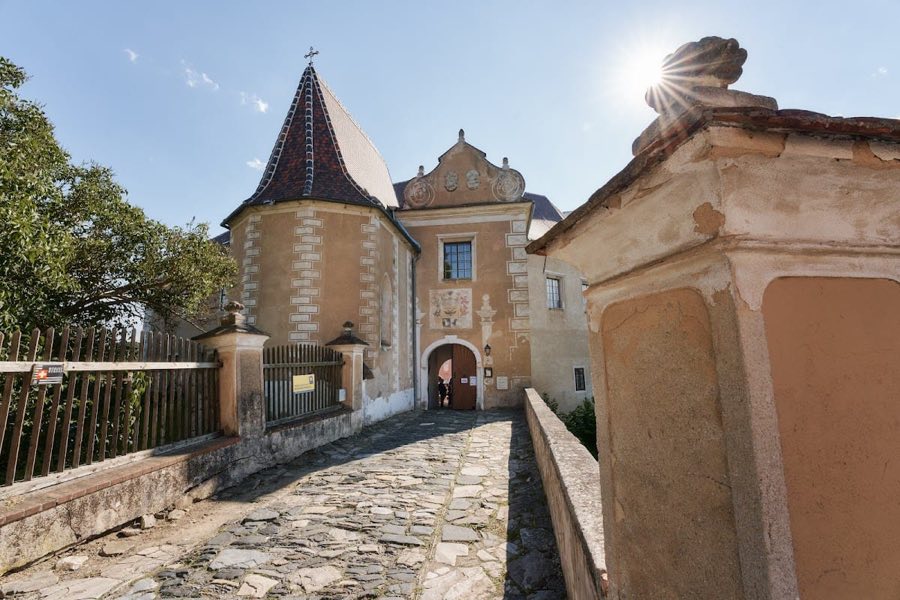
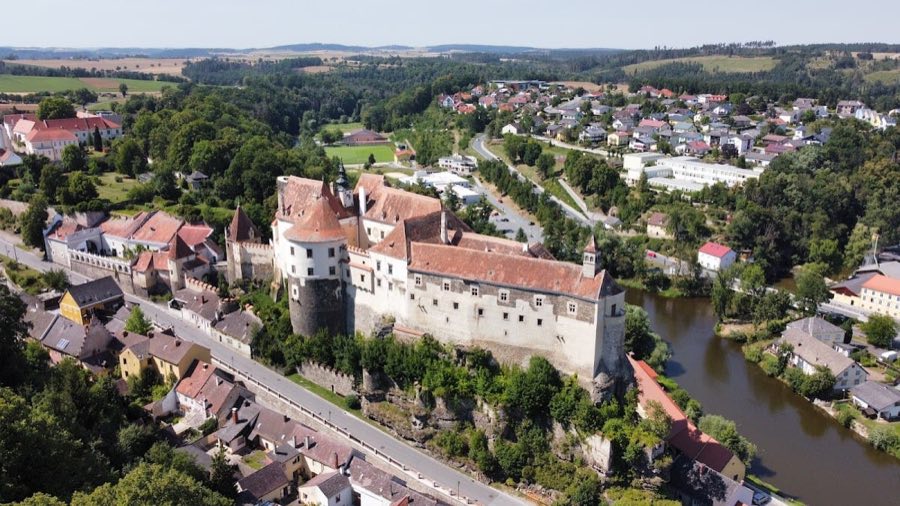
Schloss Drosendorf
Austria
CastleRestoredFor rent13th century
No. 64535
Castle · Austria
No. 64535 · 48.847 N, 15.582 E
For events
Burgruine Eibenstein is marked as a château or castle venue lead. Capacity, indoor/outdoor spaces, catering rules, and accommodation options are published only after public verification.
Event types: Private events, Cultural gatherings, Filming and photography
Quick summary
Burgruine Eibenstein is a castle in Austria with origins associated with the 16th century.
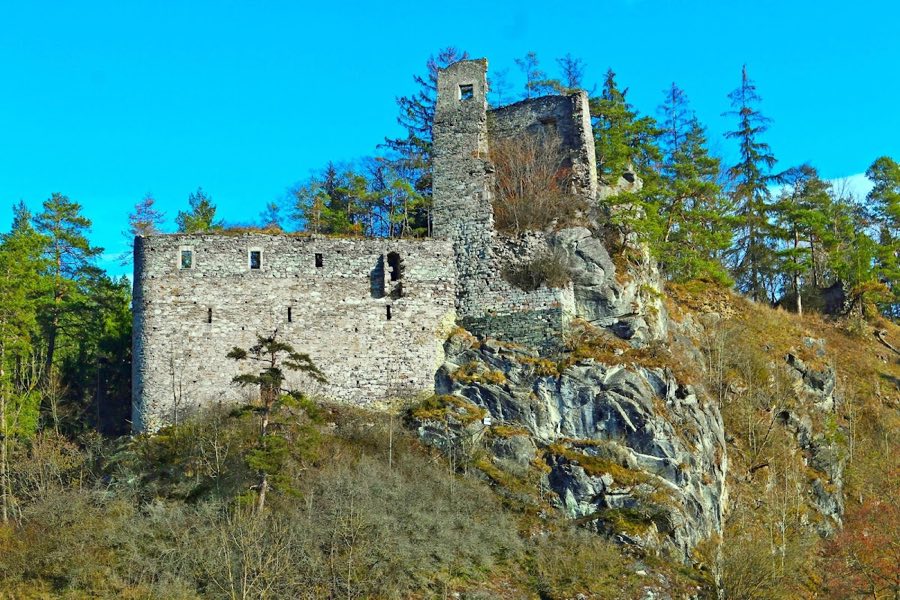
See all castles in AustriaBurgruine Eibenstein is a medieval hilltop castle located in the municipality of Eibenstein, Austria. It was originally constructed during the Middle Ages, with the first recorded mention dating back to 1194, implying its establishment by the medieval European nobility of that era.
In the mid-16th century, specifically on April 24, 1543, ownership of the castle passed to Christoph and Erasmus von Schneckenreith, brothers belonging to a noble family whose lineage ceased by 1569. Following the end of the Schneckenreith family, the castle eventually became incorporated into the larger lordship of Drosendorf. Later, the estate entered the possession of the Hoyos family, noble descendants originally from Spain, who maintained ownership thereafter.
By the 17th century, the castle had fallen into significant disrepair. This decline was documented by the cleric and mapmaker Georg Matthäus Vischer, who depicted the structure already in ruins. The historian Franz Xaver Kießling, writing between 1859 and 1940, described the site as desolate, confirming its prolonged state of abandonment. During the tumultuous years of the Thirty Years’ War (1618–1648), parts of the abandoned castle ruins were temporarily occupied, likely for shelter or as a defensive position.
Local folklore adds a layer of mystery to the site’s history. Legends connect the final proprietor of the castle to the Knights Templar, a medieval religious and military order. These stories also speak of rebellious peasants who are said to have ravaged the fortress, contributing to its downfall. In the late 19th century, specifically in 1867, a major structural loss occurred when a large section of the northern walls collapsed, tumbling down the steep rock face into the Thaya River below.
The remains of Burgruine Eibenstein occupy an elevated position on the southern bank of the Thaya River, directly facing the village of Eibenstein, which is noted for its parish church dedicated to Saint Giles. The castle’s elevated placement classifies it as a Höhenburg, meaning it was built on a naturally advantageous hill or rocky outcrop.
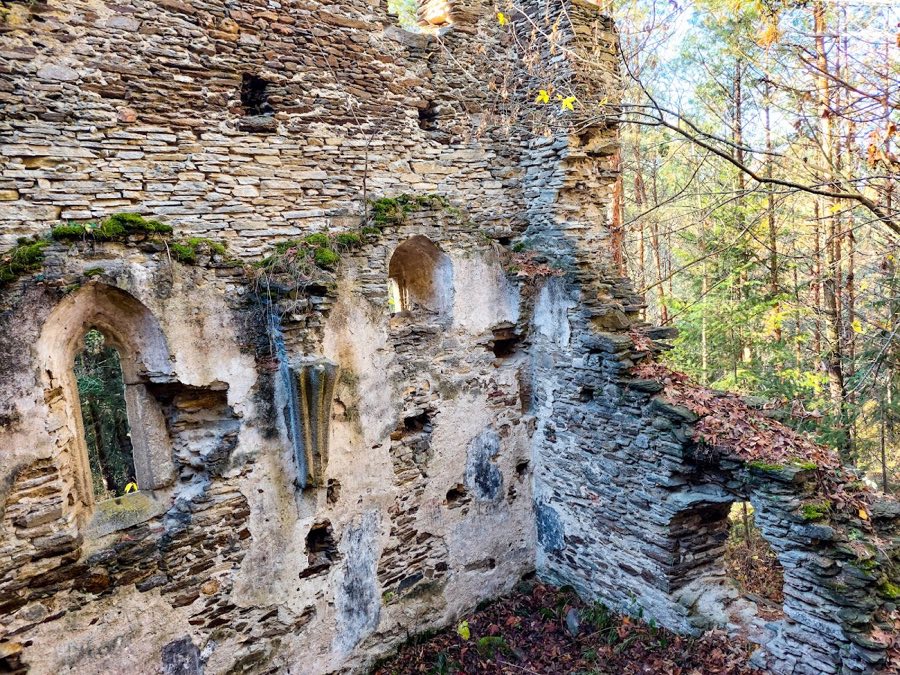
Substantial portions of the northern fortification walls were constructed atop a steep rocky cliff, overlooking the course of the Thaya River. This strategic location provided natural defense but also exposed the walls to the risk of collapse. Indeed, in 1867, a large segment of these northern walls gave way and descended the cliff into the river. Today, the remaining structures are largely ruinous, showing signs of significant destruction and partial collapse. The ruins do not feature any recorded decorative elements, inscriptions, or archaeological artifacts such as tools or pottery, suggesting that what remains is primarily the stone wall remains and foundational structures.
Although the site exhibits the typical form of a medieval hill castle, with robust defensive walls adapted to the rocky terrain, no detailed measurements or comprehensive layouts are available from the sources. The ruinous condition reflects centuries of abandonment and natural decay, as well as historical events that led to the castle’s partial destruction. Oral traditions and historical commentary preserve the castle’s narrative more than its physical structure, underscoring a heritage marked by noble ownership, war-time occupation, and eventual decline into ruin.
No. 28179
No. 80080
No. 96858
No. 13699
Comments
Comments for Burgruine Eibenstein will require a verified account before posting.
We'll send a verification link before your first comment is published.