No. 96568
Burg Sommeregg
Austria
CastleRestored12th century
No. 81382
No. 81382 · 46.764 N, 13.585 E
Quick summary
Burgruine Rothenthurn is a castle in Austria with origins associated with the 11th century.
See all castles in AustriaBurgruine Rothenthurn in Rothenthurn, Austria, is a medieval castle complex that began around the 11th century and developed through the late Middle Ages with important Renaissance-era rebuilding in the early 1500s. Built and altered by successive local noble households, the site occupied a commanding position on a narrow plateau above the Drava valley and near Millstätter See, serving as a local seat of feudal authority over the centuries.
The location takes its name from an early “red tower,” a standing structure noted from the site’s origins. A castle is explicitly mentioned in records by 1478. During the later medieval period the holding belonged to a succession of regional powers: the Counts of Ortenburg, then the Counts of Cilli (Celje), and the Counts of Gorizia–Tyrol. From about 1450 the Kreuzer family held the place as a princely fief.
In 1508 Johann Meixner appears as lord and is associated with the large-scale alterations that produced much of the castle fabric seen today. Around 1525 his daughter Barbara dedicated a private chapel to Saint Barbara. About the same time the property passed by marriage to Christoph Khevenhüller of Aichelburg, and in the mid-1500s the Khevenhüllers entrusted day-to-day management to their steward Ehrenholdt Eschey.
Subsequent owners included Hans von Gschrey, who acquired the site in 1564, and Franz Balthasar von Eschey, who bought it in 1570. The chapel was reworked in 1644. Ownership later passed to Maria Salome, Baroness von Aichelburg, in 1662 and to Baron Georg Sigmund von Mandorff in 1688. Johann Heinrich von Eineter was active at the castle in 1726, and the property returned to the Mandorff family in 1738. The Münch‑Bellinghaus and Sorgo families were later proprietors. Count Konstantin Normann von Ehrenfels acquired the estate in 1880; in 1882 the façades were transformed in a historicizing restoration and a grave monument for Count Konstantin Normann‑Ehrenfels was erected north of the castle.
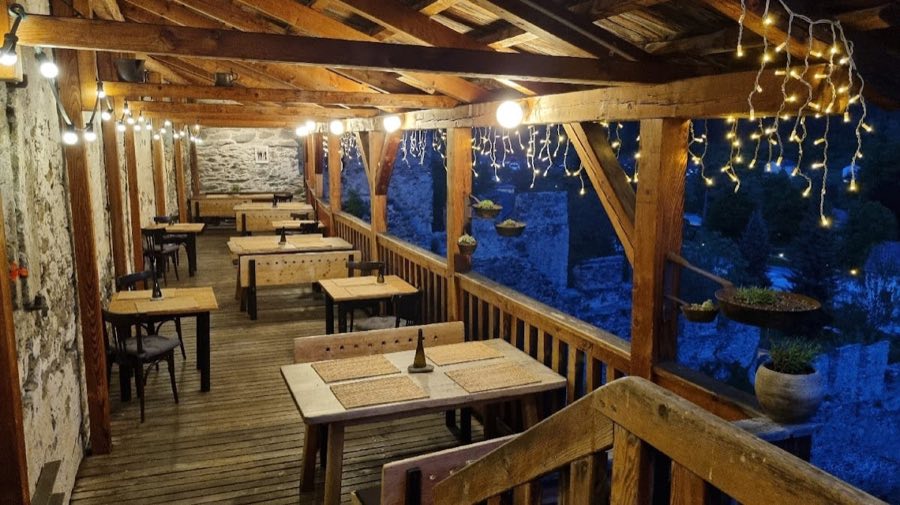
The chapel received new decorative work and an altar during the early 18th century, with the altar dated 1710 and mural decoration assigned either to 1726 or to 1737, the latter coinciding with Matthias Ferdinand Eineter’s period of activity. The complex remains in private hands and is operated today as a lodging establishment by the Pereira‑Arnstein family. The building is protected as a listed monument of the Republic of Austria, protection number 34727.
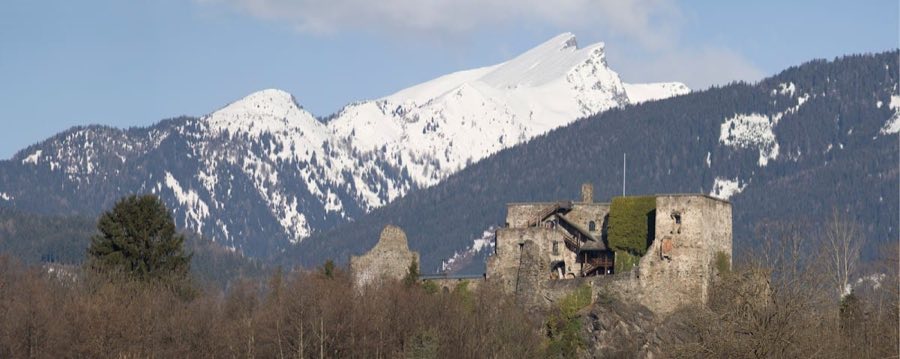
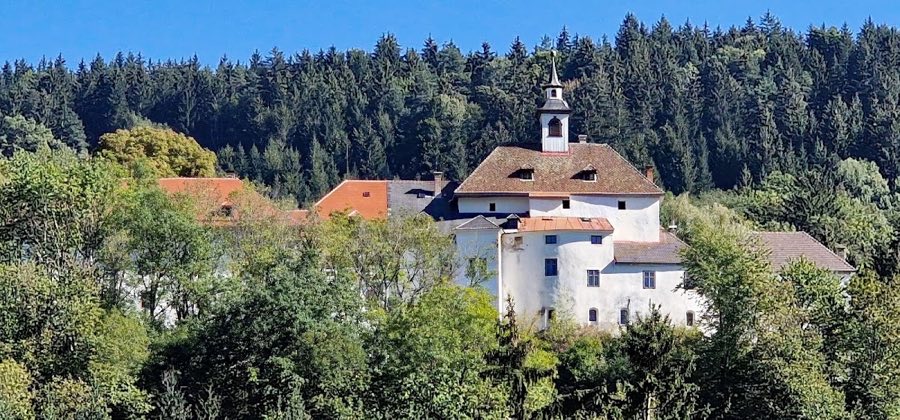
The castle sits as an elongated cluster of linked wings running along the hillside, built as two- and three-storey ranges that step down the slope and interconnect by stairways set inside the thickness of the walls. The plan reflects growth over centuries rather than a single coherent scheme, producing a varied silhouette of long tracts and rooflines.
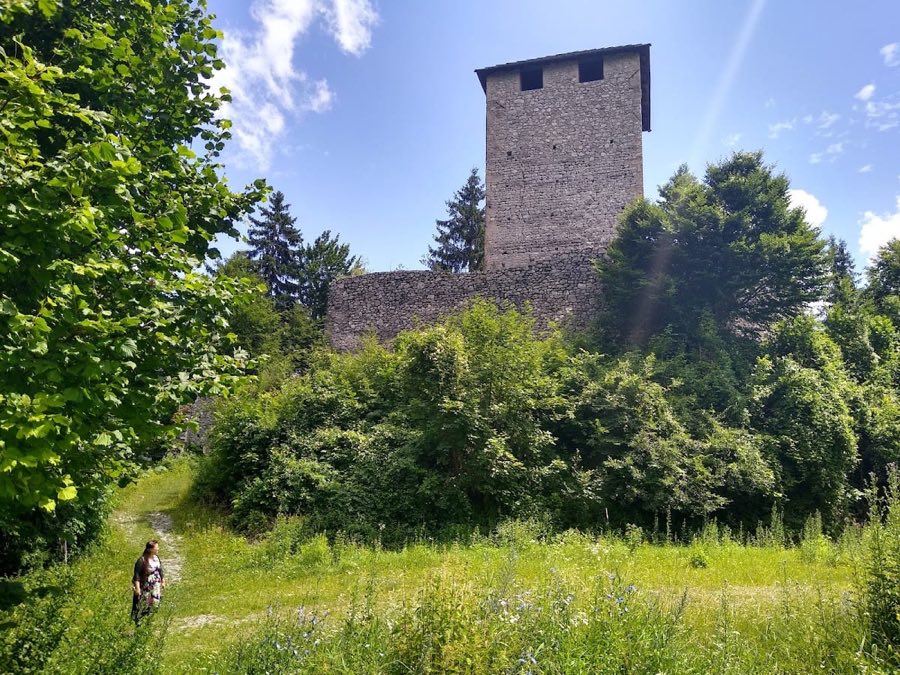
The oldest and tallest element is the central Red Tower, which dominates the composition and gives the site its name. The middle wing carries a small roof turret. The main entrance today stands on the north face of the tower and consists of a 16th-century arched doorway flanked by pilaster strips in the Tuscan style (a plain classical order). Above this portal are paired windows and a pediment bearing the Khevenhüller coat of arms. On the west wing a Renaissance stone-framed portal survives together with a broken commemorative stone that still bears the Khevenhüller shield. Most ranges are roofed with hipped, pavilion-style coverings.
The chapel occupies a principal eastern wing. It is a single-nave space divided into three bays and covered by cross-rib vaulting (a vaulted ceiling formed by intersecting ribs). The interior was altered in 1644 and contains painted decoration assigned to the early 18th century, with dates given as either 1726 or 1737, and a carved altar dated 1710 that shows the Coronation of Mary flanked by figures of Saints Barbara and Dorothea. These fixtures survive in situ and reflect the chapel’s long liturgical use and periodic refurbishment.
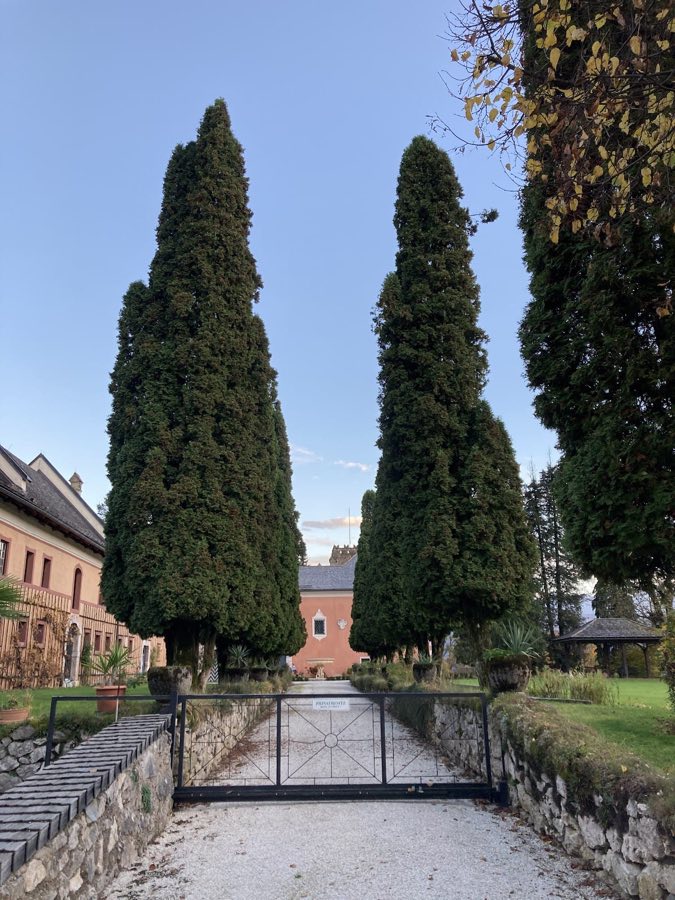
Beneath the castle an underground passage links the main tower with the site of a former castle called Maximiliansburg, located between Molzbichl and Rothenthurn. In the immediate surroundings a small ornamental pond lies in front of the entrance, and to the north stands the 1882 grave monument for Count Konstantin Normann‑Ehrenfels, formed as a three-sided open pergola. The standing walls, tower, wings, portals, chapel decorations, and the mausoleum survive; the façades were altered in a historicizing restoration of 1882 and the chapel frescoes have undergone later conservation and restoration. The compound remains a protected monument under Austrian law.
No. 96568
No. 75241
No. 60234
No. 63585
Comments
Comments for Burgruine Rothenthurn will require a verified account before posting.
We'll send a verification link before your first comment is published.