No. 23399
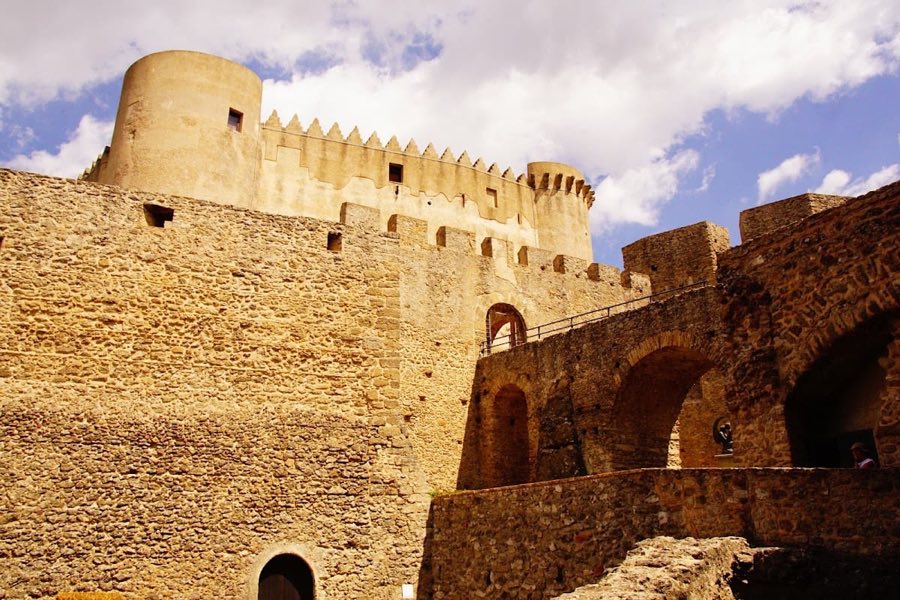
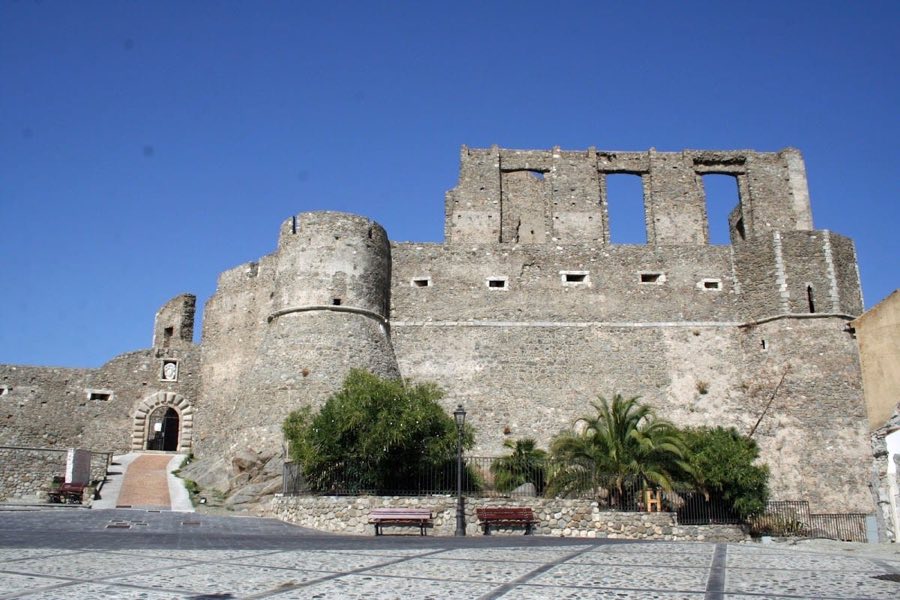
Castle of Santa Severina
Italy
CastleIntact11th century
No. 41057
Castle · Italy
No. 41057 · 39.228 N, 16.780 E
Quick summary
Caccuri Castle is a castle in Italy with origins associated with the 17th century.
See all castles in ItalyThe Castle of Caccuri stands in the municipality of Caccuri in Italy, and it was first established by the Byzantine state.
Built in the sixth century as a small military fort to control movement along the Neto valley, the site began as a defensive post under Byzantine authority. Over the medieval centuries the fortress passed into feudal hands and was adapted repeatedly to serve as a noble residence as well as a defensive position. Early feudal holders included Enrico and Matteo De Riso of Messina; their heirs transferred the fief into the possession of the Ruffo family, who held the title of counts of Montalto.
A notable episode involves Polissena Ruffo, who had been married to a French knight, Giacomo (also called Jean) de Mailly, and was later given in marriage by the queen to Francesco Sforza, son of Muzio Attendolo. That marriage produced a daughter, Antonia. Both Polissena and Antonia were murdered, an act that has been linked in the record to Polissena’s aunt Novella; after these deaths Francesco Sforza lost his entitlement to the Ruffo fief. Francesco Sforza relied on close collaborators from the Simonetta family, among them Angelo, Giovanni and especially Cicco (named Francesco in one account). A member of that family served as regent after Sforza’s death and was subsequently assassinated in Pavia by Ludovico Sforza.
In 1651 the Cavalcanti dukes, who were barons of Gazzella, acquired the lordship. Don Antonio Cavalcanti undertook extensive alterations and additions that decisively shaped the appearance of the complex that visitors see today, and his descendants occupied the castle continuously for about two centuries. During the Cavalcanti period the castle contained a family chapel erected at the same time as the Chapel of Saint Dominic in the Abbey of Saint Mary of the Succor in Caccuri; both ecclesiastical spaces were furnished with notable artworks.
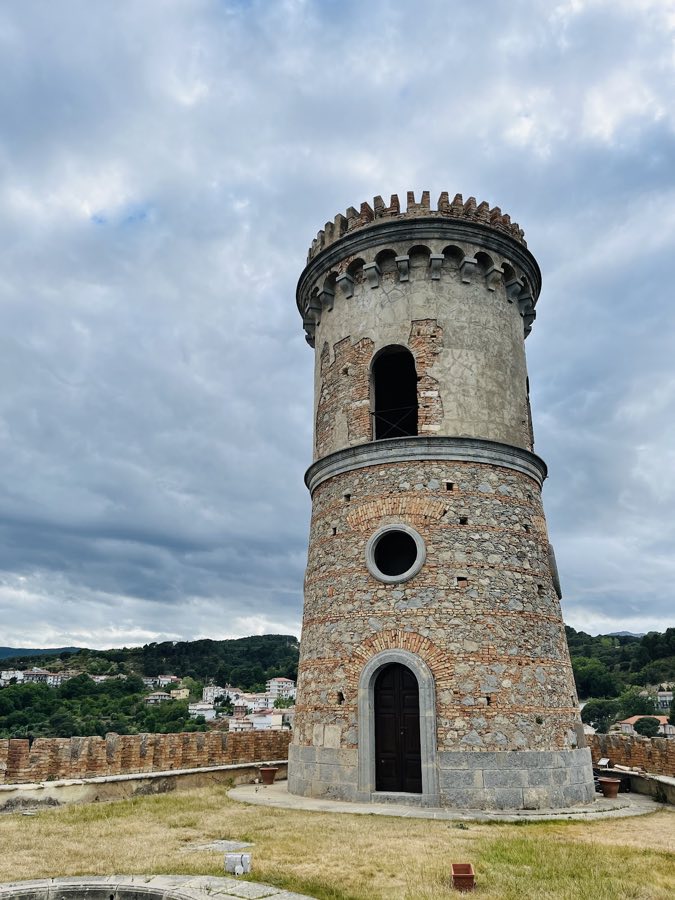
By the nineteenth century the Barracco barons were the last feudal owners. Guglielmo Barracco made his home at Caccuri and in 1882 commissioned architect Adolfo Mastrigli to build a tower on the castle’s forward defensive outwork, a work that became a distinctive feature of the site.
The complex retains elements that reflect its long sequence of military and residential use, beginning with its origin as a sixth‑century Byzantine fortification placed to oversee the Neto valley. Successive feudal owners adapted the original stronghold into a fortified residence, so the present arrangement represents layers of modification by medieval and later lords rather than a single building phase. Much of the visible fabric of the castle today is attributed to works carried out under Don Antonio Cavalcanti in the seventeenth century and thereafter.
A prominent component of the site is the forward defensive outwork (ravelin) on which a tall masonry tower was raised in 1882 to designs by Adolfo Mastrigli. That nineteenth‑century tower dominates the silhouette and has been adopted as a heraldic emblem for the municipality; it remains a conspicuous element in the ensemble. The palace contains a private family chapel erected during the Cavalcanti period; this chapel was created at the same time as the Chapel of Saint Dominic in the nearby abbey dedicated to Saint Mary of the Succor, and both interiors were enriched with artworks during that era. The record identifies the Cavalcanti interventions as responsible for a large portion of what can still be seen within the castle complex.
No. 23399
No. 20799
No. 84489
No. 97686
Comments
Comments for Caccuri Castle will require a verified account before posting.
We'll send a verification link before your first comment is published.