No. 33347
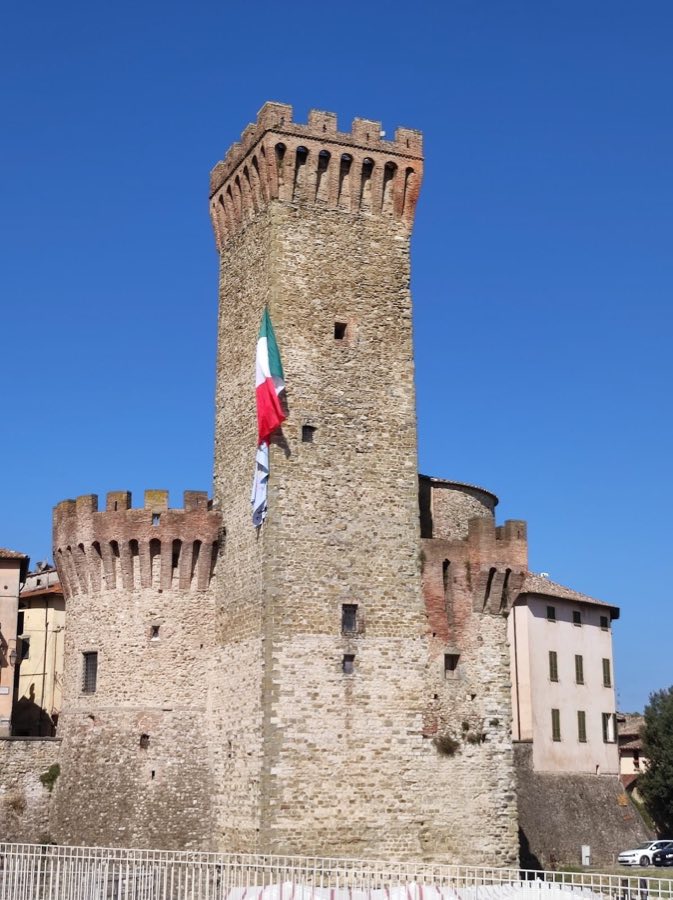
Rocca of Umbertide
Italy
CastleRestored14th century
No. 11784
No. 11784 · 43.376 N, 12.467 E
Quick summary
Carbonana Castle is a castle in Italy with origins associated with the 12th century.
See all castles in ItalyCarbonana Castle stands in the municipality of Gubbio in modern-day Italy, and it was built during the medieval period.
The site first appears in surviving records in 1192, when Pope Celestine III granted the fortress to Bentivoglio, who served as bishop of Gubbio. The earliest feudal holders traced their lineage to Bino di Pietro of the Gabrielli family. Bino was the younger brother of Cante Gabrielli, the Florentine podestà who in 1302 condemned and sent Dante Alighieri into exile.
During the fourteenth century the Comune of Gubbio made use of the castle and its principal tower for defensive purposes and to assert control over the surrounding territory. In the 1420s the stronghold passed by marriage into the hands of the Porcelli family when Giacomo di Galeotto Porcelli married Checca, the widow of Giacomo Gabrielli and a maternal relation of the Atti family of Sassoferrato. The Porcelli traced their descent to Rigo, recorded as formerly of Florence and attested in Gubbio from 1286.
The Porcelli established themselves as counts of Carbonana. In the sixteenth and seventeenth centuries members of the family occupied prominent civic offices in Gubbio and served as mercenary captains for the Republic of Venice. During their tenure they funded decoration of the castle chapel, enlarged the southern side of the building, and commissioned the construction of a circular tower at the south‑east corner of the castle courtyard. From the sixteenth century onward the complex underwent only minor alterations that did not change its overall appearance.
The castle remains privately owned. Two Canadian citizens purchased the property in 2011, and a complete restoration was carried out in 2014 under the supervision of the regional authority responsible for architectural and landscape heritage in Umbria.
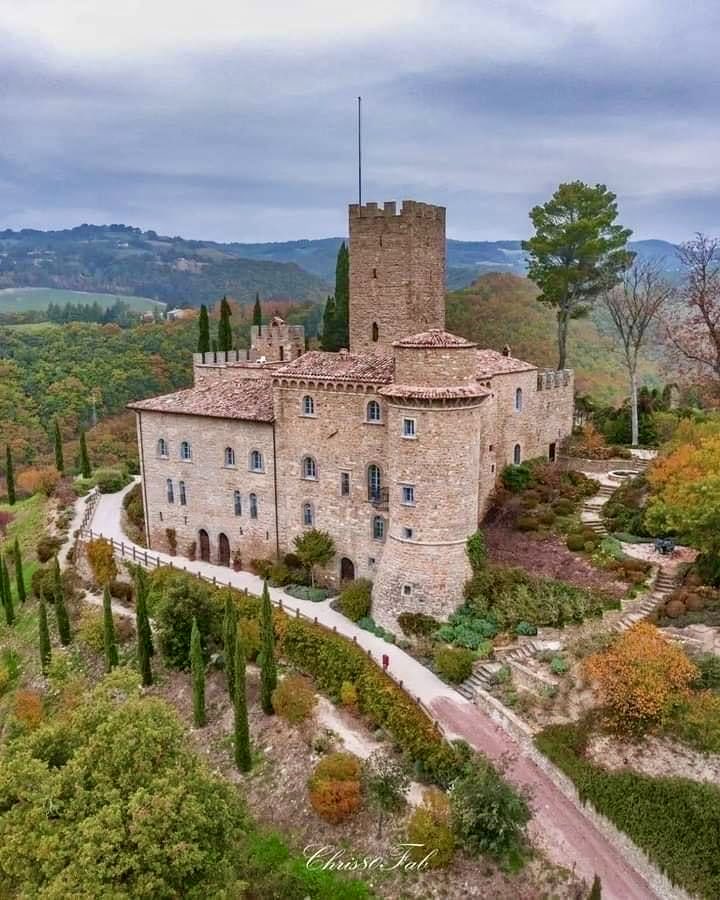
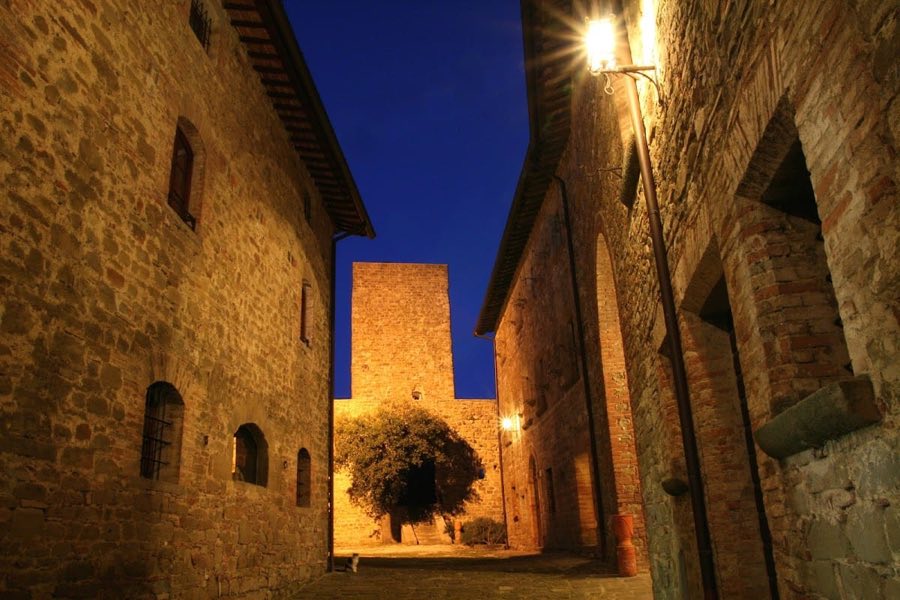
Carbonana occupies a raised promontory that overlooks the state road that connects Gubbio with Umbertide, giving the complex a commanding siting. The fortified ensemble retains a courtyard, known as a bailey, enclosed by a surrounding defensive wall. A principal tower stands within this layout, reflecting the castle’s medieval defensive role; use of the tower by the Comune of Gubbio in the fourteenth century is recorded.
A notable later addition is the elegant circular tower set at the south‑east corner of the curtain wall. This round tower was erected under Porcelli patronage in the period when they were enhancing the castle, and it remains a distinctive element of the curtain that defines the outer courtyard. The Porcelli also drove enlargement of the castle’s southern side and sponsored the interior decoration of the private chapel attached to the residence, works associated with their sixteenth‑ to seventeenth‑century phase of possession.
Overall the fabric of the site is substantially intact and well preserved, the long sequence of care and limited remodelling since the sixteenth century having left the proportions and general aspect largely unchanged. The ensemble survives as a clearly legible medieval fortress with later early modern additions, and the complex was the subject of a complete restoration completed in 2014.
No. 33347
No. 85560
No. 21445
No. 36137
Comments
Comments for Carbonana Castle will require a verified account before posting.
We'll send a verification link before your first comment is published.