No. 70655
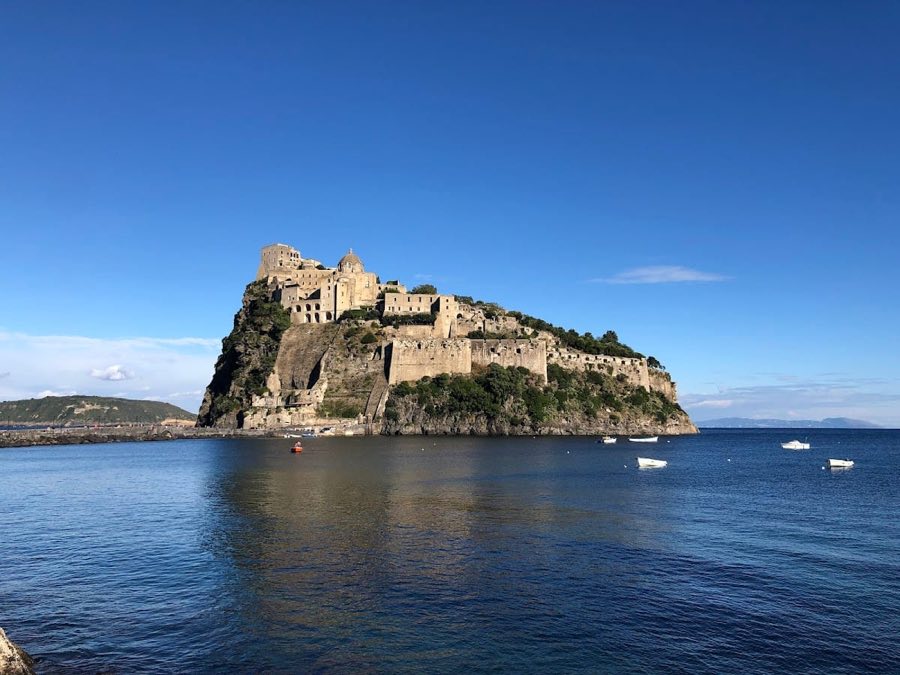
Aragonese Castle, Ischia
Ischia, Italy
CastleRuinFor rent16th century
No. 67295
Palace · Italy
No. 67295 · 40.820 N, 14.058 E
Quick summary
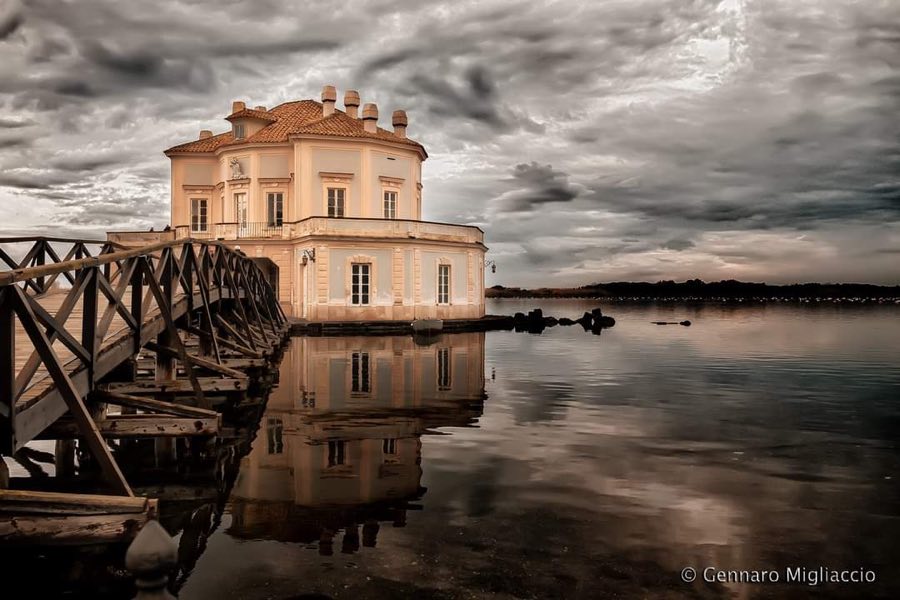
Casina Vanvitelliana, Bacoli is a palace in Bacoli, Italy with origins associated with the 18th century.
See all castles in ItalyThe Casina Vanvitelliana in Bacoli, Italy, is an 18th-century hunting pavilion erected under the Bourbon monarchy. Built during the Bourbon period, it formed part of a royal landscape used for hunting and fishing and became an important site for hosting prominent guests. Its location on a small islet in Lake Fusaro and its role within a royal reserve explain its historical relevance to the court and to later cultural life.
In 1752 the Bourbon king Charles of Bourbon acquired the Fusaro estate and set about turning it into a royal hunting and fishing reserve. Early work on the site was carried out under Luigi Vanvitelli, who undertook drainage and consolidation of the lake shores and put a first small pavilion on the islet to serve the royal estate.
Building continued under Ferdinand IV, and Luigi Vanvitelli’s son, Carlo Vanvitelli, completed the work that produced the present Royal Hunting Pavilion in 1782. The pavilion was sited close to the shore on its islet and designed to serve the needs of the royal household and their guests.
The Casina served as a residence for distinguished visitors across the 19th and 20th centuries. An imperial guest named Francis stayed there in May 1819 (identified as Francesco II of Habsburg-Lorraine, also known as Francis I of Austria). Composer Gioachino Rossini later visited the site, and in the mid-20th century President Luigi Einaudi used the pavilion. Wolfgang Amadeus Mozart came to Lake Fusaro in 1770, but the royal pavilion had not yet been constructed, so he did not stay there.
For many years access to the islet was by boat; a long wooden footbridge was added later to link the pavilion directly to the lakeshore. In the 21st century the building continued to serve public cultural functions, hosting the Bacoli Archaeological Film Festival beginning in 2023 and opening a public library and media library called the “Libreria del Lago” in 2024.
The pavilion occupies a small islet and presents a compact, circular plan made up of three octagonal volumes set one above another, which narrow toward the top and give the building a pagoda-like profile. The exterior is pierced by large windows arranged on two levels, providing strong visual rhythm around the curved composition. The present connection to the shore is a long wooden pier, a timber footbridge that replaced the earlier habit of reaching the islet by boat.
Inside, the lower floor contains a Circular Hall that, during the Bourbon period, served for social and gallant gatherings. A broad ramp from this hall rises to the main floor, the piano nobile, where the Hall of Wonders stood as a space reserved for the royal family alone. On the principal floor there were also a service bedroom and a private study; the walls of these rooms bore paintings depicting the Four Seasons by the vedute painter Jakob Philipp Hackert.
The site’s early engineering works included drainage and consolidation of the lake’s shores, interventions carried out during the mid-18th-century transformation of the estate. The current pavilion dates to the work completed in 1782 and stands on the islet in a condition that allows active cultural use, as evidenced by its recent role as a venue for a film festival and as the location for a public library.
No. 70655
No. 99261
No. 67528
No. 97049
Comments
Comments for Casina Vanvitelliana, Bacoli will require a verified account before posting.
We'll send a verification link before your first comment is published.