No. 52059
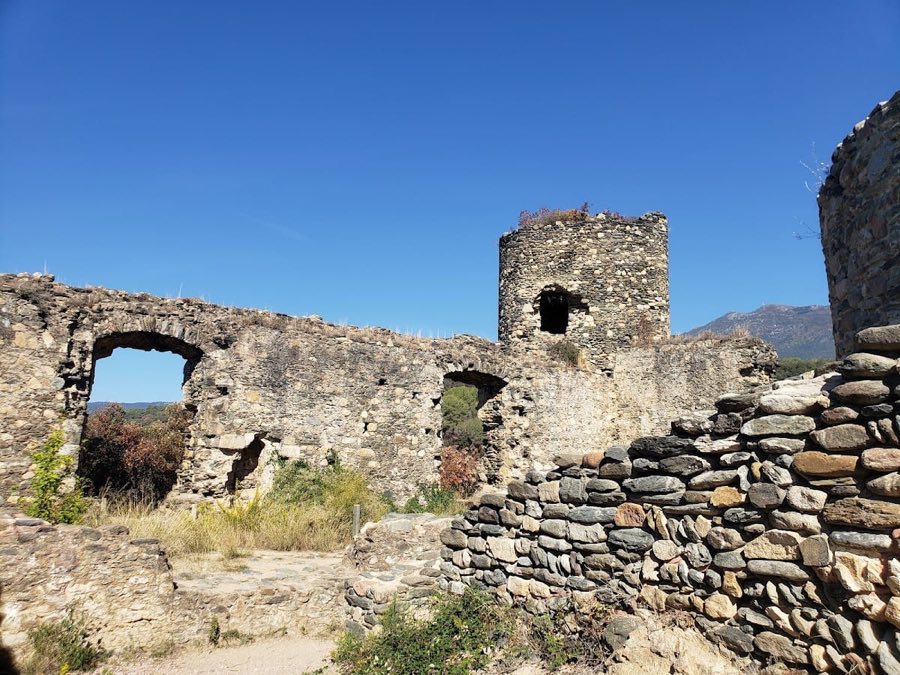
Montclús Castle
Spain
CastleRuin10th century
No. 90682
Castle · Spain
No. 90682 · 41.626 N, 2.407 E
Quick summary
Castell del Far is a castle in Spain with origins associated with the 6th century.
See all castles in SpainCastell del Far is situated within the municipality of Llinars del Vallès in Spain and was originally established by the Iberian civilization. Its history reveals a long period of occupation and transformation, beginning in the early medieval era and continuing through the late Middle Ages.
The earliest traces of human activity at the site date back to the 6th century, when features such as a rock-cut moat and storage silos were created near the nearby Iberian settlement known as El Far. The castle itself is first recorded in 982 under the name Munt Fariq, during the military campaign led by the Andalusian general Almanzor, who conquered the fortress as part of his incursions into Catalonia.
By 990, the castle was under the lordship of Gombau de Besora. In the 12th century, ownership shifted to the Desfar family, with documents identifying Pere de Far in 1135 and Bernat de Far in 1178 as key figures linked to the site. This century also saw architectural development, including the construction of a tower on the northeast side and an enlargement of the chapel incorporating a rounded apse, which reflected the Romanesque style of the period.
Around the turn of the 13th century, the castle may have been inhabited by members of the Cathar religious movement. Evidence for this includes the replacement of the chapel with an open-air structure suited to their rituals and the presence of a Toulouse cross painted on one of the walls, a symbol associated with Cathar beliefs. Later that century, the castle became a fief held by Ramon de Cabrera. In 1285, King Pere el Gran entrusted him with the defense of northern Barcelona against potential French attacks, indicating the site’s strategic importance.
Early in the 13th century, the Corbera family took control of Castell del Far. Sibila, widow of Ramon de Corbera, ordered the construction of a new chapel, which their son Riambau I de Corbera donated to the bishop of Barcelona in 1336. During this period, the castle underwent significant expansion, including the addition of a new tower to the north and residential quarters featuring Gothic windows and stone supports called corbels. The 14th century was marked by tensions between the castle’s lords and King Pere el Cerimoniós, reflecting the broader political unrest of the era.
The castle’s active use came to a sudden end on May 24, 1448, when a devastating earthquake caused its collapse. Approximately one hundred years later, the family of Riambau de Santcliment constructed a new fortress named Castellnou de Llinars within the town settled below, marking a shift in the local center of power.
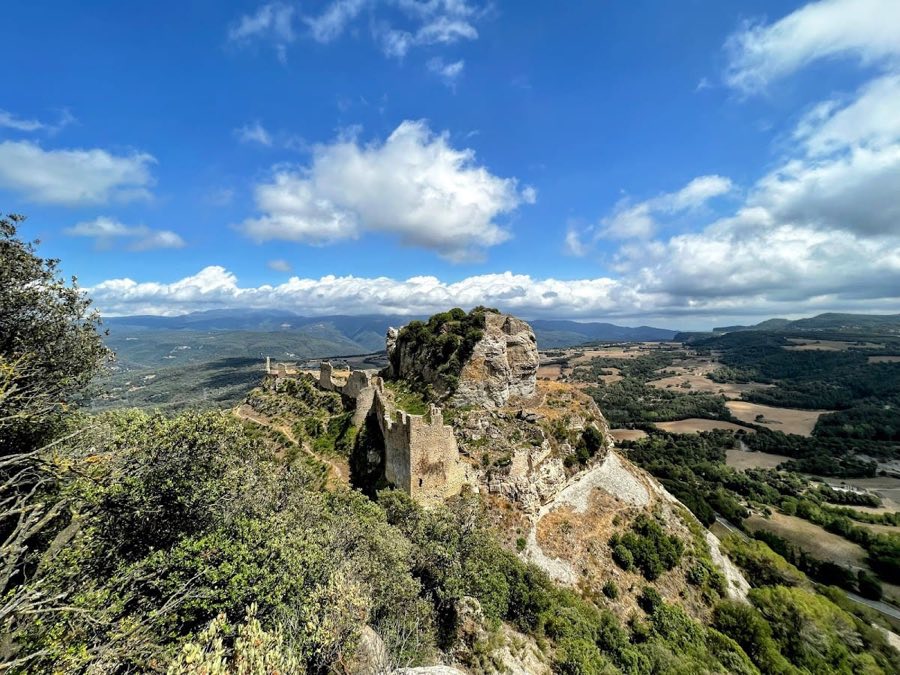
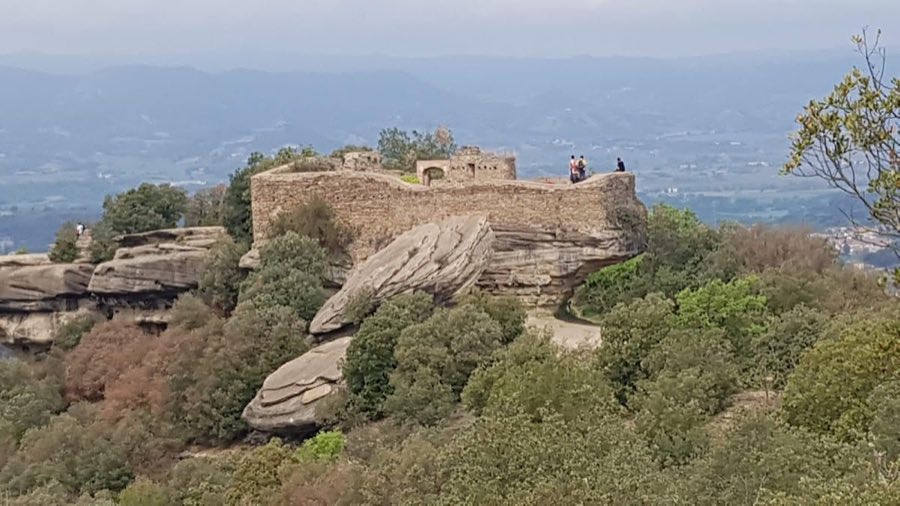
The ruins of Castell del Far retain substantial elements of its original defensive layout and building techniques, allowing insight into its long history. The structure is characterized by robust walls and a moat carved directly into the living rock, designed in an oval shape. This moat highlights early engineering efforts to fortify the site and points to its ancient origins.
In the northern section, there are visible remains of defensive towers. These include the base of an old prismatic (multi-sided) tower and a round tower situated at the northeast corner, which likely served as watchpoints or strongholds. Additionally, traces of a square-shaped tower from the 14th century have been uncovered, signifying later medieval reinforcement.
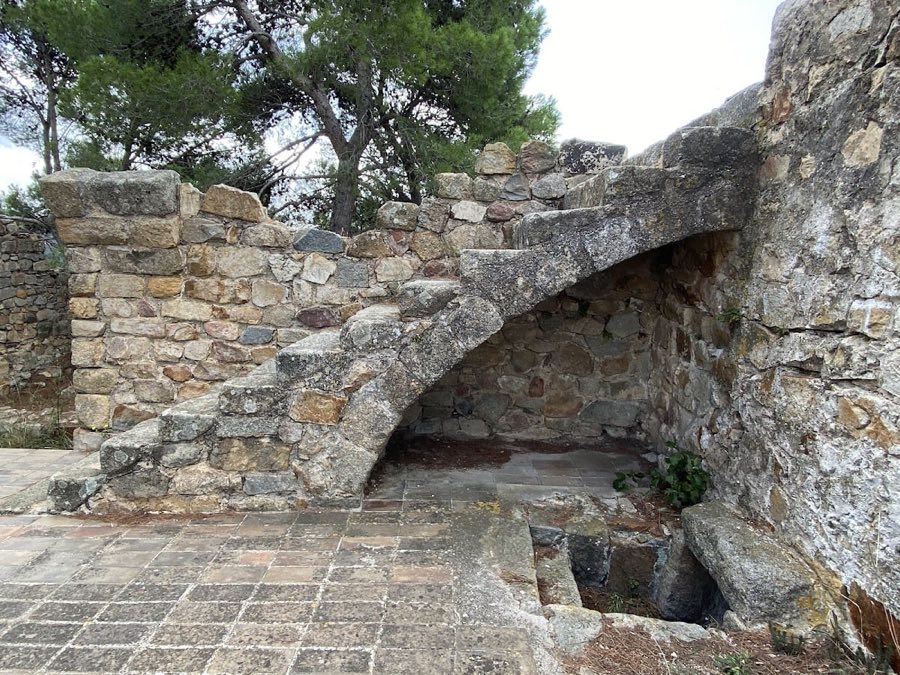
Central to the site is a rectangular tower that underwent transformation over time. Originally this tower was an open structure, but was later converted into a cistern, a storage space for water, demonstrating adaptation to the castle’s changing needs. Nearby, to the east, a vaulted chamber with an overhead staircase remains intact, providing evidence of organized access within the fortress.
To the southeast, preserved remnants of two apses—semi-circular or polygonal extensions typical of churches—belong to chapel buildings from the pre-Romanesque and Romanesque periods. These apses mark the religious functions that took place on the site, tracing the evolution of sacred architecture over the centuries.
Among the decorative and symbolic features, a painted Toulouse cross stands out on one wall, linking the castle to the Cathar presence suggested for the early 13th century. In the residential quarters, Gothic architectural details such as characteristic pointed windows and stone corbels were introduced during the castle’s expansions, reflecting medieval stylistic trends.
Today, the site remains consolidated to preserve its main structural elements, allowing a clear understanding of its defensive and domestic arrangements. The ruins form an important archaeological record of the castle’s lengthy occupation, religious shifts, and military significance through more than half a millennium.
No. 52059
No. 55739
No. 97955
No. 72198
Comments
Comments for Castell del Far will require a verified account before posting.
We'll send a verification link before your first comment is published.