No. 97486
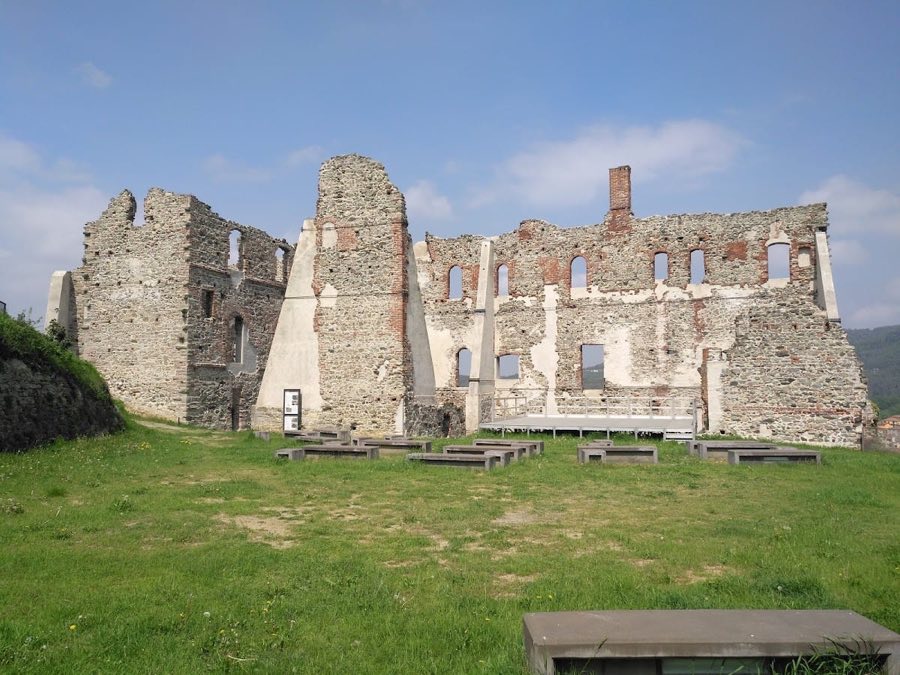
Cairo Montenotte Castle
Italy
CastleRuin12th century
No. 29487
No. 29487 · 44.113 N, 8.080 E
Quick summary
Castello di Castelbianco is a castle in Italy with origins associated with the 13th century.
See all castles in ItalyCastello di Castelbianco sits above the village of Vesallo in the municipality of Castelbianco, Italy, and was built during the medieval period by local Italian feudal authorities.
The site experienced military contest in the later twelfth century, when the city of Albenga temporarily seized control during the second half of the 1100s. A written record from 1202 lists the castle among the possessions of the Marchesi di Clavesana, confirming its place within that family’s holdings at the start of the thirteenth century.
Control of the fortress returned to the Clavesana family in 1288, at a time when Manuele I led the clan. In 1355 Emperor Charles IV granted the castle to the marchesi Del Carretto, who then placed it in the hands of the Cepollini family as their vassals. From 1393 the site came under the administration of the vicario of Ranzo and was later transferred by sale to the Republic of Genoa.
By 1632 Giovanni Vincenzo Imperiale reported that the castle had ceased to serve as a primary defensive stronghold, although its structures still provided shelter to soldiers and functioned as a watchtower. In the modern period the ruined remains appear on the provincial registry of notable emerging structures maintained by the Province of Savona.
The ruins occupy the summit of a hill known as Garscin, a position from which the nearby Castello di Alto is visible, a fact that suggests the site once formed part of a line of lookout points. What survives today represents the core of a medieval fortified compound, reduced to fragments but retaining the footprint of its defensive role.
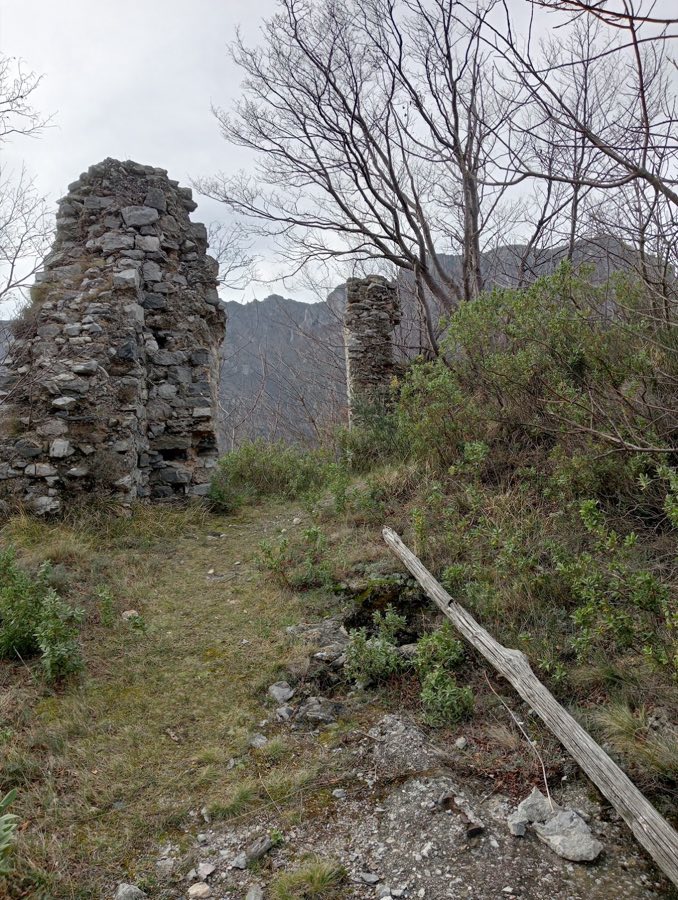
The lower portion of a polygonal tower remains standing in place. This fragment belonged to a vertical defensive element of the medieval complex and is consistent with the site’s later use as a watchpoint. The masonry visible at the tower base consists of coarse stonework, now weathered and partial, and the tower survives only as a truncated remnant.
Sections of the fortified nucleus are preserved as stretches of wall built from irregular stones set in largely horizontal courses. These walls mark the heart of the defensive enclosure and show the straightforward stone-laying technique used in the structure’s construction. Outside the core, portions of the perimeter wall survive in fragmentary form and retain vestigial battlement profiles, traces of the crenellated parapet that once crowned the defenses.
The ruins are described in historical records as ruderi and were still employed for shelter and observation in the early 1600s. Today the remains are fragmentary and in situ on Garscin; they can be reached on foot by paths that lead up from the inhabited centers of Vesallo and Veravo.
No. 97486
No. 56101
No. 34802
No. 49388
Comments
Comments for Castello di Castelbianco will require a verified account before posting.
We'll send a verification link before your first comment is published.