No. 51253
Malpaga Castle
Italy
CastleRuinFor events15th century
No. 14441
No. 14441 · 45.629 N, 9.763 E
Quick summary
Castello di Cavernago is a castle in Italy with origins associated with the 13th century.
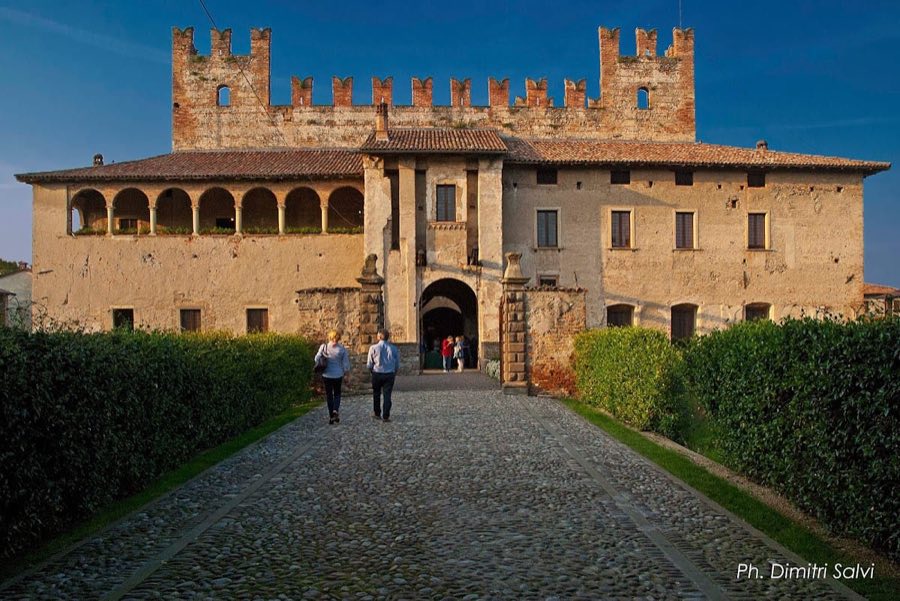
See all castles in ItalyCastello di Cavernago stands in the municipality of Cavernago in northern Italy. Its origins trace back to 1243 when the canons of the Bergamo cathedral took ownership of an existing building at this strategically important site, located where the historical territories of Milan, Bergamo, and Brescia converged. This early phase reflects the involvement of ecclesiastical authorities in managing properties with both defensive and administrative significance.
In 1470, the castle passed into the hands of Bartolomeo Colleoni, a well-known condottiero or mercenary leader of the time. Colleoni’s acquisition marked a turning point for the structure, which underwent notable modifications under his direction to suit his status and needs. Upon his death, the fiefdom including the castle was inherited by Gherardo Martinengo-Colleoni, who was married to Ursina, one of Colleoni’s daughters. Their son, Alessandro Martinengo Colleoni, also played a role in the castle’s lineage, indicating the property’s continuity within the family.
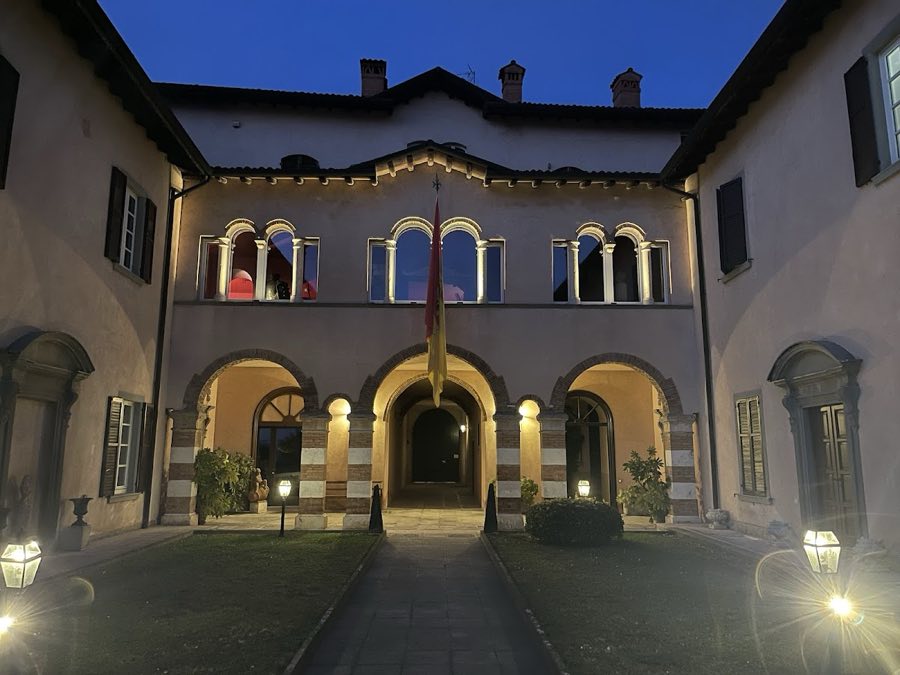
A substantial rebuilding took place in 1597, commissioned by Francesco Martinengo. This work reshaped the castle’s appearance and functions, reflecting architectural and residential trends of the late Renaissance moving into the early Baroque period. Later, ownership transferred through prominent families, including the Giovanelli counts and Count Mazzotti Biancinelli. Today, the castle remains in private hands, belonging to a descendant of the Prince Gonzaga of Vescovato, connecting it to one of Italy’s noble lineages.
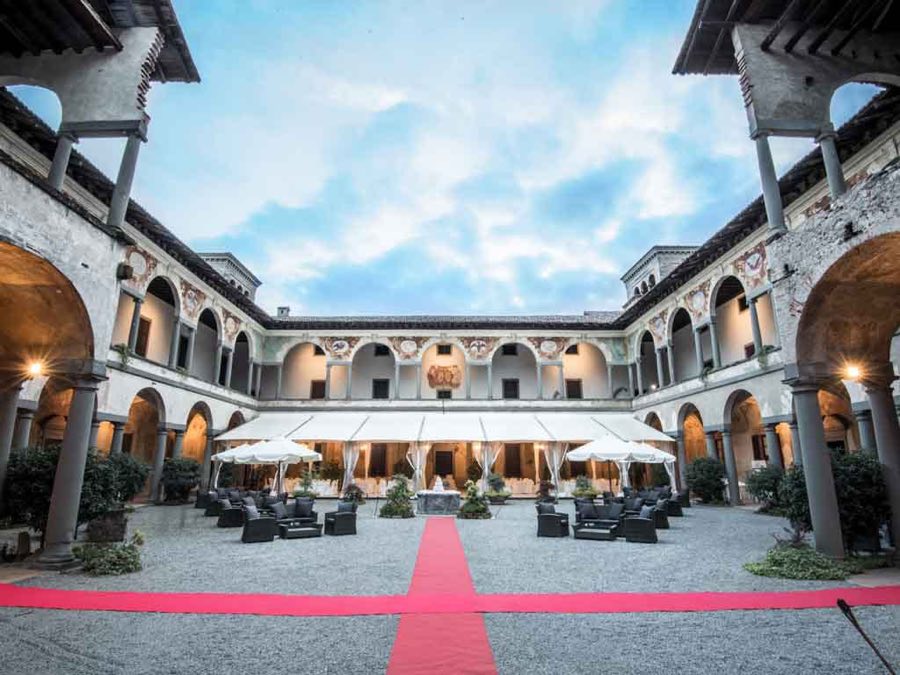
The present structure of Castello di Cavernago primarily dates from the 17th century, featuring a design in the Baroque style. Its layout is based on a square plan that surrounds a large central courtyard. The courtyard is notable for being enclosed by a double loggia, which consists of two tiers of open galleries supported by columns or arches, providing elegant, sheltered walkways overlooking the open space.
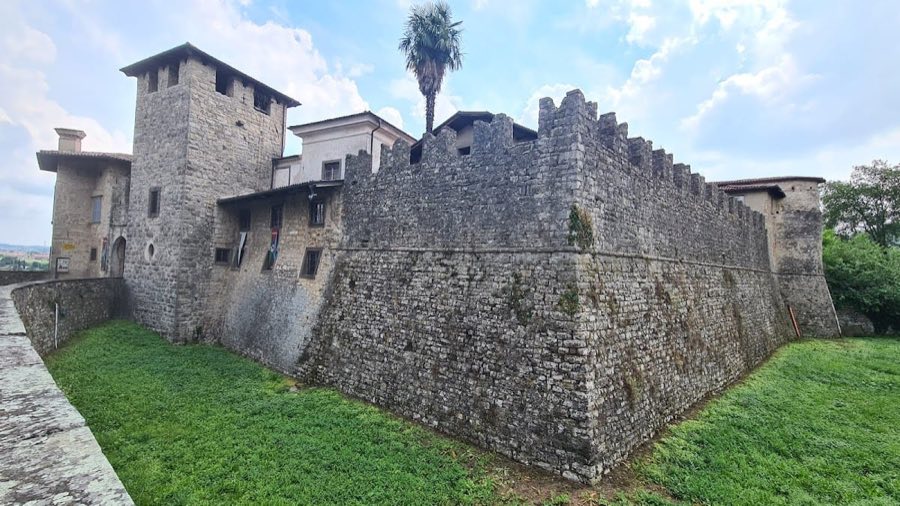
Unlike typical medieval fortresses, the castle does not display battlements or wall-walks, architectural elements intended for defense. This absence indicates a shift from military function to serving as a stately residence for aristocratic life. Nevertheless, the castle retains key defensive features suited for earlier periods, including a drawbridge that once spanned a moat encircling the property. Although the moat is no longer filled with water, it is still evident in the grounds, and it was complemented by a central well that provided water supply within the defenses.
The grounds around the castle include an extensive garden, enhancing the estate’s residential and aesthetic qualities. Inside, the rooms are adorned with frescoes painted directly onto walls and ceilings. These decorative works add artistic value to the interior spaces and reflect the taste and cultural interests of the castle’s inhabitants during the period of its most significant development.
Together, these elements illustrate the evolution of Castello di Cavernago from a medieval stronghold into a stately Baroque residence, blending practical defensive remnants with sophisticated architectural and artistic expressions.
No. 51253
No. 80916
No. 86658
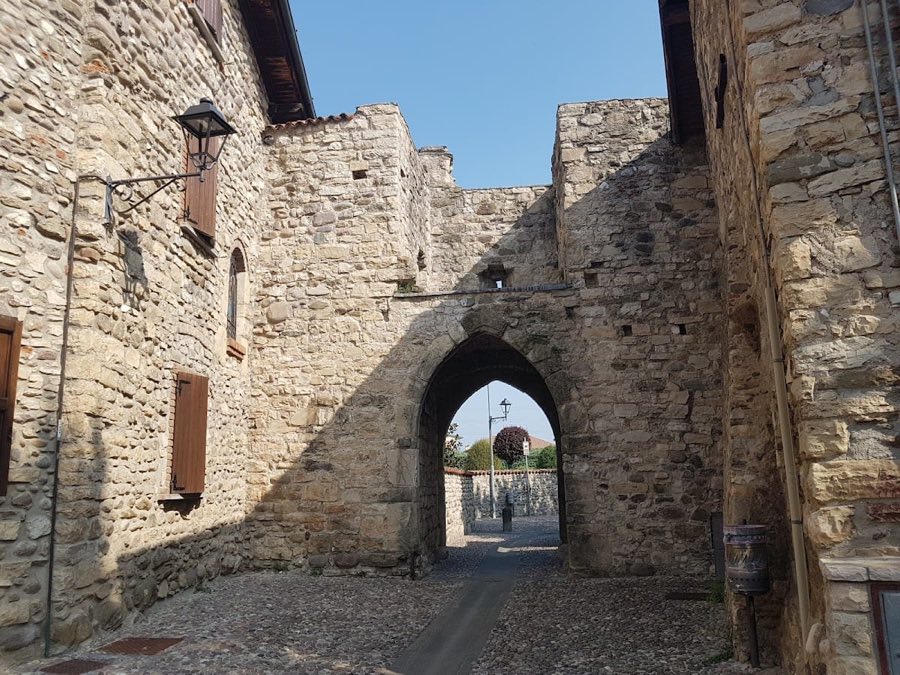
No. 76567
Comments
Comments for Castello di Cavernago will require a verified account before posting.
We'll send a verification link before your first comment is published.