No. 79345
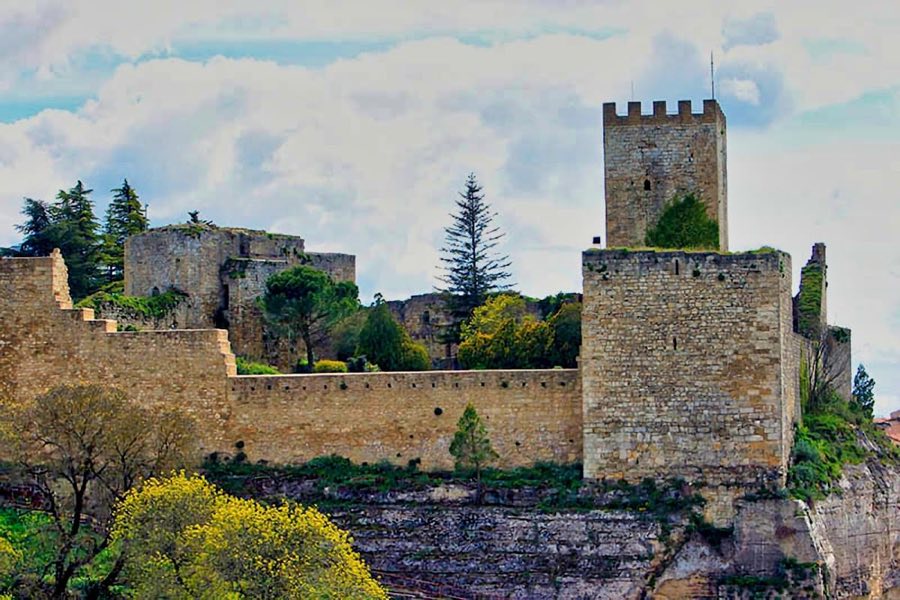
Castello di Lombardia
Italy
CastleRestored13th century
No. 24574
Castle · Italy
No. 24574 · 37.854 N, 14.153 E
Quick summary
Castello di Geraci is a castle in Italy with origins associated with the 14th century.
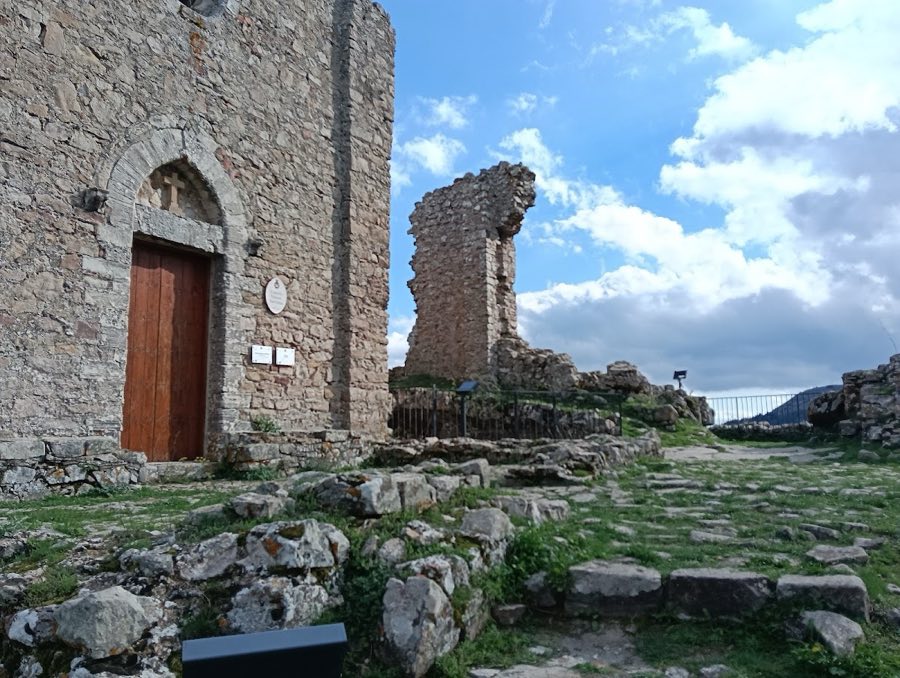
See all castles in ItalyCastello di Geraci stands above Geraci Siculo, Italy, and was erected by the Normans for military use. Count Roger I removed the territory from Arab control and granted the place in vassalage to his nephew Riccardo Serlo II, who died in 1072. After that initial Norman phase the castle passed through a sequence of holders recorded in local records. Named figures include Engelmaro and Eliusa, followed by Ruggiero di Bernavilla, who died in 1098, and Rainaldo di Bernavilla. Later administrators included members of the Creone family, among them Ugone, Guglielmo and Ruggero de Creone, and a figure called Guerrera.
From the later medieval decades the Ventimiglia family became the dominant presence at Geraci. Arrigo Ventimiglia, son of Guglielmo Ventimiglia, died in 1265. Alduino Ventimiglia died in 1289, and Francesco I Ventimiglia died in 1338. Under Aragonese rule and during the tenure of Francesco I the site was transformed into a true military fortress and the town’s perimeter was closed with large gates, traces of which remain visible. Royal interventions touched the lordship of Geraci in the mid-14th century. In 1354 King Ludovico of Sicily restored goods that had been confiscated to Emanuele Ventimiglia and to Francesco II Ventimiglia.
Later Ventimiglia lords recorded in the house’s succession include Emanuele (died 1362), Francesco II (died 1387), Enrico III, and Giovanni I Ventimiglia, who was named marquis of Geraci by King Alfonso V in 1433. Subsequent holders include Antonio Ventimiglia Prades, Giovanni III Ventimiglia and Giuseppe Ventimiglia, who died in 1620. The castle compound contains the ancient remains identified as the Maniero dei Ventimiglia.
The castle crowns a massive sandstone outcrop, its buildings arranged to exploit the rock’s natural prominence. The surviving complex preserves the footprint of a stronghold laid out for defense rather than comfort, with interior spaces organized to withstand prolonged assaults. The remaining fabric incorporates the Maniero dei Ventimiglia within the greater compound.
Below ground level there are cisterns and storage spaces cut or built to hold water and provisions, and there are enclosed underground rooms that served as prisons. These underground features survive as empty cisterns and storage vaults, recorded in situ among the ruins and testifying to the castle’s capacity for long sieges.
On the ground floor the surviving plan shows areas that served as stables, kitchens and armories, together with shuttered shooting-holes in the walls for defenders. These rooms were arranged for service and defense, and the apertures for shooters remain visible in the masonry. The upper story is documented as the living quarters for the count’s family, positioned above the service level.
Elements added or consolidated during the Aragonese and Ventimiglia phase include the town’s closed perimeter and large gate structures, traces of which survive at the site. Ruined towers exhibit truncated corners, and many of the defensive openings survive in fragmentary form. Among the ruins the small church of Sant’Anna stands intact, preserved within the castle area.
No. 79345
No. 75779
No. 24838
No. 32971
Comments
Comments for Castello di Geraci will require a verified account before posting.
We'll send a verification link before your first comment is published.