No. 76713
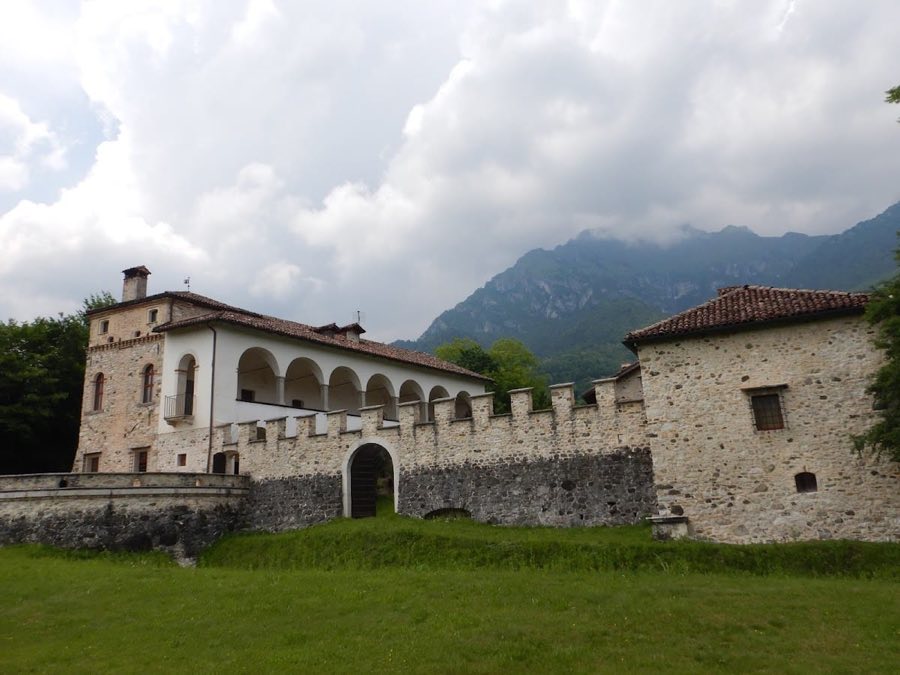
Castel Lusa
Italy
CastleRestored15th century
No. 69462
Castle · Italy
No. 69462 · 45.946 N, 11.923 E
For rent
Castello di Quero is marked for bookable castle accommodation. Nightly pricing, sleeps count, stay rules, and amenities are displayed only when public operator data is available.
Rental type: Hotel / bookable stay, Short-stay rental
Short-term availability: Bookable accommodation signal
Quick summary
Castello di Quero is a castle in Italy with origins associated with the 14th century.
See all castles in ItalyCastello di Quero, also known historically as Castelnuovo, is situated in the municipality of Setteville, Italy. This fortified complex was constructed in the late 14th century by the forces of the Republic of Venice, known as the Serenissima Republic, to guard against military threats coming from the north.
Before Castello di Quero was built, the nearby area was defended by another fortress called Castelvecchio, located slightly to the south. This earlier stronghold was dismantled following its siege in 1196, when Gerardo de’ Taccoli, bishop of Belluno, led forces that successfully captured it. Several decades later, between 1376 and 1379, the new castle was erected under the leadership of Jacopo Cavalli, captain of the Serenissima Republic. Upon completion, the castle was staffed by a garrison of eighteen soldiers, emphasizing its role as a strategic point of defense.
Throughout its early history, the castle experienced significant military activity. In 1411, troops from Feltre launched an assault that temporarily took control of the fortress. The Serenissima forces eventually regained the castle, although the main tower sustained partial damage during the conflict. Further military engagements affected the castle, notably during the War of the League of Cambrai, a major conflict involving several European powers in the early 16th century. Later, in World War I, the fortress became a target once again; Austrian troops bombarded and occupied it during the First Battle of the Piave.
After its usefulness for military defense diminished, Castello di Quero found new purposes. It was converted successively into an inn and later a hotel, accommodating travelers rather than soldiers. In 1924, the Somaschi Fathers purchased the castle and undertook complete restoration by 1927. This religious order established the castle as both a residence and a place of worship. The Somaschi connection to the site is deep-rooted, as their founder, Gerolamo Miani, served as castellan of Quero and was imprisoned within the castle’s dungeons in 1511 following a French assault led by Mercurio Bua. Tradition holds that Miani’s release came through a miraculous intervention after his prayers to the Madonna, marking a turning point that began his religious transformation and ultimately led to the founding of the Somaschi order.
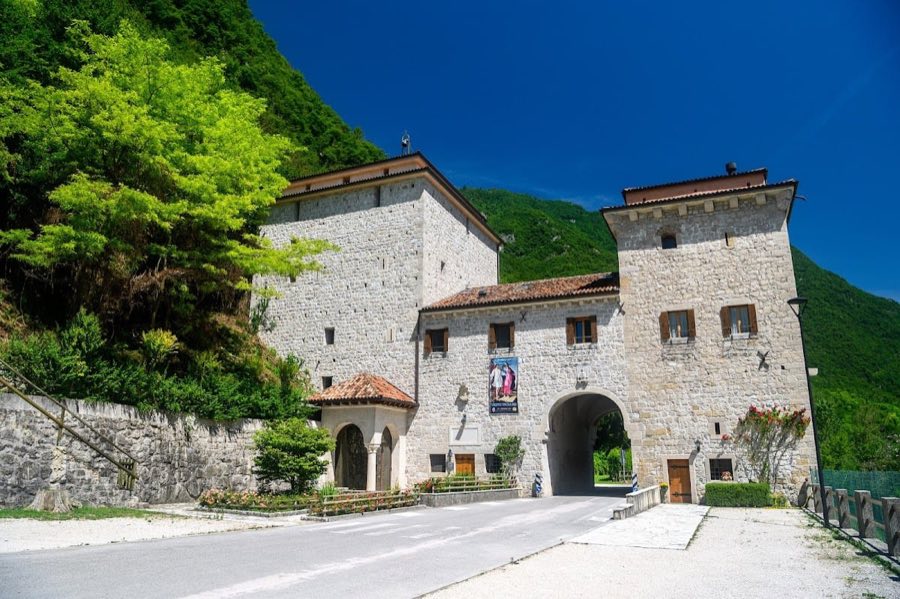
The Castello di Quero is composed primarily of two prominent towers connected by a walkway spanning over the main road beneath. This layout underscores its defensive function as well as its role in regulating traffic through this key communication route. The central tower, built around the late 14th century, features machicolations—openings in the parapet through which defenders could drop objects on attackers below—demonstrating the fortress’s medieval military architecture.
Positioned directly on the bed of the Piave River, the smaller tower played an important role in controlling river traffic. It was once linked via a heavy chain to a counterpart tower located on the opposite shore, forming a physical barrier that could be raised or lowered to allow or block passage. This chain was destroyed accidentally in 1885, but its former presence highlights the castle’s role as a customs post overseeing commercial navigation.
The castle’s defensive structures have endured various periods of damage, notably to the main tower during military engagements such as the assault in 1411 and the World War I bombardments. Despite these hardships, the two towers and the connecting elevated walkway remain preserved to a substantial degree. Modern restorations, particularly those undertaken by the Somaschi Fathers in the 1920s, helped to stabilize and maintain these features, adapting the fortress to new uses while respecting its historical fabric. Oral tradition reinforces the significance of the dungeons beneath the castle, tied to the imprisonment of Gerolamo Miani, which adds a spiritual dimension to the site’s physical remains.
No. 76713
No. 54436
No. 42878
No. 15074
Comments
Comments for Castello di Quero will require a verified account before posting.
We'll send a verification link before your first comment is published.