No. 63512
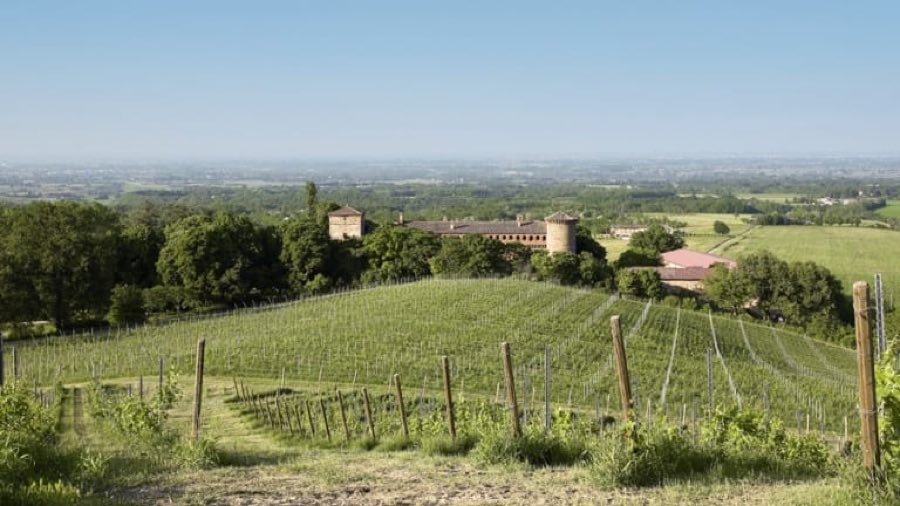
Maccastorna Castle
Italy
CastleRestored13th century
No. 12315
Castle · Italy
No. 12315 · 45.023 N, 9.950 E
Quick summary
Castello di San Pietro is a castle in Italy with origins associated with the 15th century.
See all castles in ItalyThe Castello di San Pietro stands in the municipality of San Pietro in Cerro, Italy. This brick fortress was constructed during the late 15th century by the Italian civilization, replacing an earlier medieval fortification.
The earliest known structure on this site dates back to the 13th century, serving as a fortress that featured a moat and a ravelin—a triangular defensive earthwork. These elements suggest its initial military purpose was to guard the territory, particularly protecting the Piacenza area from incursions by neighboring forces from Cremona. Over time, the strategic importance of the site grew, highlighting its role in regional defense.
In 1446, the fiefdom, which included the castle site, was granted to Bartolomeo Barattieri by Bianca Maria Visconti, widow of Francesco Sforza. Barattieri, whose family was established in Piacenza and known for legal and diplomatic pursuits, commissioned the current castle around 1491. This newly erected structure incorporated features suitable for both defense and residence, signaling a transition toward gentler uses as the need for military fortifications lessened.
The Barattieri family held ownership almost continuously for nearly five centuries. They mainly utilized the castle as a secondary home in the countryside rather than as a primary residence. During their tenure, the castle underwent certain adaptations that reflected this shift, with defensive elements being softened to accommodate more comfortable living spaces. Despite these changes, the castle remained well preserved due to the limited extent of structural alterations, contrasting with the more extensive modifications often seen in primary residences.
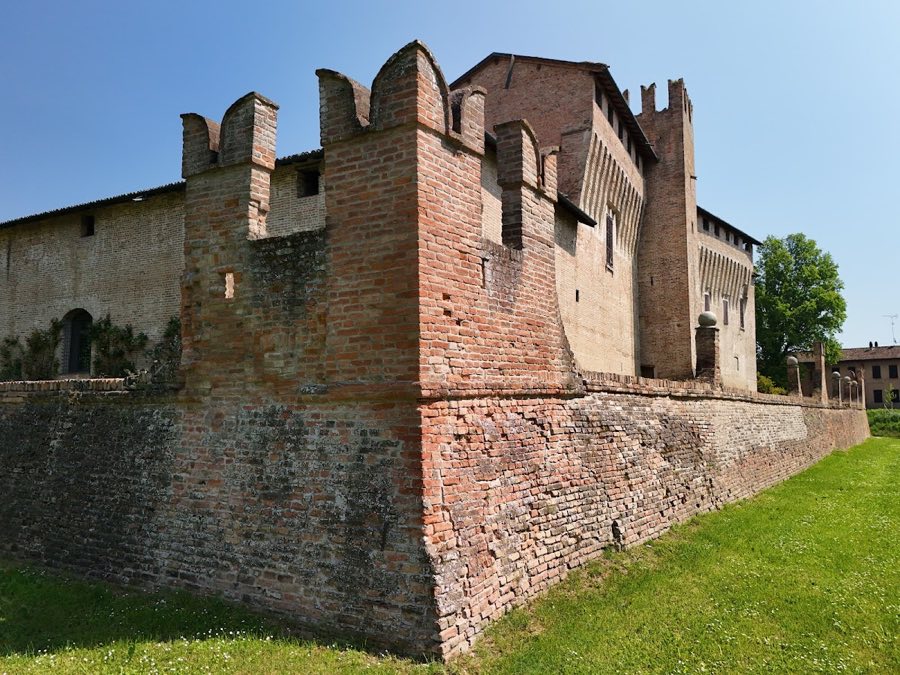
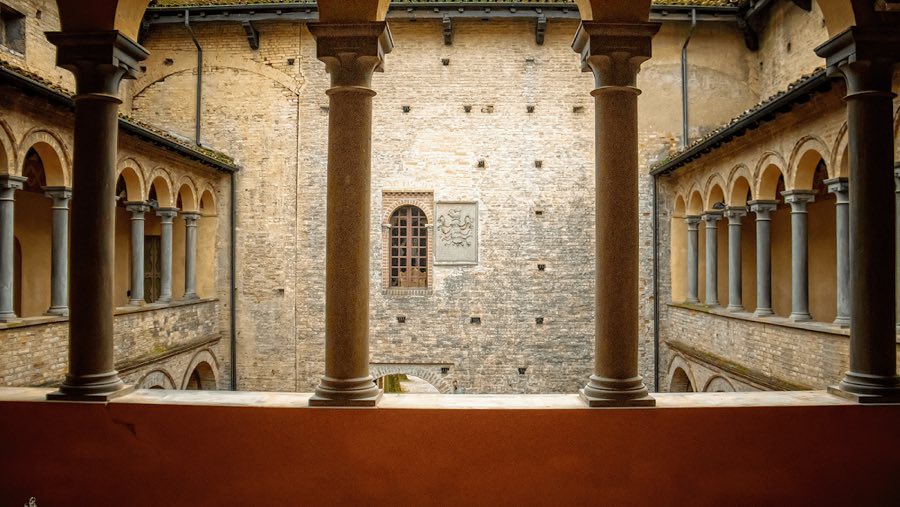
The Castello di San Pietro exhibits a quadrangular layout entirely constructed from brick, featuring a central courtyard that includes a double loggia, or covered gallery, dating back to the 15th century. This arrangement reflects the architectural style of the period, balancing functionality with aesthetic considerations.
Two slender cylindrical towers rise from the northern corners, enhancing the castle’s defensive stance. On the southern side lies the main entrance, protected by a mastio—a keep or fortified tower designed to guard the gate. Traces remain of the former drawbridge bolts on this mastio, hinting at the castle’s original defensive mechanisms that controlled access.
Approaching the entrance, a tree-lined avenue leads visitors directly to the south-facing gate, emphasizing the castle’s residential transformation by creating a welcoming approach. One notable architectural detail is the use of “ventiere,” which are pivoting wooden shutters that close over the upper wall openings. These served both practical and security functions.
Modifications made during its conversion into a country residence included filling the moat to create a garden space where water once surrounded the structure. Additionally, windows were inserted into the castle’s external walls to admit more light, reflecting a departure from purely defensive construction toward domestic comfort.
Inside, several rooms retain frescoed salons adorned with decorative coffered ceilings—ceilings featuring recessed panels. These spaces are furnished with luxurious fittings that further reveal the castle’s residential purpose. Due to its role as a secondary dwelling, the building has experienced minimal structural changes, preserving much of its original layout and atmosphere.
Today, part of the castle’s attic houses the “Museum in Motion,” an exhibition dedicated to showcasing paintings and sculptures produced after World War II. This collection features works by both Italian and international artists, with particular emphasis on creators from Piacenza, linking contemporary cultural endeavors to the historic site.
No. 63512
No. 96946
No. 17290
No. 39934
Comments
Comments for Castello di San Pietro will require a verified account before posting.
We'll send a verification link before your first comment is published.