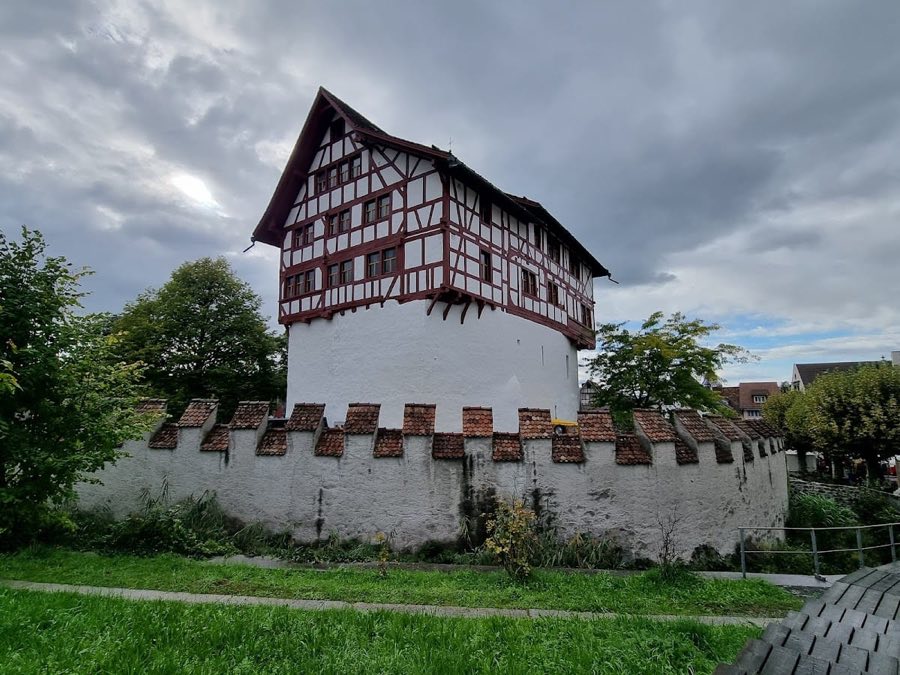
No. 55305
Zug Castle
Switzerland
CastleRestored11th century
No. 96168
Castle · Switzerland
No. 96168 · 47.141 N, 8.470 E
Quick summary
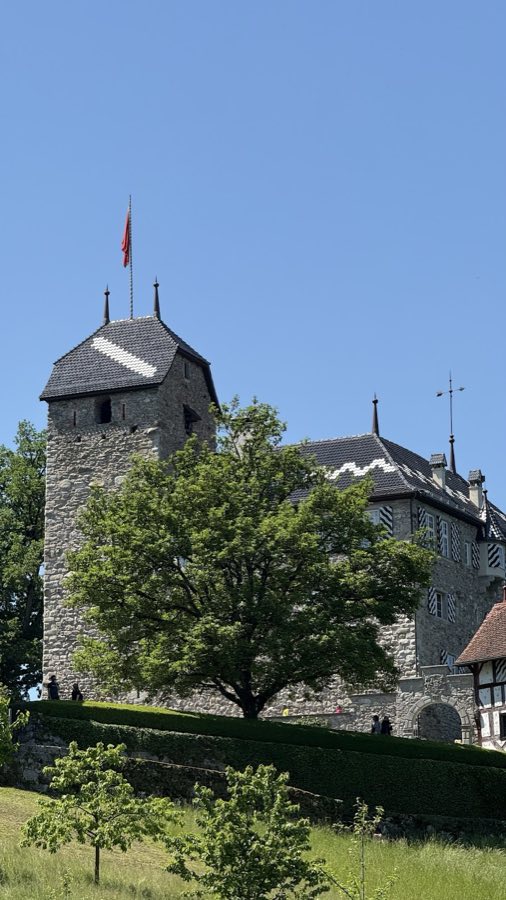
Castle Buonas is a castle in Switzerland with origins associated with the 15th century.
See all castles in SwitzerlandCastle Buonas stands on a peninsula of the Zugersee in the Buonas quarter of Risch, Switzerland, and was established in the medieval period by local knightly families.
A carved date above the castle portal records 1071, and the place name first appears in a donation charter of 22 January 1130 that names knights “von Bochunna.” Individuals tied to the castle appear in later records, including Petrus de Buochnase in 1223. In 1250 Adelheid of Buonas, the last member of her line, married Ulrich von Hertenstein, and the property passed into the Hertenstein family. Over time the site has been known by several names, including Burg Buonas, Schloss Hertenstein, and Altes Schloss Buonas.
Tensions over legal authority around the castle led to a confrontation in the early 15th century. In 1421 military action was threatened between the canton of Zug and the Hertenstein family. An arbitration meeting on 20 August 1424 assigned lower-court jurisdiction to the Hertensteins while reserving highest jurisdiction to the canton of Zug. Destruction struck the castle in 1478 when it burned down to its foundations. Work to rebuild began in 1494 and finished in 1498, at which time the reconstructed building received an extra storey.
The Hertenstein line ended as local lords when the last heiress married Johann Martin Schwytzer in October 1654 and conveyed the estate to him. On 28 March 1782 Josef Xaver Thüring Schwytzer sold the castle for 37,625 Gulden to two citizens of the city of Zug, with two thirds of the purchase amount financed by the city. The property then passed through a number of owners and fell into neglect until 1862, when Count Mieczislaw de Komar of Paris bought the estate and carried out an extensive restoration.
In 1871 Carl August von Gonzenbach-Escher acquired the grounds, laid out the park landscape, and from 1873 to 1877 commissioned the English architect William Wilkinson to erect a large neo‑Gothic villa known as the New Castle. The villa stood in the park after its completion in 1877; one account records its presence there until 1979, while another record states it was demolished in 1970 and replaced by a country house. That demolition drew criticism from the Federal Commission for Monument Preservation and from the ETH Zürich architectural historian Paul Hofer, and the cantonal building authority did not reverse the decision. The loss of the villa is regarded locally as one of the canton’s greatest losses of architectural substance and led the canton of Zug to appoint a full‑time monument and conservation officer.
In 1997 the Basel pharmaceutical firm Hoffmann‑La Roche purchased the castle complex to create a management training center called the Roche Forum, and committed to preserving the historic buildings and the surrounding landscape.
The castle complex occupies a small peninsula on the Zugersee and is set within a spacious park. The ensemble of historic buildings and grounds forms a registered landscape listed as object No. 1309 for the Zugersee area. The park contains planted features including a rhododendron garden in the southern section and a decorative well known as the Zugerbrunnen located at the Old Castle.
The oldest built element that can be read in place is the portal bearing the date 1071, which marks the medieval character of the site. Documentary evidence records that the medieval castle was destroyed by fire in 1478, the remaining walls having been consumed down to the foundations. Rebuilding took place between 1494 and 1498, and the restored structure included an additional storey above the earlier footprint. That rebuilt castle survives as part of the historic ensemble and has been maintained under later conservation commitments.
The later phase park and service buildings reflect 19th‑century transformation of the grounds. From 1873 to 1877 a large neo‑Gothic villa called the New Castle was erected within the park by architect William Wilkinson at the commission of Carl August von Gonzenbach-Escher; this villa occupied a prominent place in the landscape after 1877. Accounts record that the villa was later removed and a country house was built on its site, a demolition and replacement that drew official criticism at the time. Since 1997 the group of historic buildings, their park setting, and associated outbuildings have been preserved together as a coherent ensemble under the stewardship committed by Hoffmann‑La Roche.
No. 55305
No. 36202
No. 36426
No. 99306
Comments
Comments for Castle Buonas will require a verified account before posting.
We'll send a verification link before your first comment is published.